sharing my love for philanthropy, cooking, and adventure

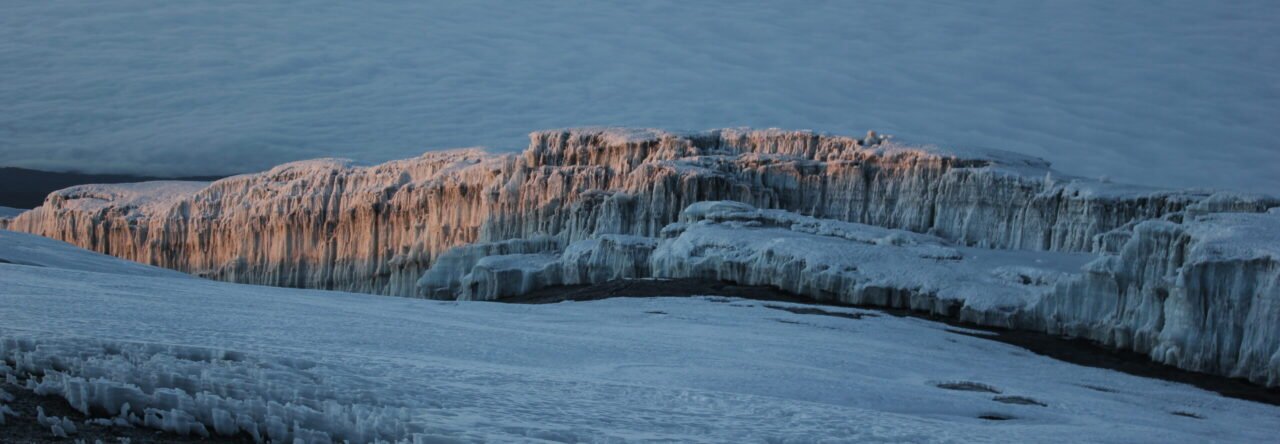
Sunrise illuminating the summit glacier on Mount Kilimanjaro, with ice formations in the foreground and a sea of clouds in the background.

Month: February 2024

City of Rocks State Park | New Mexico

Picture: Entrance with the City of Rocks in the distance

A Tale of Two CIties

As I sit here, I grapple with finding the words to capture the essence of this State Park. I want to remain positive, despite these arduous times where negativity often feels easier. So much like the opening lines of Dickens’ masterful narrative, A Tale of Two Cities, one could say that my experience embodies a paradoxical duality: “It was the best of times, it was the worst of times.” With that profound prelude, let’s embark on this journey and explore City of Rocks State Park.

A little about the park from their website

The park encompasses a one-square-mile area in the scenic Chihuahuan desert region of southwestern New Mexico at an elevation of 5,200 feet. The “city” is a geologic formation made up of large, sculptured rock columns, or pinnacles, rising as high as 40 feet and separated by paths or lanes resembling city streets and a city skyline. These rocks were formed about 34.9 million years ago when a very large volcano erupted. Then, erosion over millions of years slowly formed the sculptured columns seen today, creating a stunning, otherworldly landscape.

Located about halfway between Silver City and Deming, City of Rocks offers over 50 campsites, hiking trails, excellent mountain biking, wildlife viewing, birding, stargazing, picnic areas, and a desert botanical garden. The uniquely designed, new Visitor Center includes a large display area and modern restrooms with hot showers. The park charges a Day Use Fee of $5 per vehicle.

Pictures: Entrance with Visitor Center in the Background | Mural at the Visitor Center

Getting there and the Visitor Center

The night before my visit I stayed in Las Cruces, New Mexico, the second largest city in New Mexico. I remember Las Cruces fondly from childhood as we took a day trip to nearby White Sands National Park while visiting friends in El Paso, Texas. To get to the park from Las Cruces, you need to head west on Interstate-10 to Deming, which takes about 1 hour and 30 minutes and you’ll also pass through a US Customs and Border Patrol (CBP) checkpoint. Bet you didn’t know their jurisdiction spans 100 miles into the interior of the United States from any land or maritime border. Considering two-thirds of the U.S. population falls within this zone, you may want to read about their authority and your rights. Anyway, from Deming, it’s still a long drive to the park entrance and then a bit more to the visitor center.

I chatted with this really nice volunteer at the visitor center who gave me the lowdown on the park. She asked if I wanted to watch a 10-minute video about the park, and even though I wasn’t thrilled about it, I said yes because I could tell it was important to her. When I sat down to watch it, I felt like I had been thrown back in time – there were just a few chairs around a small TV and DVD player – something reminiscent of grade school.

Picture: Park Map – pretty easy not to get lost here

Why New Mexico?

While not exactly the Bastille, my visit to what felt like the Start Park Prison had me questioning if I had unwittingly stumbled into a rocks-and-boulders-themed incarceration. Imagine exploring the rocks or “the city,” only to discover that the campsites are cleverly hidden within the very rocks you’re trying to admire and to unknowingly gatecrash someone’s camping turf – talk about awkward rock encounters. Luckily, there were only a few campers during my visit. Now, if the park was bursting at the seams with campers, navigating the rocky metropolis would be a bizarre dance of dodging tents and campers – not my idea of a fun park visit. And consider the reverse: camping amidst the rocks, only to have enthusiastic rock enthusiasts meandering through your campsite – a perplexing scenario, indeed.

I just don’t understand why the State decided to do this? Why not keep the campsites in the serene outskirts, letting people camp in peace and explore the “city” without inadvertently intruding on someone’s tent/camper territory? After all, the “city” is THE focal point and reason to visit this park, you’re not coming here to stroll around campsites.

Pictures: Some of the campsites you’ll encounter

Pictures: More campsites you’ll encounter

Let’s get out of the city

Shortly into my walk through the rocks, I decided I needed a change of pace and decided to head towards the back of the “city” to the Hydra and Table Mountain Trailheads. My legs were feeling a bit like Jell-O from my hike the day before – Guadalupe Peak – so I wasn’t sure how far I would hike, let alone go up to Table Mountain. It’s 1.87 miles up to Table Mountain, with the last 1/4 mile having the largest elevation change. The trails are well marked and also dual-use – both for hiking and mountain bikes – so keep an eye out for bikers. I found it ironic that these trails were marked better than Guadalupe Peak, but much harder to get lost here. As you hike along the trails, you’ll see some cool desert floral and fauna, as well as some wildlife – holes in the ground.

Pictures: Some of the boulders on the “outskirts” of the city | Hydra Trail Directional Sign

Pictures: Hydra and Table Mountain Trailheads | Another campsite near the Trailheads

Pictures: Soaptree Yucca | A critter hole

Pictures: Another Hydra Trail Marker | Where Table Mountain Trail and Hydra Trail split | In both pictures Table Mountain is in the background

Picture: Looking up at the left side of Table Mountain and the trail to the summit

Worth the Hike!

As you start to ascend from the desert floor, the impressive scale of the “city” becomes apparent. The trail leading up to the summit is a gradual incline, with a few resting spots along the way to catch your breath and admire the views. There are also some sections of the trail that may make you wonder how mountain bikers navigate through them. The ascent to the summit has an elevation change of 695 feet and treats you to breathtaking views of the Chihuahuan Desert and the City of Rocks – definitely one of the highlights of my trip. Once at the top, I took a quick break before running back down the trail, which was a fun experience, despite my legs feeling like Jell-O and not having my knee braces on.

Pictures: View as you begin to rise above the desert floor | The trail

Pictures: One of the resting areas | The last push up to the summit

Picture: View from the summit with “City of Rocks” in the distance

Pictures: Summit Selfie | Looking down (It’s much higher than it looks in the picture)

Picture: Another view from the summit showing the vastness of “City of Rocks”

Picture: Another spot to rest | The desert below

Picture: The beautiful Chihuahuan Desert

The Desert Botanical Garden

Exploring the Desert Botanical Garden proved fascinating; it offered insights into the local fauna, and the opportunity to wander among rocks without maneuvering through campsites. They’ve got a couple of picnic tables too, so I grabbed my lunch there. It was a good spot, even though it was right by the dirt road. And it was peaceful until some yahoo in a pickup truck decided to blast up the road, kicking up sand and dirt in my direction. Seriously Dude?!

Pictures: The Botanical Garden | Info about the Chihuahuan Desert

Pictures: Barrel Cactus | Cholla Cactus

Pictures: Parry’s Agave | Cow’s Tongue Cactus

Pictures: Sotol | Engelmann’s Prickly Pear

Pictures: Rocks near the Botanical Garden, sans campsites

Pictures: More rocks near the Botanical Garden, sans campsites

Pictures: Picnic Area | Cool, almost petrified, trunk of the tree near the picnic tables

Let’s Tour the City – complete with City Folk!

After lunch, I headed down the trail right across from picnic tables, and into the heart of the “city.” The trail is about 1.4 miles out and back, but you’ll probably end up hiking more as the trail isn’t well marked and you just end up meandering through the rocks. It’s amazing to think as you walk around these massive boulders that they have spewed from a volcano millions of years ago. As I wandered around, I felt like I was in a city – complete with kid’s screaming and yelling at each other as they ran through the boulders and climbed on them. Ah, city folk.

Pictures: Trailhead | Part of the trail through the “City”

Pictures: Meandering through the “City”

Pictures: Some of the more interesting Rocks

Picture: Table Mountain from the “City”

Stars and Planets

The first state park astronomical observatory, equipped with a 14’’ Mead Telescope powered by solar energy, is located in the City of Rocks State Park, New Mexico. It offers a unique opportunity to observe planets, stars, and constellations. Together with the National Public Observatory, the park organizes a monthly Star Party, featuring programs that typically extend over a 2-hour duration. Informative signs about various planets are placed in the vicinity of the observatory. Interestingly, it was near the Observatory that I encountered wildlife, spotting a beautiful rabbit among the distinctive boulders.

Pictures: The Observatory | Planetary Informational Sign – this one is for Pluto

In Summary

City of Rocks State Park stands as a fascinating testament to the wonders crafted by Mother Nature while showcasing desert flora and fauna. But I would deem this a People’s Park and honestly, if I weren’t looking for a place to camp, I wouldn’t go out of my way to visit the park. Perhaps a convenient stopover on a trip to the Gila National Forest or if you happen to be exploring nearby Hatch, New Mexico, renowned for its famous Hatch Chile. While not claiming expertise, I can’t help but feel that a more thoughtfully designed park could enhance the overall experience. Perhaps it has something to do with the fact that State Parks fall under the jurisdiction of the Energy, Minerals and Natural Resources Department?

Date of Visit: 18 November 2023
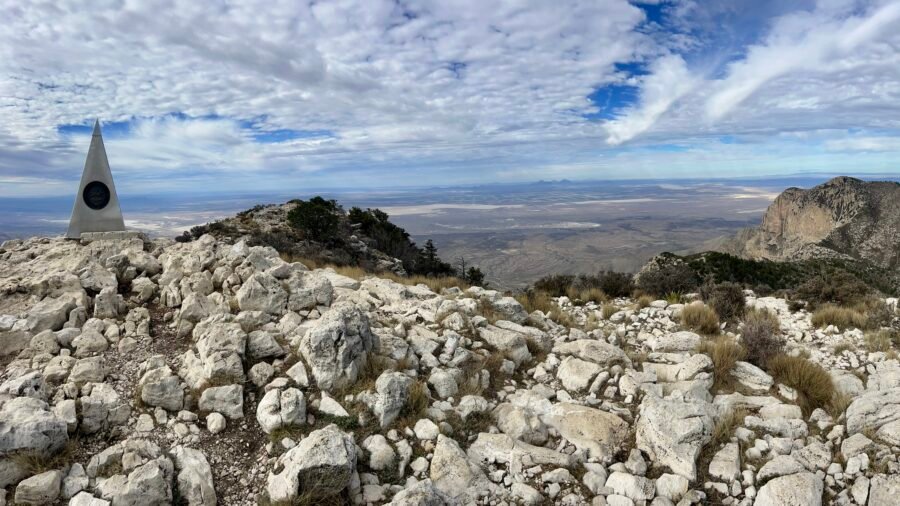
Guadalupe Peak | Texas (#27)

The day I hiked Guadalupe Peak was filled with so many emotions. I had read many of the reviews on AllTrails, my go-to hiking resource, which gave me a bit of angst. For example, “The last 100 yards are a bit scary as you can see a long way down and the rocks are slick.” Couple this with the fact that it is an 8.4-mile out-and-back trail with an elevation change of almost 3,000 feet, I was a bit nervous, to say the least, and I had visions of my challenging hike to the summit of Mt. Katahdin on Abol Trail. In the end – Was it hard? – Heck yeah; Was it as hard as Katahdin? – Not even close; and Were you happy you did it? – One word: Ecstatic! So there you have it!

Let’s talk about the Beast of Texas: Guadalupe Peak

Guadalupe Peak, located in Guadalupe Mountains National Park, Texas, stands as the highest point in the Lone Star State at 8,751 feet above sea level, ranks #14 in State High Points, it’s the tallest state high point under 10,000 feet, and was my 27th High Point. This iconic summit offers breathtaking panoramic views of the surrounding Chihuahuan Desert and rugged mountain landscapes. Hiking enthusiasts are drawn to the challenging Guadalupe Peak Trail, a strenuous 8.4-mile round trip that rewards climbers with a stunning view from the summit.

The peak is part of the ancient Capitan Reef, an ancient marine fossil reef that once thrived in a Permian sea over 250 million years ago. Today, visitors can marvel at the remnants of this geological history as they ascend the peak. The diverse flora and fauna, including agave and ponderosa pine, add to the unique ecological tapestry of the region. Guadalupe Peak is not just a geological marvel; it’s a testament to the rich natural heritage embedded in the heart of Texas.

Picture: Park Entrance

The 42nd Largest National Park

Spanning over 86,000 acres in western Texas, Guadalupe Mountains National Park is a vast expanse of rugged beauty. (I can’t believe there are 41 National Parks that are larger than this!) Renowned for its diverse landscapes, the park features soaring limestone canyons, expansive desert flats, and pristine fossilized reefs. McKittrick Canyon, a botanical wonder, showcases vibrant autumn foliage, attracting hikers to its picturesque trails. Carved by time, Walnut Canyon unveils ancient rock formations, while the historic Frijole Ranch offers a glimpse into the region’s ranching past.

Home to over 80 miles of hiking trails, the park beckons explorers to discover its hidden treasures and appreciate the untamed grandeur of the American Southwest. The park is renowned for its towering peaks, with Guadalupe Peak reigning as the highest in Texas and the striking El Capitan. As a designated International Dark Sky Park, it offers unparalleled stargazing opportunities, making it a haven for both adventure seekers and nature lovers. The entrance fee is $10 per person, however, if you have a valid America the Beautiful pass, there is no fee.

Picture: Park Map

Carlsbad, New Mexico

Carlsbad, New Mexico is one of the closest towns to the park, located about 50 miles and 47 minutes to the northeast. During my visit, I stayed at a unique hotel called the Karbani Inn, located on US-180. Their target market is primarily oil field workers and truckers, but despite not being a part of either group, I found the rooms to be simple, reasonably priced, and equipped with all the necessary amenities for an overnight stay. This includes a clean bed, a microwave, a refrigerator, a clean bathroom with a toilet and shower, and free parking. It’s worth noting that the hotel is modular and constructed out of office trailers. I found the staff to be extremely friendly and accommodating. Additionally, the hotel guests – mostly workers – tended to go to bed early and wake up early, similar to hikers.

Pictures: Hotel Entrance | The Karbani Inn

Pictures: My Room

Pictures: Everything you need to be comfortable for a night

Just a heads up – when leaving the hotel and heading south out of Carlsbad, there’s only one gas station, so make sure to fill up before you go! You’ll see signs warning you that there won’t be any more services for the next 130 miles. Also, keep in mind that you’ll be going to Mountain Time, but your phone might still show Central Time because the cell towers are in a different time zone. So remember that you’ll lose an hour.

An Epic Start To My Day!

Up and at ’em by 6:00 AM, and let me tell you, the morning gifted me the most mind-blowing sunrise. Heading towards the Texas-New Mexico border, my eyes were treated to the sight of majestic mountains like El Capitan and Guadalupe Peak rising proudly from the desert floor.

Picture: Morning Sunrise

Cruising along, I made my way to the Pine Springs Visitor Center entrance. A quick drive took me to the trailhead parking lot, and I couldn’t be happier about snagging an early spot before the rush.

I started my hike just before 7:00 AM and the day could not be better. If you do decided to hike Guadalupe Peak, here are some hiking tips:

  1. Know thyself! It might not be a technical climb, but it’s no walk in the park either, so listen to your body.
  2. Be prepared for wind, especially the higher you go. So it is important to have the right clothing and Layer, Layer, Layer!
  3. Taking a page from my Mt. Kilimanjaro experience, go “Pole, Pole, Pole” – slowly, slowly, slowly. No need to race to the summit; enjoy the journey.
  4. Hydrate like it’s your job and pack some high-energy snacks. Trust me; you’ll need the fuel. And if the weather’s fine, consider a picnic just shy of the summit (it can get breezy up there).
  5. Be ready for anything – first aid kit and a map are your trail buddies. Oh, and keep an eye out for Mountain Lions and Black Bears. Know what to do if you bump into these wild neighbors.

From the Pine Springs Trailhead parking lot, you have a choice of 4 different trails – Devil’s Hall Trail, El Capitan Trail, The Bowl, and the trail I hiked – the Guadalupe Peak Trail. The initial stretch is a breeze, a gradual incline with a split – El Capitan to the left, and Devils Hall and the Guadalupe Peak Horse Trail to the right.

Pictures: Trailheads | Information about the trails and wildlife, as well as a Hiker’s Checklist

Pictures: Ready for an epic hike! | First trail junction

When you reach the edge of the mountain, be prepared for a series of switchbacks. As you climb higher, the view becomes more breathtaking, and eventually, you will see how far you have hiked with views of the parking lot below and US-62, the road leading into the park. Once you’ve reached the final part of the switchbacks, the trail will level off, and you will find yourself circling to the backside of the mountain.

Pictures: Looking towards the Devils Hall Trail area | Looking down at the Parking lot and US-62

Pictures: The Switchback Up | Just before you circle to the backside of the mountain

Pictures: As the trail levels off and you circle around the backside of the mountain

Pictures: Another breathtaking view | Looking up towards Guadalupe Peak

George!

As you circle to the backside of this mountain, you’ll come across one of the coolest parts of the hike, a bridge across a fissure in the rocks. At first, I thought this would be terrifying to cross due to its height, but it was a piece of cake. It was here that I would first meet George as we both crossed the bridge at the same time. I took a couple of pictures of him at the bridge and went on my way. As one of us would stop to take pictures or stop for a drink or snack, we would pass each other on our way to the summit. Once around this mountain, the trail ascends to Guadalupe Peak. From here you see El Capitan and begin to realize how high up you have hiked.

Pictures: The Bridge

Picture: Looking down at how high you have hiked up

Pictures: Another breathtaking view | El Capitan sighting

Picture: Getting Closer! That’s George in the distance.

Remember AllTrails?!

As I was approaching the last stretch of my hike towards the summit, I kept thinking about the comment on AllTrails – “The last 100 yards are a bit scary as you can see a long way down and the rocks are slick.” I caught up to George at this perilous section. He was having trouble with his footing, so I helped guide him through it. It wasn’t as bad as I had feared, but it still required concentration. Ahead of us, a father, about our age but super fit, and his two grown sons who had passed us earlier were sitting below the summit, and they encouraged us and let us know we were almost there. I reached the summit in 2 hrs. 45 minutes. At the top of the summit, there’s a stainless steel pyramid that was erected by American Airlines in 1958 to commemorate the 100th anniversary of the Butterfield Overland Mail, which was a stagecoach route that passed south of the mountain.

The view from the summit was breathtaking, making this hike one of my favorites so far. George and I took some pictures of each other at the summit, including a few selfies. Due to the windy conditions, I didn’t stay up there for long, but I had enough time to capture some amazing photos. Afterward, I descended just below the summit, where it was less windy, and had lunch in the same spot where a father and his two sons were earlier.

Picture: High Point #27 in the books!

Pictures: Stainless Steel Monument | Summit Selfie

Picture: George taking his Summit Selfie and trying to get a 360-degree picture
Picture: View from the Summit
Picture: El Capitan from the Summit
Picture: My view while eating lunch – El Capitan

Celebrity Sighting!

On my way down the mountain, I made sure to check on George and helped him through the tough part he encountered on his way up. Once he was good to go, I let him know that I was going to speed down and we parted ways. I met a ton of people on the way down and chatted with a few of them, so I didn’t make it down as fast as I thought I would.

Picture: One last view before I’m back at the parking lot.

As I was making my way down the last switchbacks, I met the nicest backcountry volunteer named Pam from New Hampshire. Pam is an older woman who volunteers at different national parks and receives free housing in exchange for her work. During our conversation, I shared with her my family’s connection to Mount Washington, where she had worked earlier in her career. We spoke about hiking a bit and she shared some stories about rescuing people right here on Guadalupe Peak. I later learned that she had probably summited Guadalupe Peak more than 200 times!

I continued my hike, passing a sign for a Palo Duro, which caught my attention as I had just been to Palo Duro Canyon State Park. Come to find out, the Spanish name for a Mountain Mahogany is Palo Duro, which means “hard wood.” It was given its Spanish name because of the extreme toughness of the trunks and branches. I guess I missed this on my visit to the park.

Pictures: Mountain Mahogany or Palo Duro

When I finished my hike, I went to the visitor center, where I spoke with another volunteer and discovered that Pam is somewhat of a celebrity. Her name is Pam Bales and she was the inspiration for a movie called Infinite Storm, where Naomi Watts played her. The movie is based on her true story as a search and rescue volunteer. One day, she sets off on a hike to the top of Mount Washington, but a sudden storm hits. Pam notices tracks in the snow of someone wearing only sneakers and soon comes across an incoherent man whom she calls “John”. Together, they face many obstacles as they make their way down the mountain to safety, almost drowning at one point.

I headed back to my car, gearing up for my journey west, when suddenly, there was George again! I greeted him with a friendly hello and asked if he had spotted Pam on the trail. Turns out, he snagged a selfie with her, and I filled him in on her remarkable story. As a side note, I mentioned George to Pam, and when she met him, she casually said, “Hi George.” He was pleasantly surprised that she knew his name—little did he know the source! It was a fantastic day of hiking, filled with lots of fun and adventure. From there, I set my sights westward toward El Paso, making a quick stop to catch one last view of El Capitan—from the other side. It’s interesting how it looks so different from a different perspective.

Pictures: El Capitan from the side | The rugged mountain landscape

Picture: El Capitan – another perspective

Date of Visit: 17 November 2023

Powered by WordPress & Theme by Anders Norén