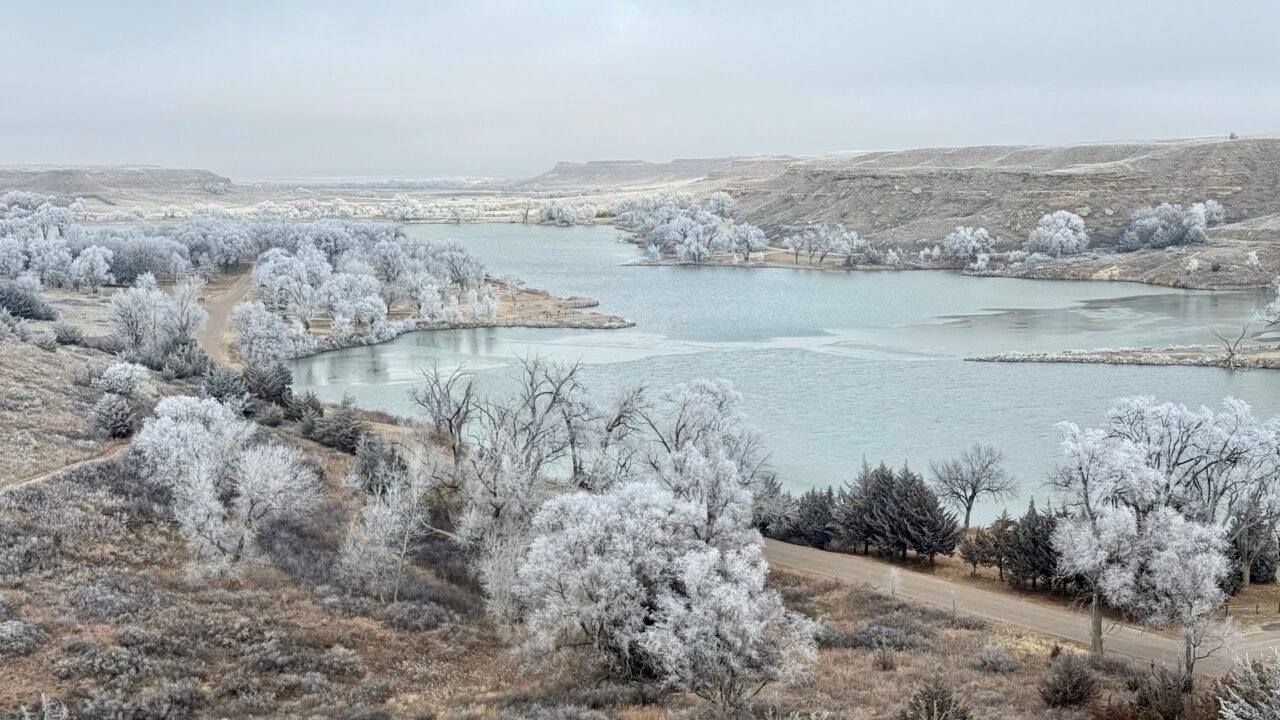
Road Trippin’ into 2025!
Happy 2025! After a fun New Year’s Eve in Nashville — raving to Sofia Kourtesis at Night We Met — I decided to kick off the year with something equally energizing: exploring, hiking, and high-pointing. If you’re going to start a new year, why not begin on a literal and figurative high note? Historic Lake Scott made for the perfect start to 2025.
So far, I’ve visited 32 of the 50 Best State Parks in the U.S. (as ranked by The Discoverer). I’ve also stood atop 32 of the 51 State High Points — yes, including Washington, D.C., because why not? That leaves some serious ground to cover.
Below, the red tree markers represent the state parks I still need to visit. The yellow mountain markers show the high points I have yet to summit. For simplicity’s sake, I left off Alaska and Hawaii — but rest assured, both their state parks and summits are firmly on the list.
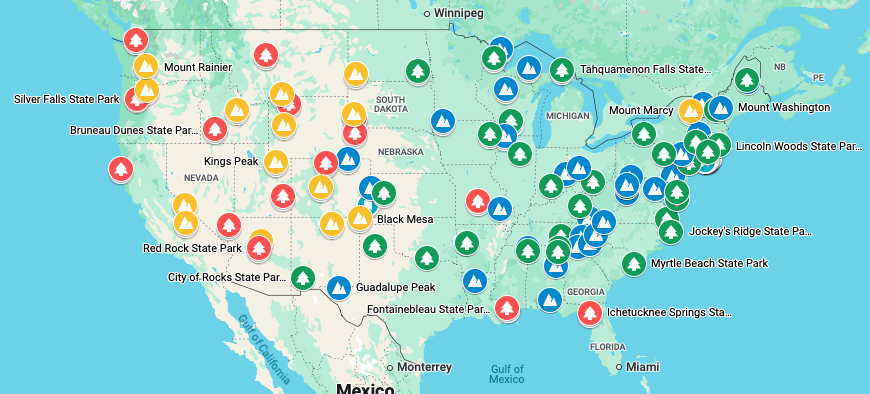
Photo: My Adventure Map – High Points and The Best State Parks
My plan? Start in Nashville. Cross the Plains. Push into Colorado. Drop into New Mexico. Then roll through the Southwest toward San Diego.
Naturally, no road trip unfolds perfectly. Mine hit a speed bump in the form of Flu A somewhere in the middle of Nebraska. I’ll spare you the gritty details for now — Panorama Point will get its own moment.
For this post, we’re focusing on the first major stop of 2025: Historic Lake Scott State Park in western Kansas.
An Unexpected Oasis at Historic Lake Scott
Nestled about 35 miles south of Interstate 70 and just 15 miles north of Scott City, Historic Lake Scott State Park spans roughly 1,000 acres of rugged canyon terrain, rolling prairie, natural springs, and striking Kansas bluffs.
And honestly? It doesn’t look like what most people picture when they think of Kansas.
At the center lies spring-fed Lake Scott, framed by limestone cliffs and towering cottonwoods. The elevation changes — rare for a Kansas state park — give the landscape unexpected depth and character. In fact, the terrain feels more canyon country than open Plains.
When I arrived, it was 18 degrees. Frost clung to the trees. The lake sat still and silent.
Meanwhile, I had the place nearly to myself.
Sure, Lake Scott State Park is known for camping, fishing, and summer lake days. However, in winter it transforms into something entirely different — quiet, stark, and almost cinematic.
It felt like I had stumbled into a hidden oasis in the middle of western Kansas.
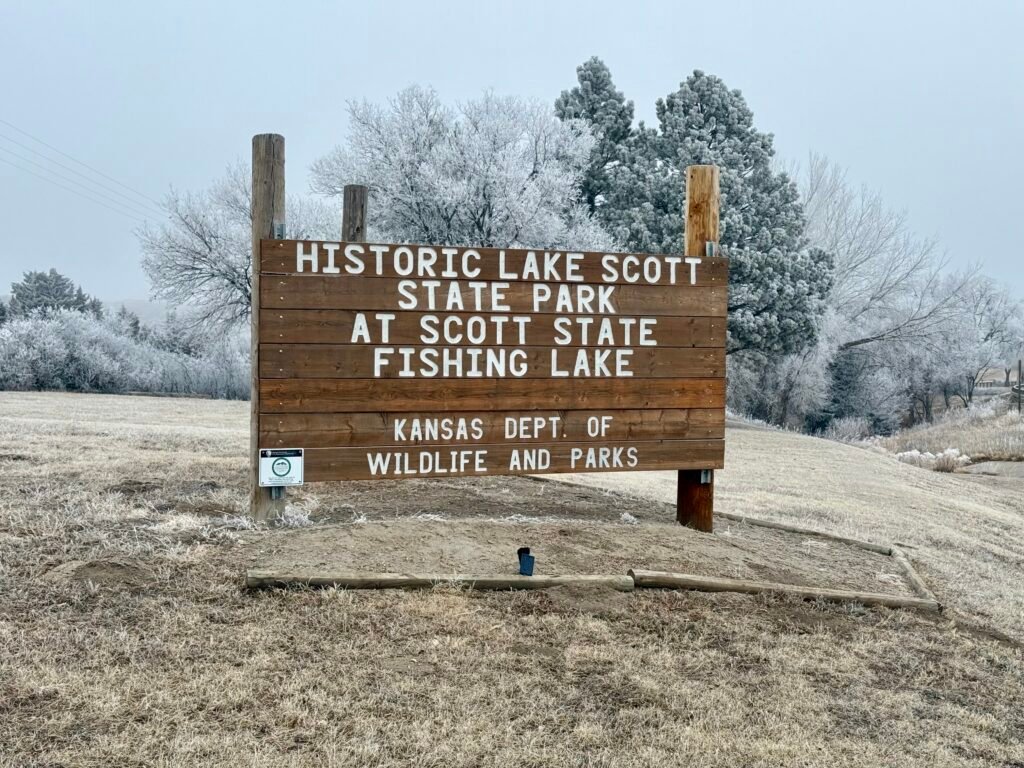
Photo: The Southern Entrance to Historic Lake Scott State Park
A $5 Pass and Watchful Eyes
As I drove south on Kansas 95, my first glimpse of the lake forced an impromptu pull-over. Some views demand documentation.
Next, I stopped at the Park Office to grab my $5 daily permit. Yes, there’s a self-pay station. Still, I prefer stepping inside when possible. Rangers know things. They offer context. Occasionally, they even have postcards.
No postcards this time. Helpful ranger? Absolutely.
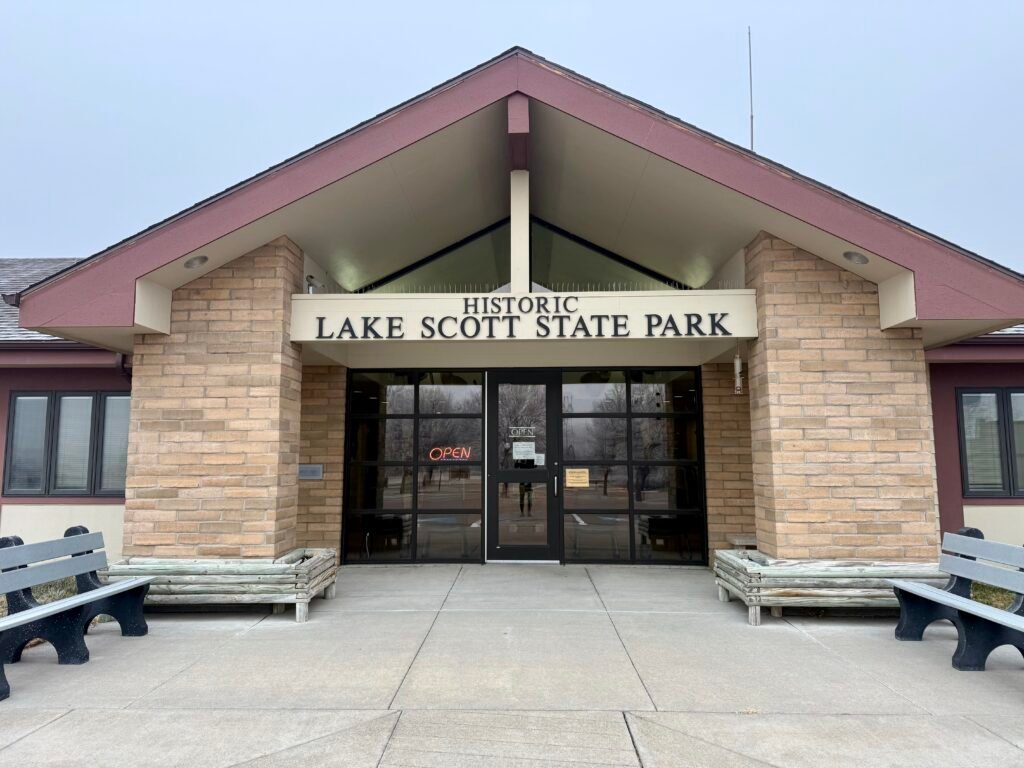
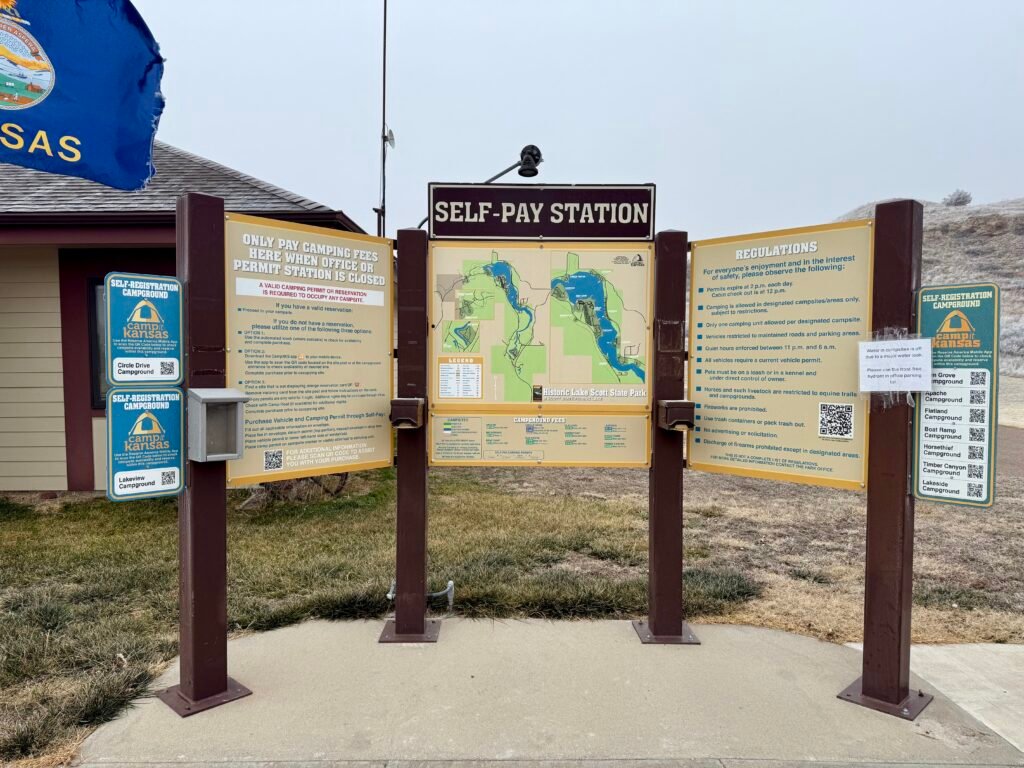
Photos: Park Office | Self-Pay Station
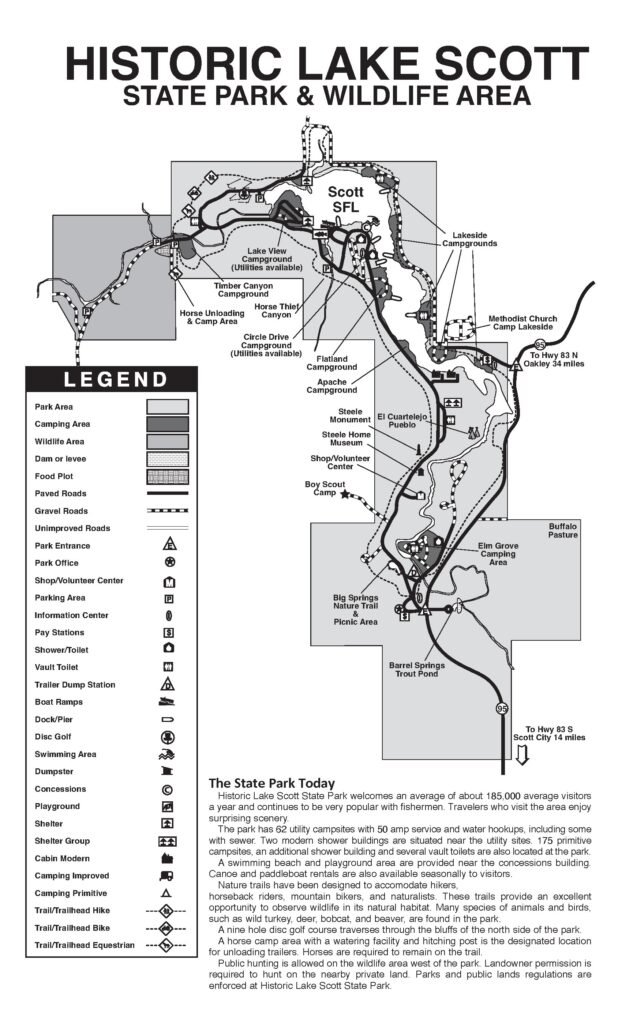
Photo: Park Map
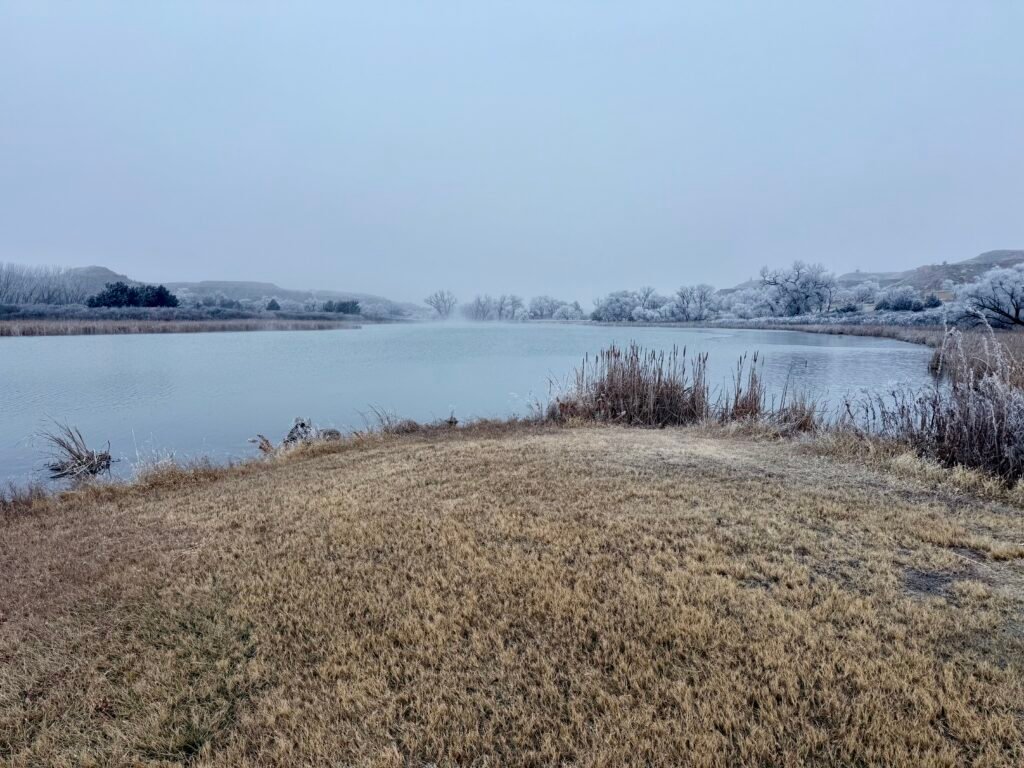
Photo: Lake Scott
Then something caught my eye.
High above the office stood two striking Native American statues positioned along the ridge — watchful, intentional, symbolic. I immediately knew I’d be hiking up there.
This land once belonged to the Plains Apache. Later, it became significant to the Northern Cheyenne. Tools and petroglyphs discovered in the area speak to the long history of this landscape.
Suddenly, those statues felt less decorative and more meaningful — a tribute to the people who walked these bluffs long before modern hiking boots showed up.
Let’s Find Those Indians!
One of the best parts of Historic Lake Scott State Park is the network of hiking trails that wind through its surprisingly diverse terrain. Prairie grasslands. Natural springs. Rugged Kansas bluffs. It’s a landscape that feels layered and alive.
The park boasts several miles of trails catering to hikers, horseback riders, mountain bikers, and general wanderers like me. That said — quick heads-up — trail names can vary depending on your source, and the signage isn’t exactly stellar.
However, don’t panic.
You won’t get lost (probably).
You just might find yourself pausing at a fork in the trail thinking, “Well… this looks promising.” Especially if you venture onto the more rugged West Bluff Trail, where the climbs feel real and the directional confidence feels… flexible.
Big Springs
I kicked off my first hike from the Big Springs Picnic Area, one of the most scenic starting points in the park. From there, two short but sweet trails branch out: the 0.4-mile Sunflower Trail and the 0.4-mile Big Springs Nature Trail.
Fun fact (perhaps): the Sunflower Trail is actually part of the Big Springs Nature Trail. So technically, you’re hiking one trail wearing two name tags.
From Big Springs, I immediately spotted the iconic Indian on horseback perched high on the bluff — a silhouette against the sky and a preview of what was ahead. The statue stood watch over Lake Scott, and I knew I wasn’t leaving without climbing up there.
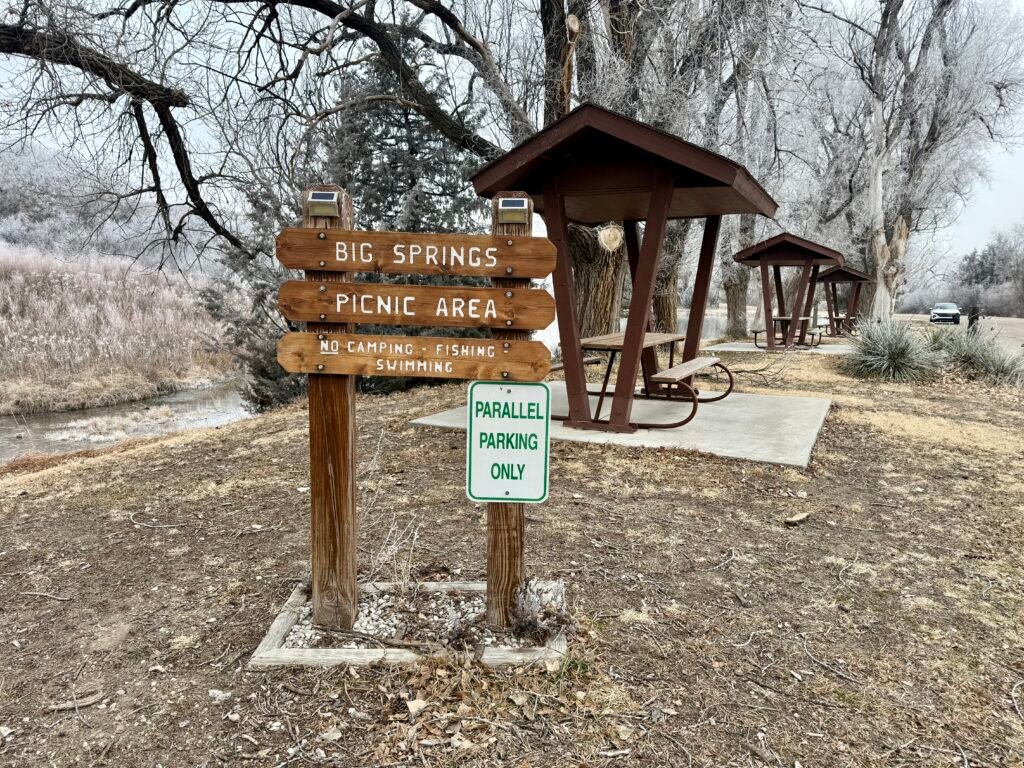
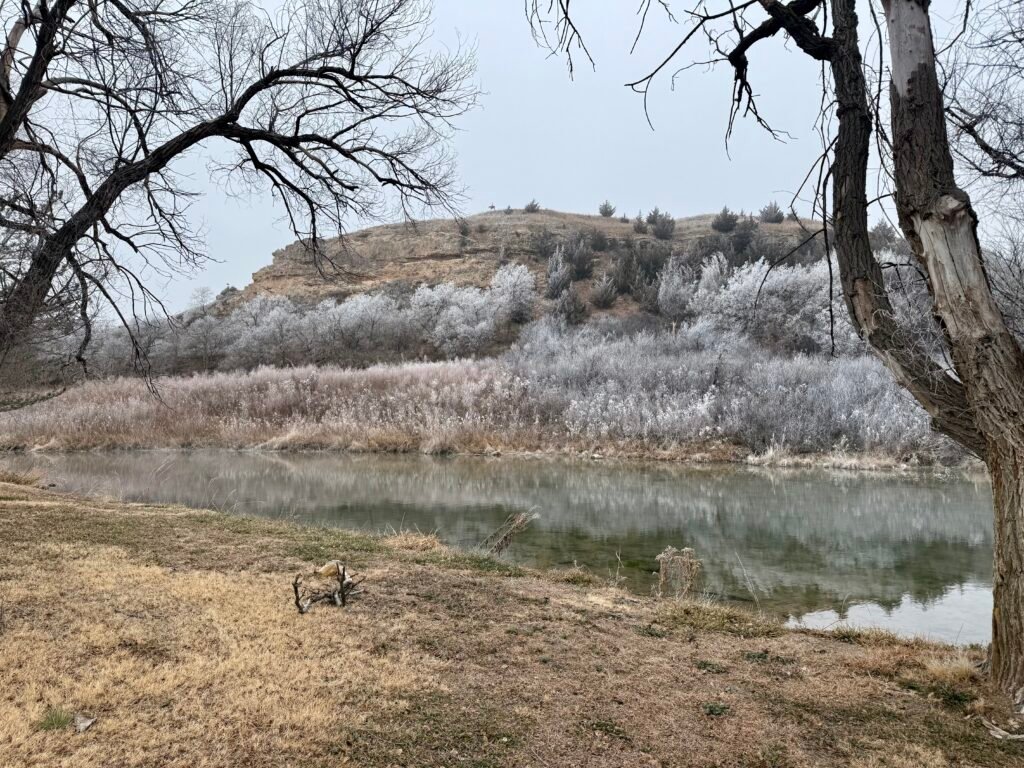
Photos: Big Springs Picnic Area |
Big Springs (Indian on the Bluff visible in center)
There’s a bridge near the picnic area that I crossed at first, mostly out of instinct. But then I doubled back. Something about the trail to the left felt more adventurous — slightly less worn, slightly more “let’s see where this goes.”
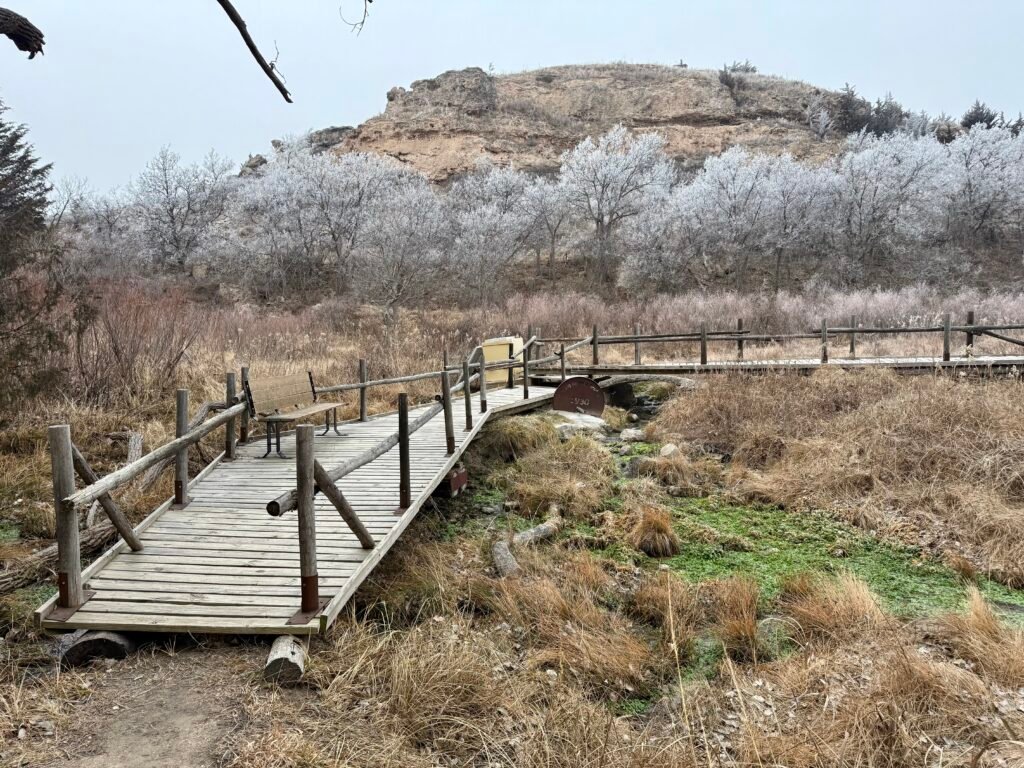
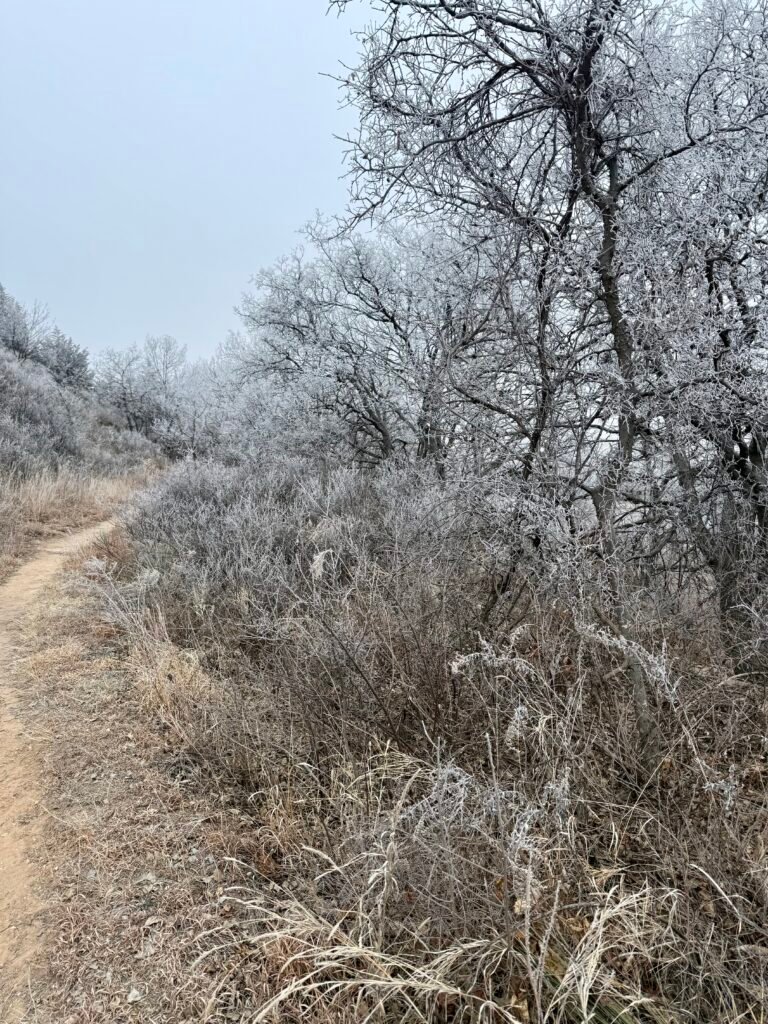
Photos: The Bridge at Big Springs |
The Big Springs Nature/Sunflower Trail
Climbing Above Big Springs
That trail gradually led upward toward the bluff.
The path wasn’t exactly manicured. Frost still lingered in patches. So I took it slow. No reason to rush when the air is crisp, the springs are bubbling below, and you’re climbing into one of the most unexpected views in a Kansas state park.
At the top, the reward came quickly.
Sweeping vistas. Rolling prairie meeting canyon walls. Lake Scott State Park unfolding below in layers of limestone, cottonwoods, and winter stillness.
And yes — I finally reached the two elusive Indian statues.
Up close, they feel intentional. Symbolic. A nod to the Plains Apache and Northern Cheyenne who once lived on this land long before it became a state park destination.
After lingering for a bit — taking in the view, snapping photos, pretending I hadn’t questioned my life choices halfway up — I looped back down along the far side of the spring.
Honestly? It felt like more than 0.4 miles.
But who’s counting when you’re chasing views above Lake Scott Kansas?
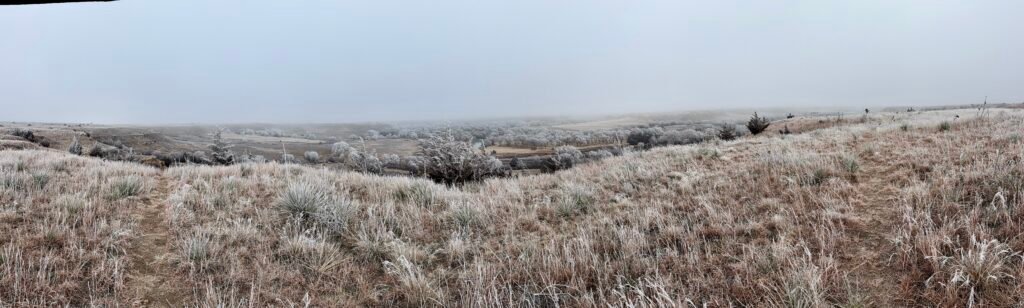
Photo: View from the Bluff
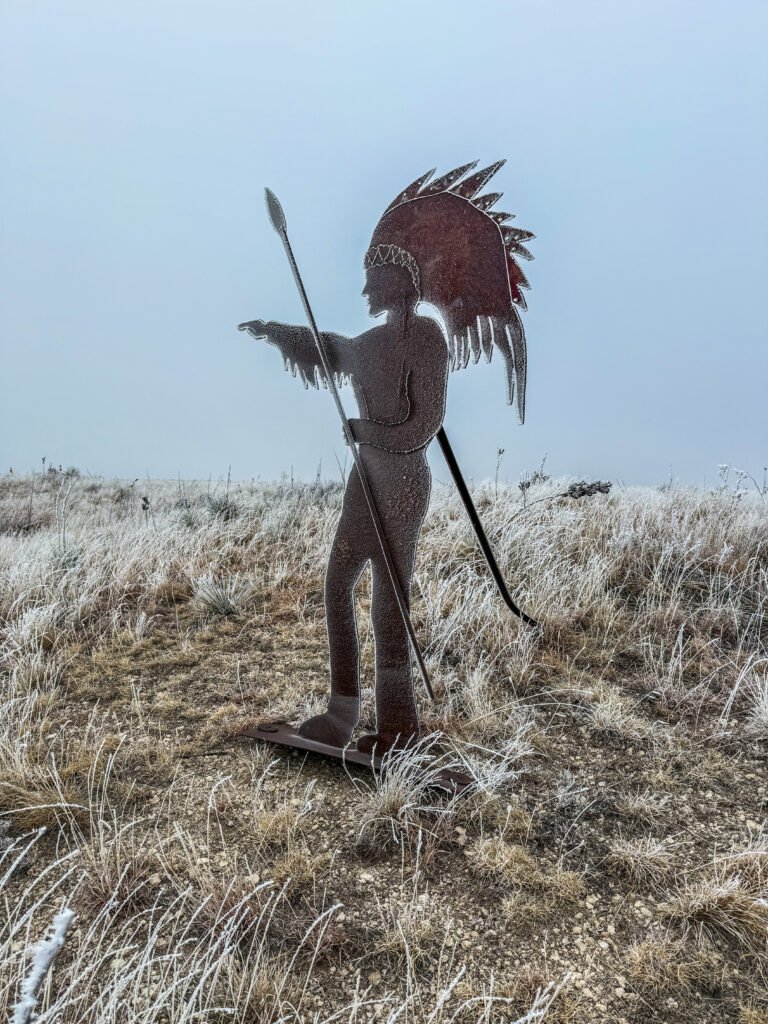
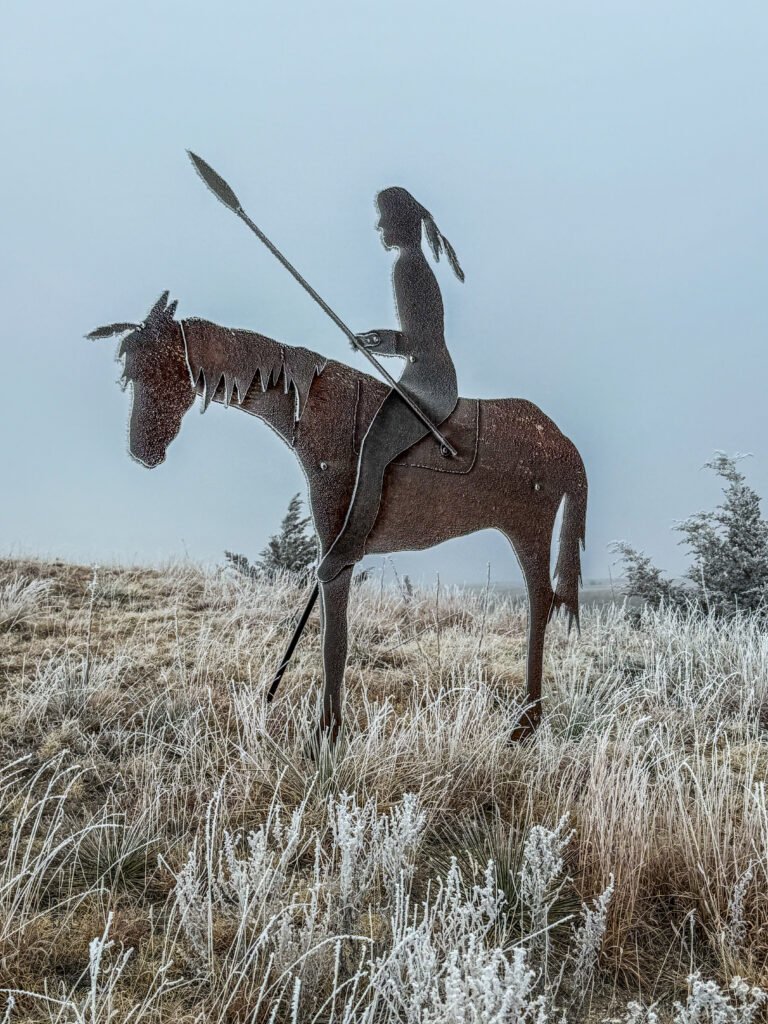
Photos: The Indians on the Bluff
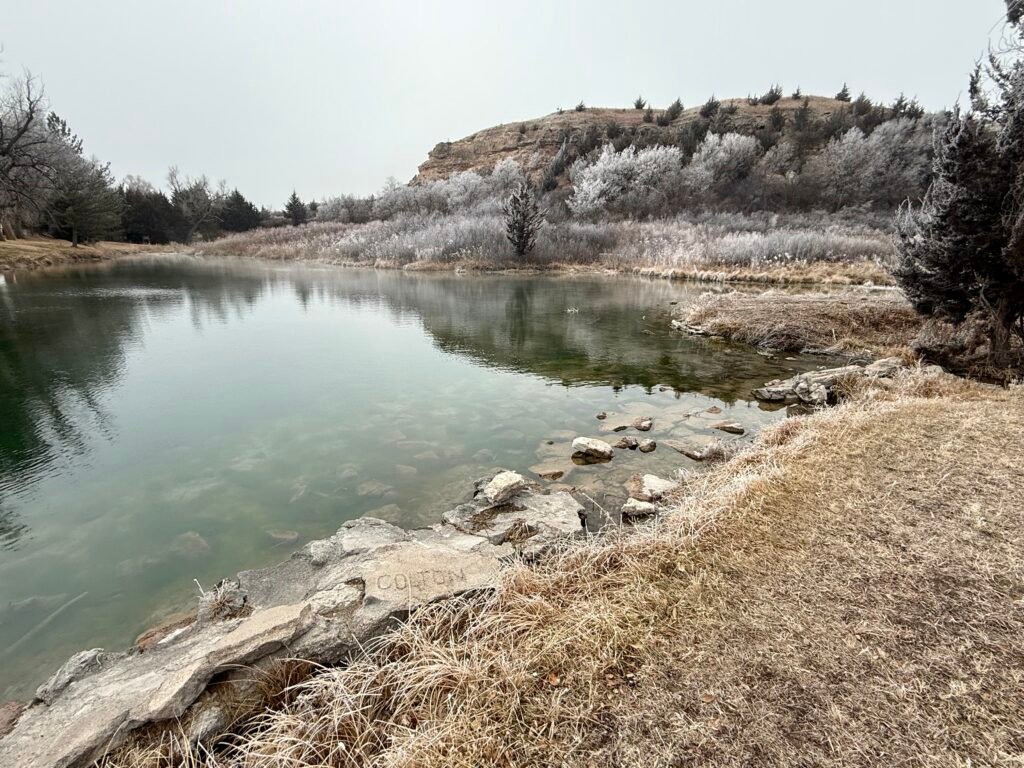
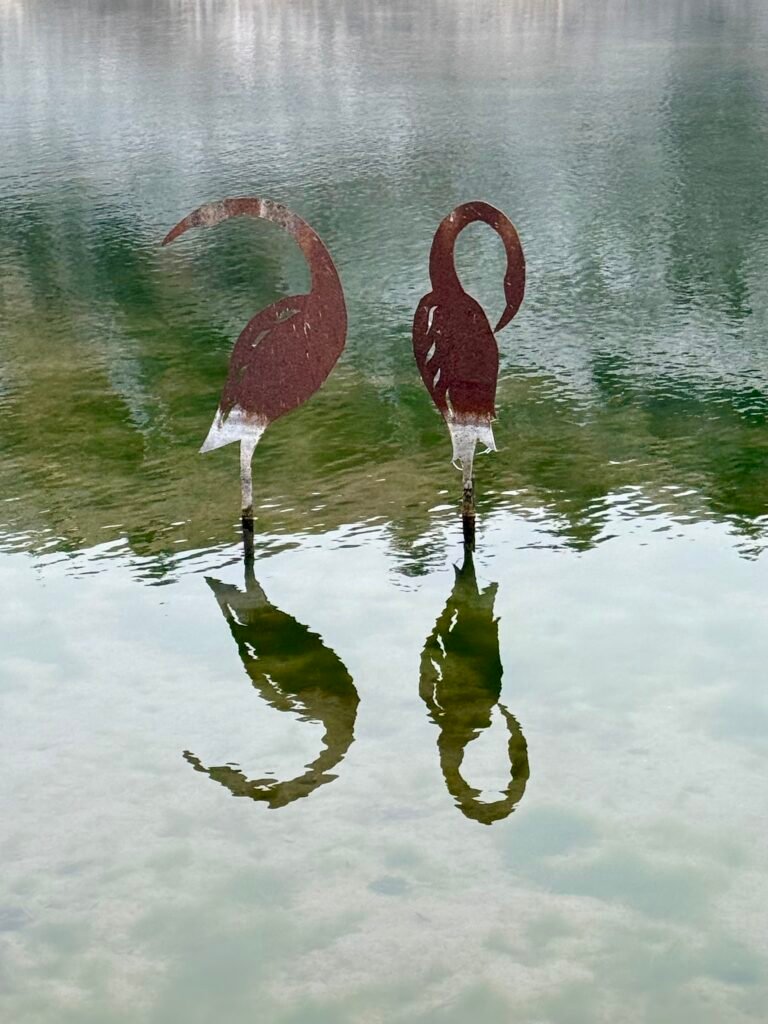
Photos: Big Springs | Bird Statues in the Spring
Kansas History for 200, Ken
In 1888, Herbert Steele claimed land in Scott County. Five years later, he married Eliza Landon, and together they began life in a dugout home carved into the earth.
Eventually, they built a four-room sandstone house using stone pulled directly from nearby bluffs. That kind of DIY energy feels almost heroic now.
Their preserved home — the Steele Home Museum — still stands inside Historic Lake Scott State Park. In 1928, the Kansas Forestry, Fish and Game Commission acquired 1,280 acres, fulfilling the Steeles’ dream of turning the land into a public park.
I stopped by hoping to explore the interior. Unfortunately, tours require advance arrangements.
Minor disappointment. Major trail miles still waiting.
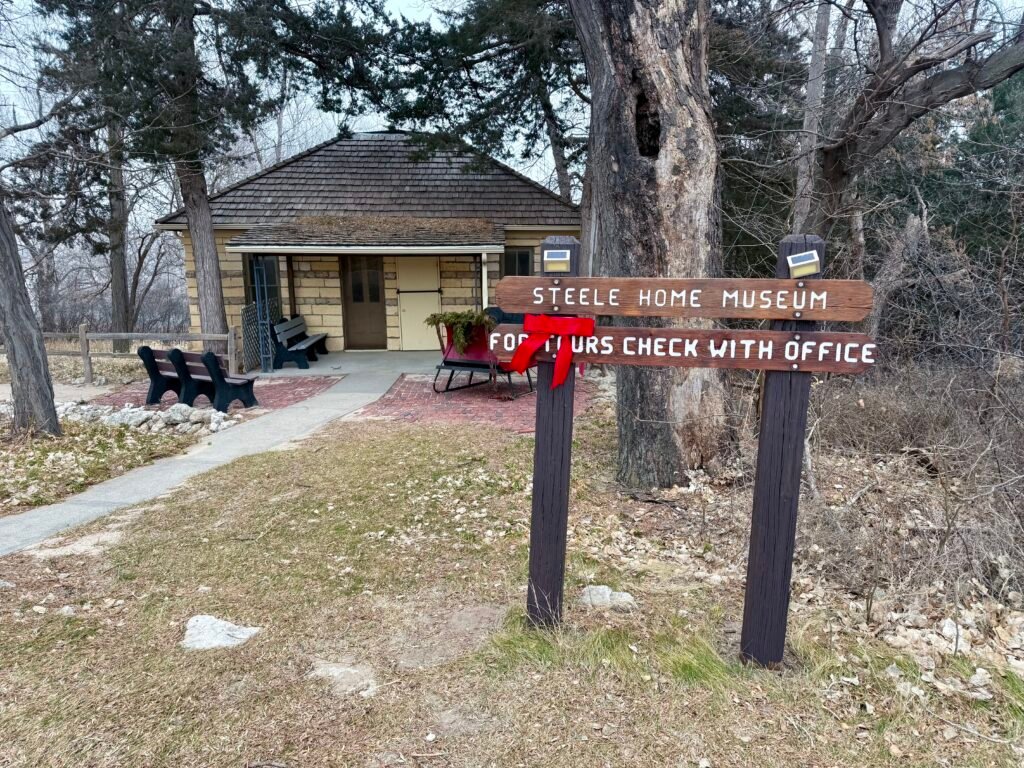
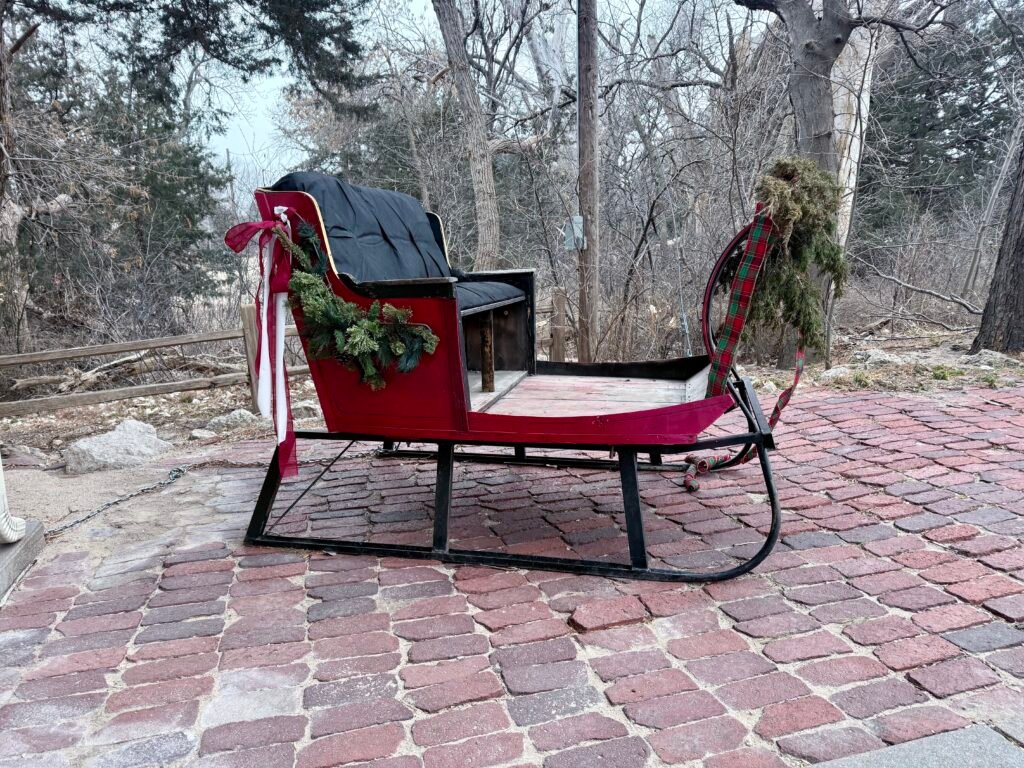
Photos: Steele Home Museum | I guess Santa left his sleigh
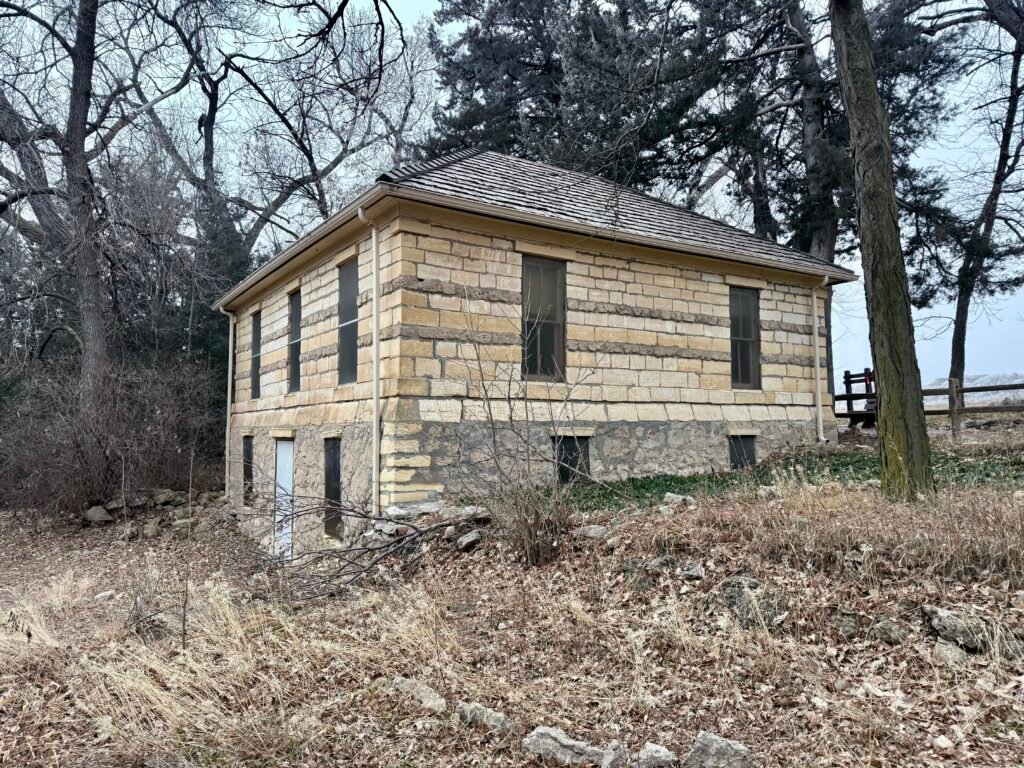
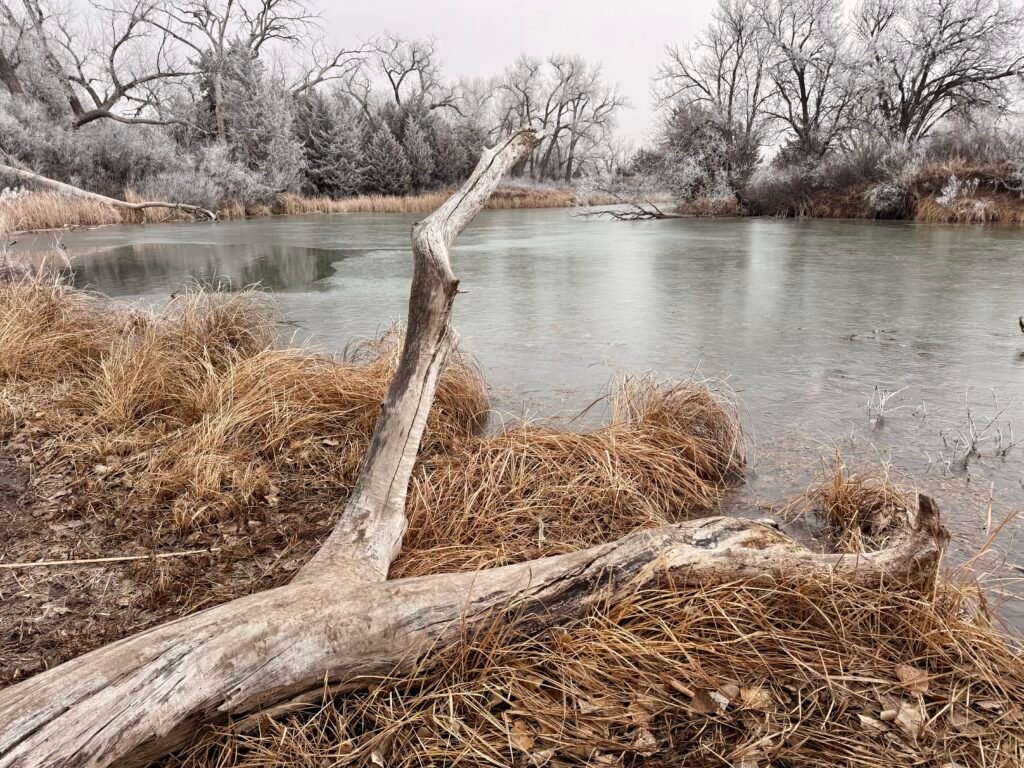
Photos: The back of the Steele Home Museum | Lake Scott behind the Museum
How Many Bluffs Does It Take to Question Your Life Choices?
Across the road from the Steele Home Museum, a trailhead beckoned.
So naturally, I parked, glanced around at the nearly deserted Historic Lake Scott State Park, and headed up.
And by “up,” I mean a steep climb where the trail immediately splits into a choose-your-own-adventure scenario of, “Which way won’t make me regret my life choices?”
Depending on who you ask — or which map you’re holding — this is either the Lake Scott West Loop or the West Bluff Trail. Either way, it’s roughly 2.9 miles of loops, climbs, and out-and-back segments that deliver some of the best elevation gain in western Kansas.
Which, admittedly, is saying something.
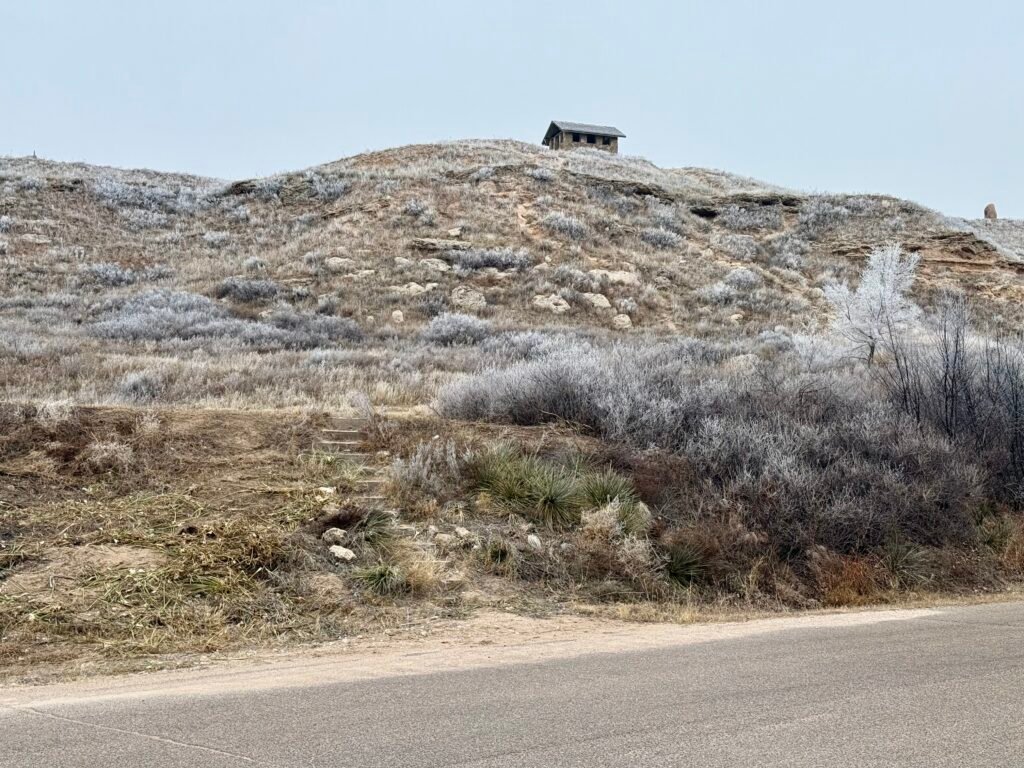
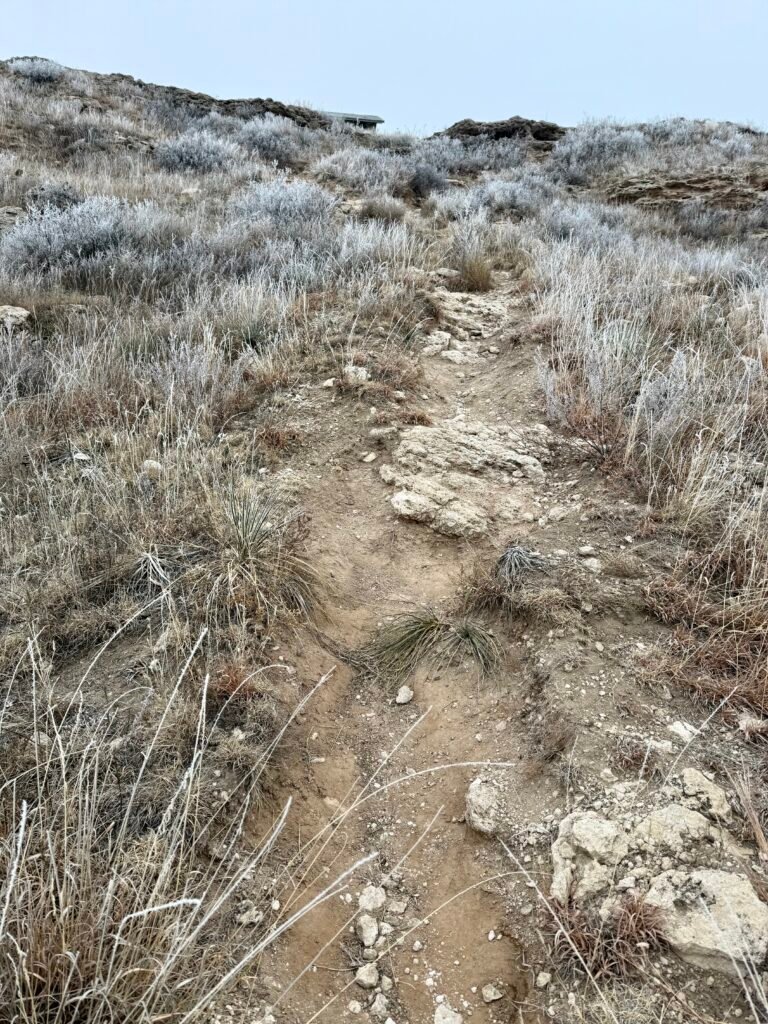
Photos: The Trailhead and the Mysterious Building |
The Trail up to the Bluff
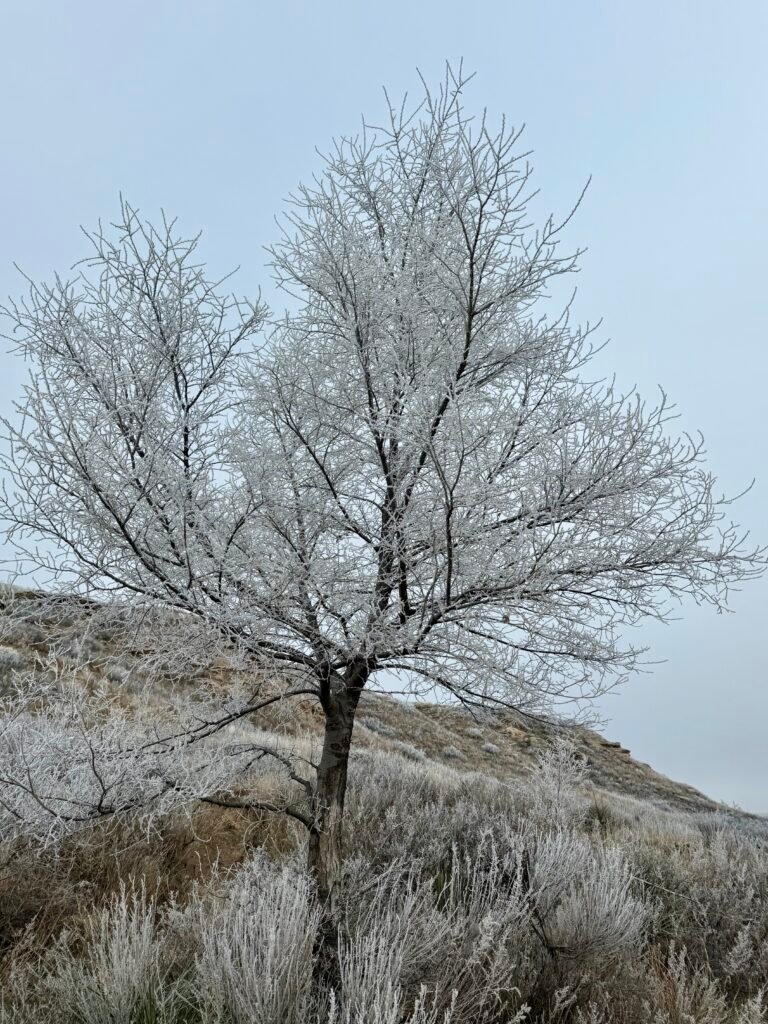
Photo: Frost-covered tree along the trail
The climb wastes no time. The frost underfoot made each step deliberate. Meanwhile, the silence of a winter morning added to the drama.
Eventually, I reached the top.
At the summit sits a mysterious stone building — purpose unknown — along with the Steele Monument, which offers sweeping, jaw-dropping views across Lake Scott State Park. From up there, the bluffs roll outward in layers, and the lake glints below like a reward for effort.
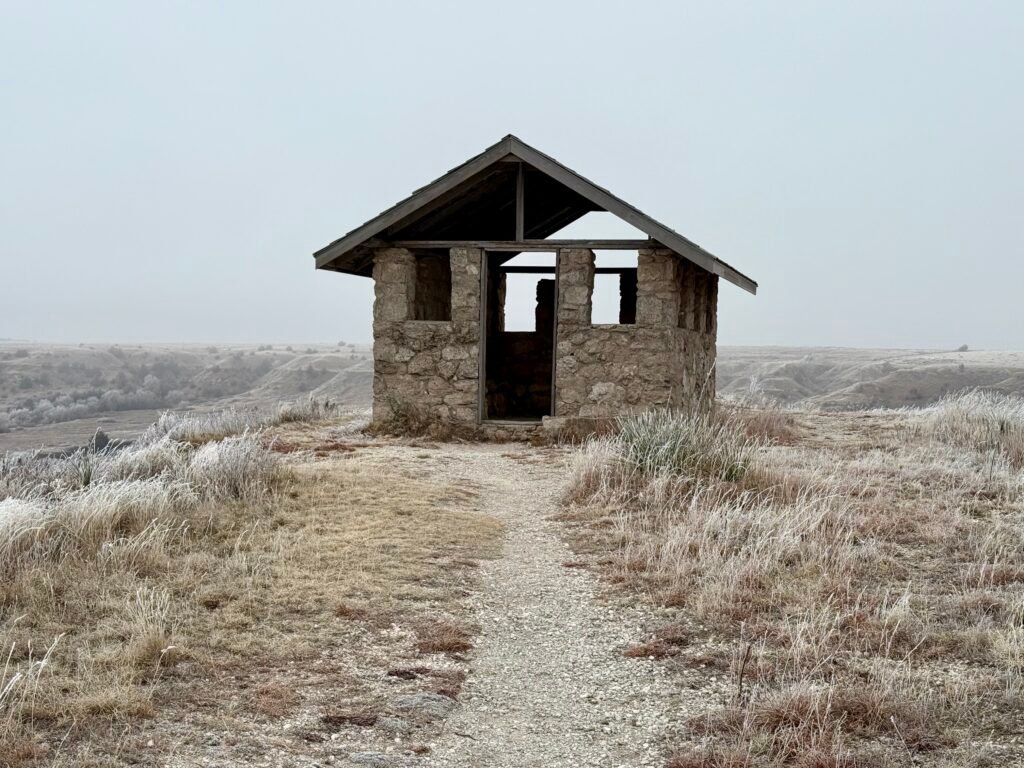
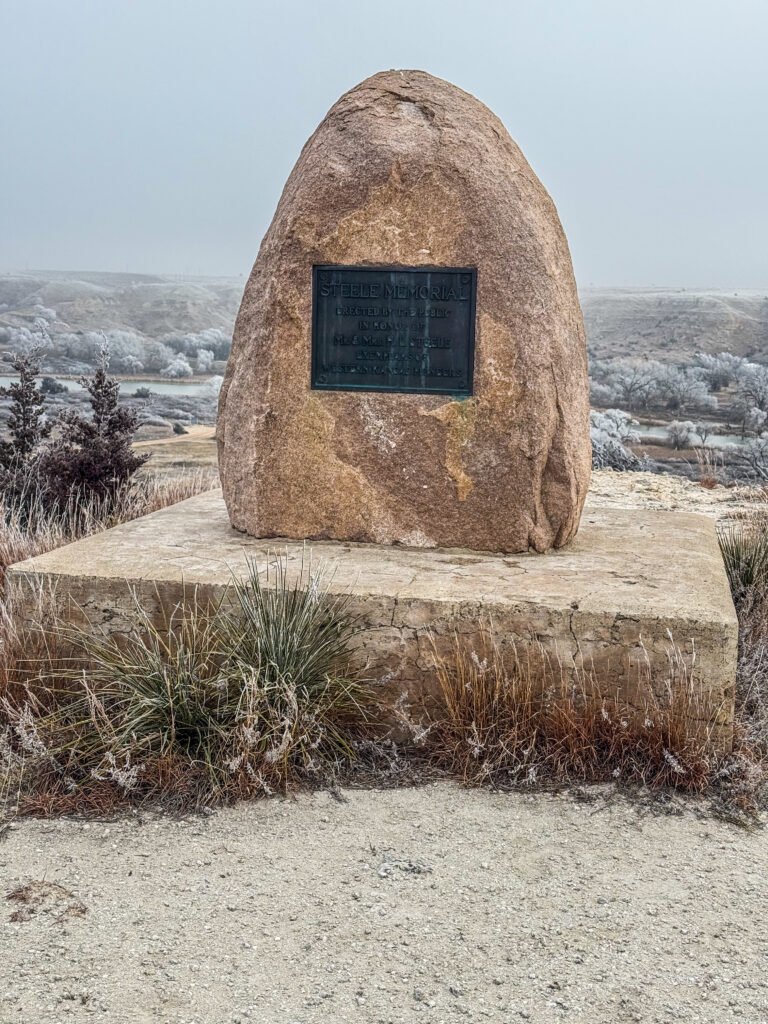
Photos: The Mysterious Building | The Steele Monument
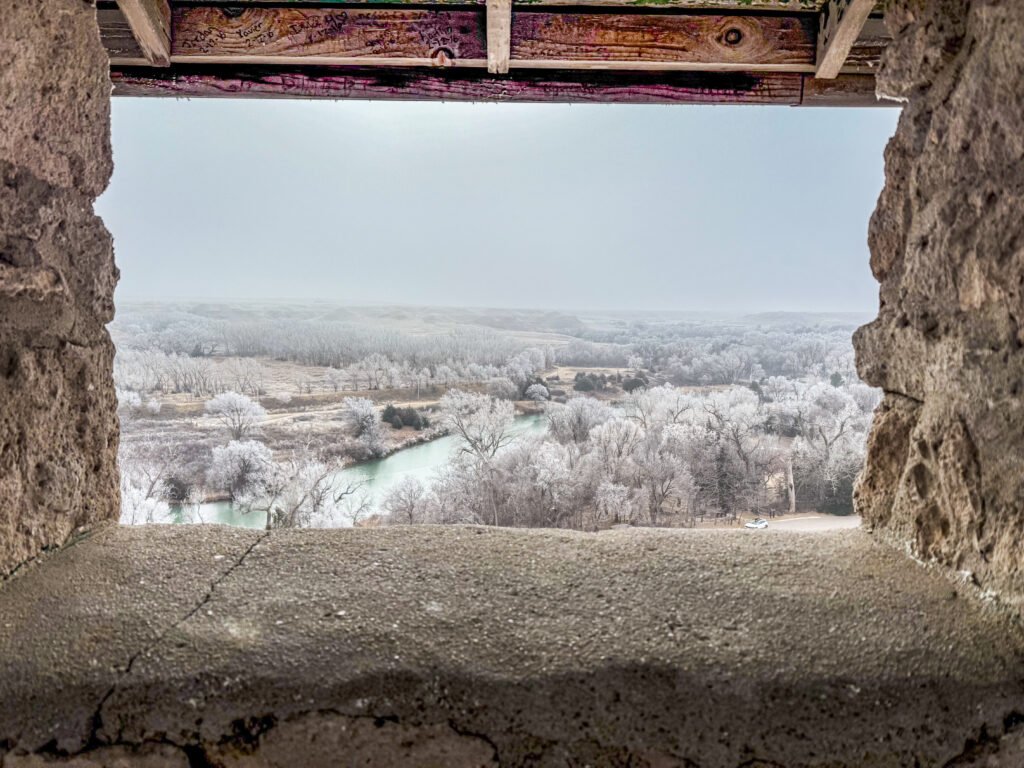
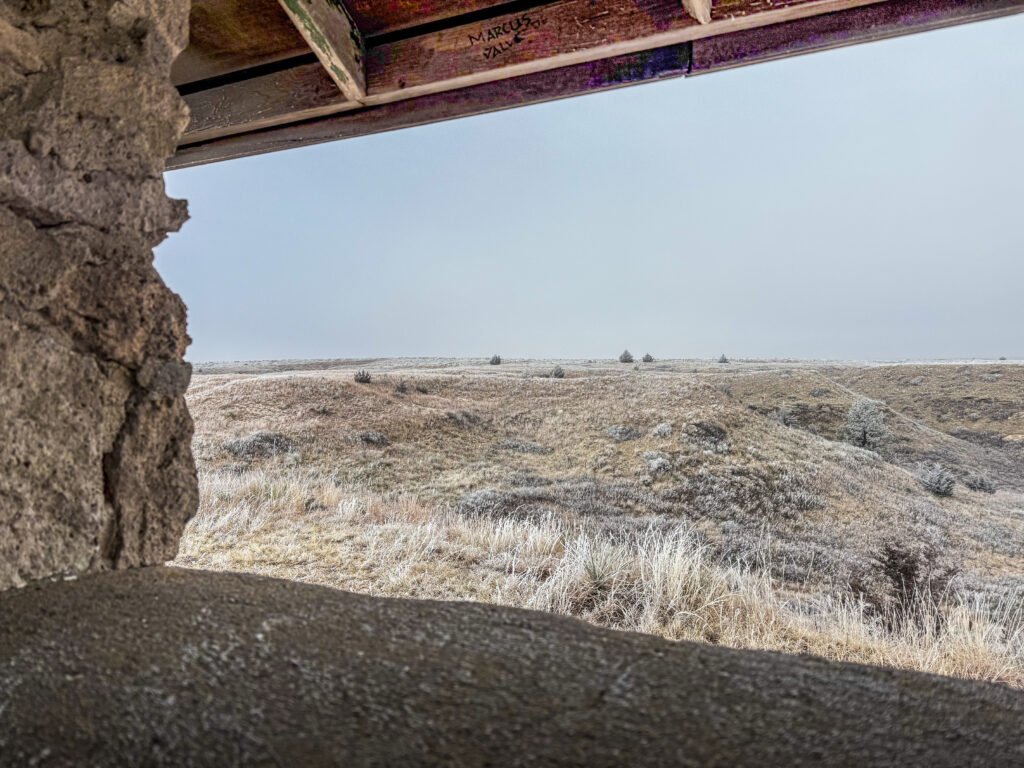
Photos: Views from the Building
Naturally, that wasn’t enough.
From the monument, I scrambled down — only to climb up again to the next bluff. Because why stop at one steep ascent when you can test your calves twice?
Buzzards Point and the Flag Bluff
Back on the valley floor, the trail flattens just enough to lull you into a false sense of confidence. You start thinking, “Okay. That wasn’t so bad.”
Then you look up.
Another bluff rises ahead — this one crowned with a dramatic bench known as Buzzards Point.
So yes, I climbed that too.
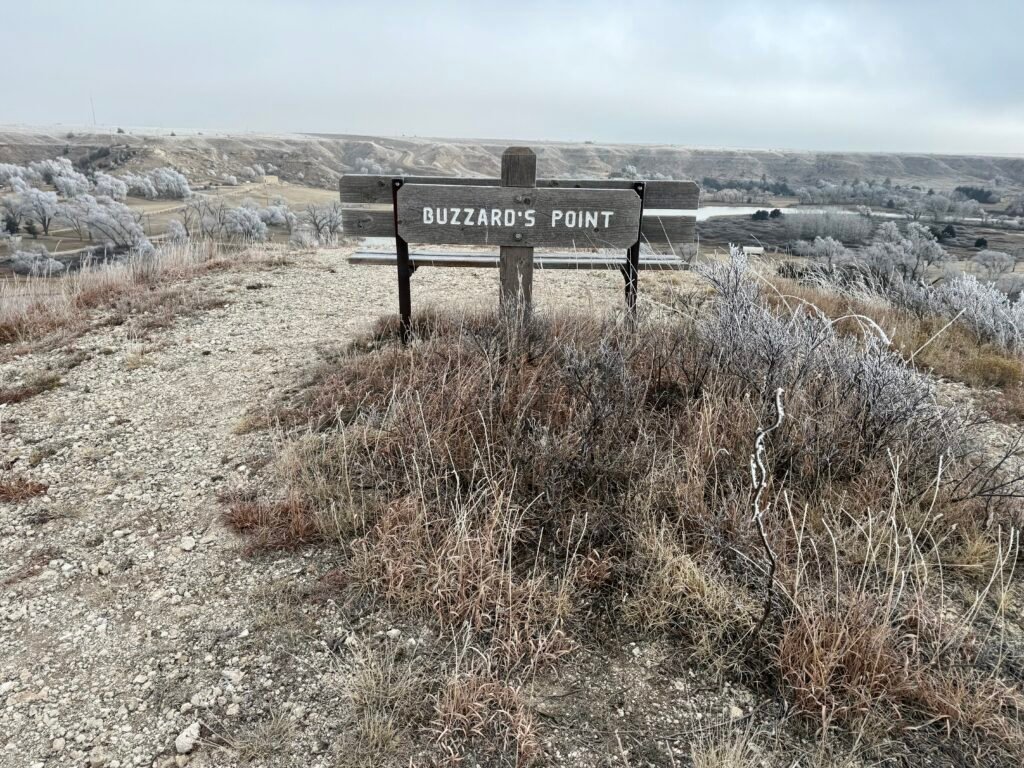
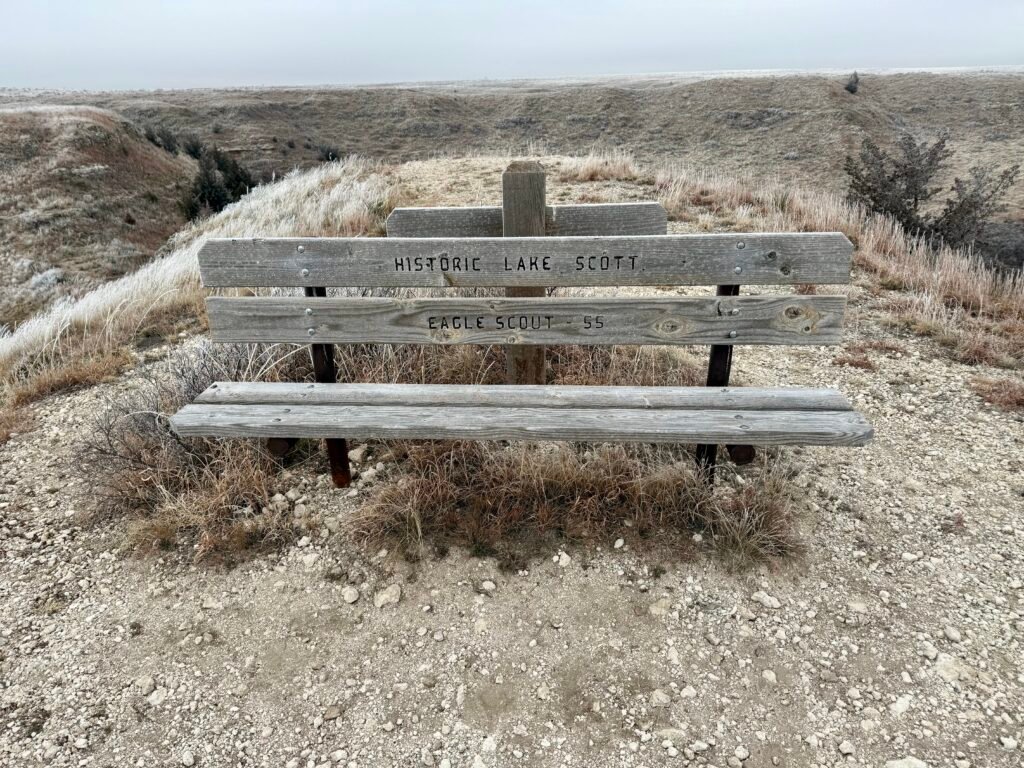
Photos: Atop Buzzard’s Point
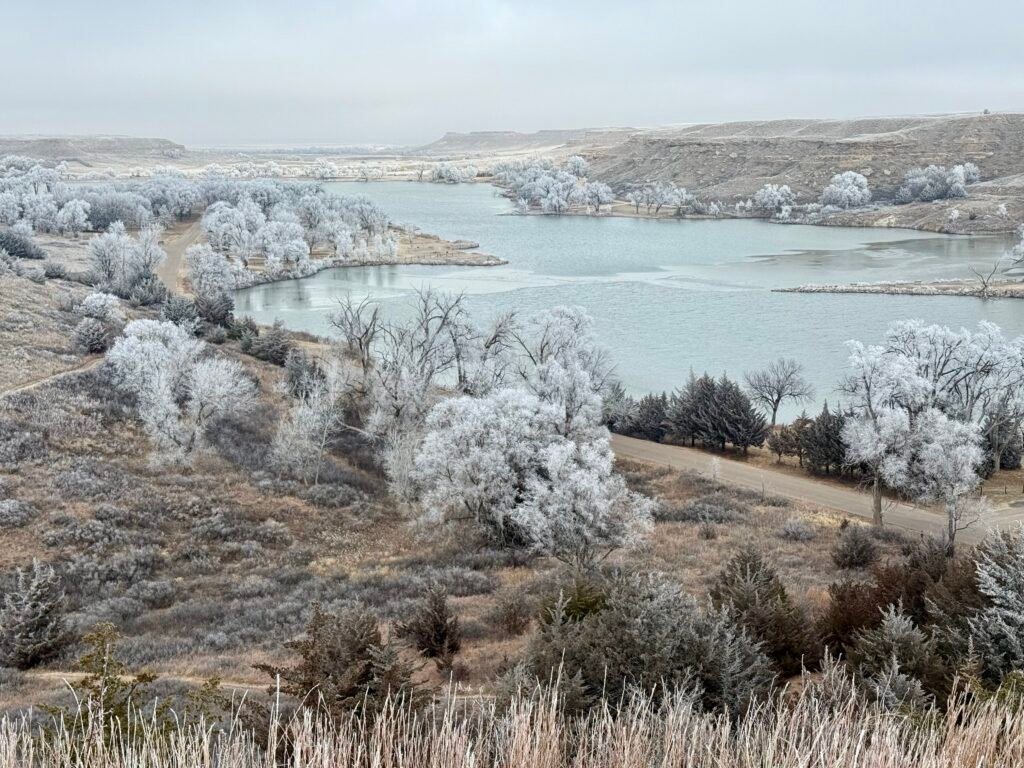
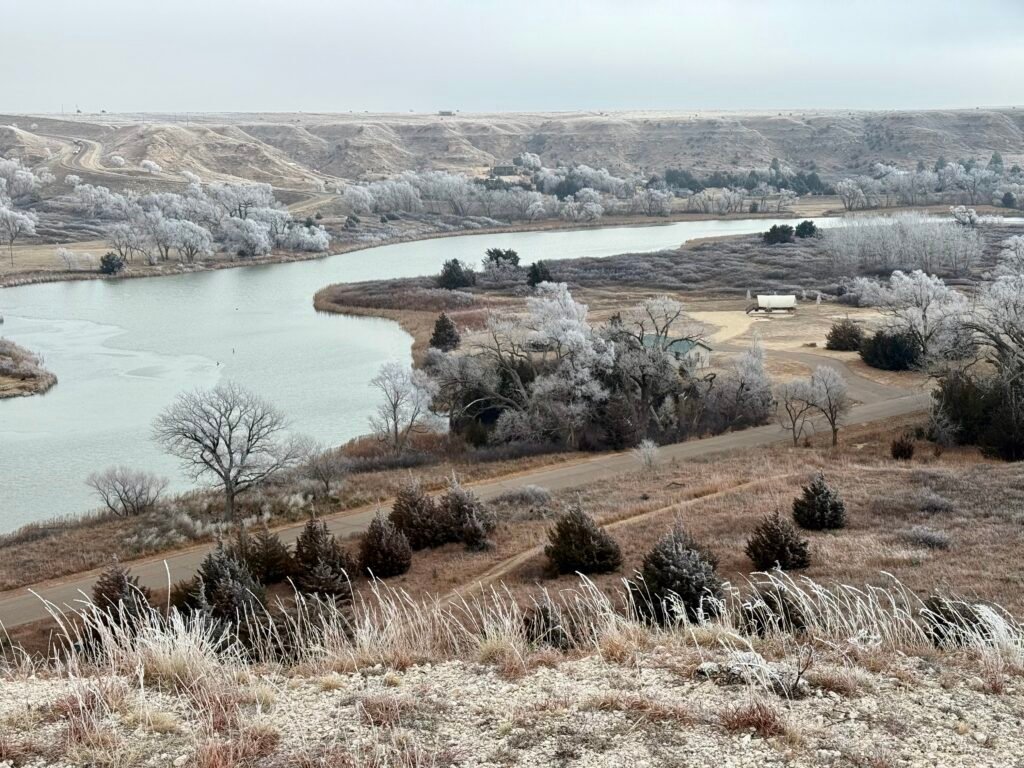
Photos: The Views of Lake Scott from Buzzard’s Point
From Buzzards Point, the views open up even more. You can see the lake stretching below, the limestone formations carving through the prairie, and — if you squint — yet another bluff in the distance topped with an American flag.
And of course, I climbed that one as well.
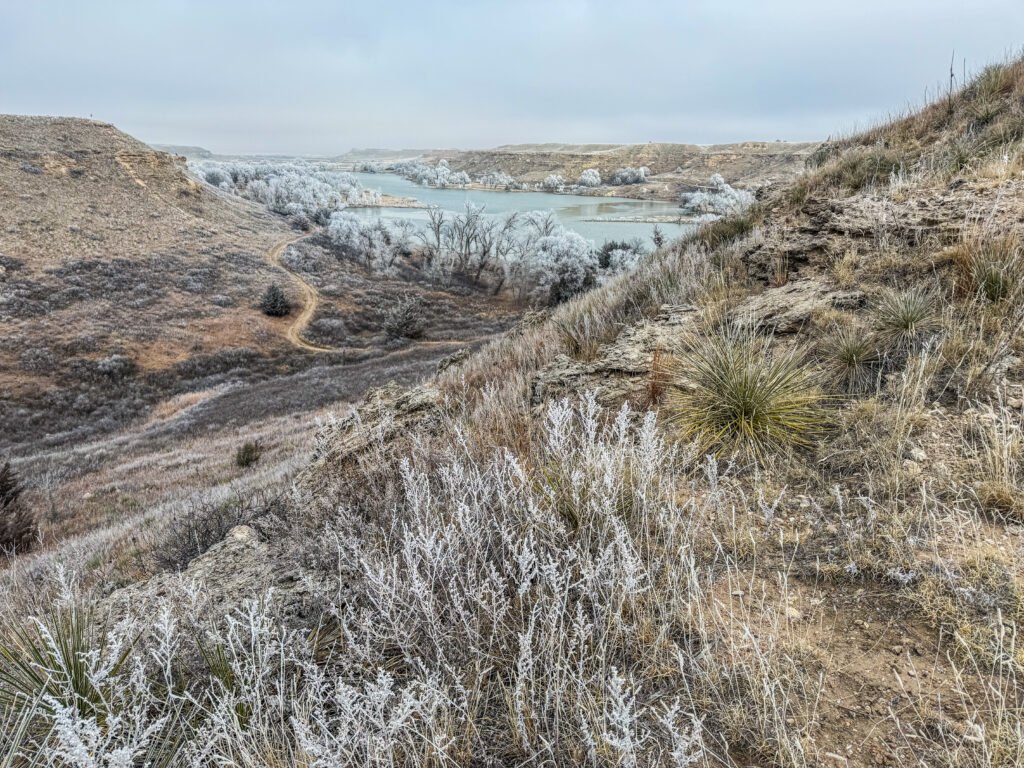
Photo: You can barely see the Flag on the Bluff in the distance – notice the trail to the top!
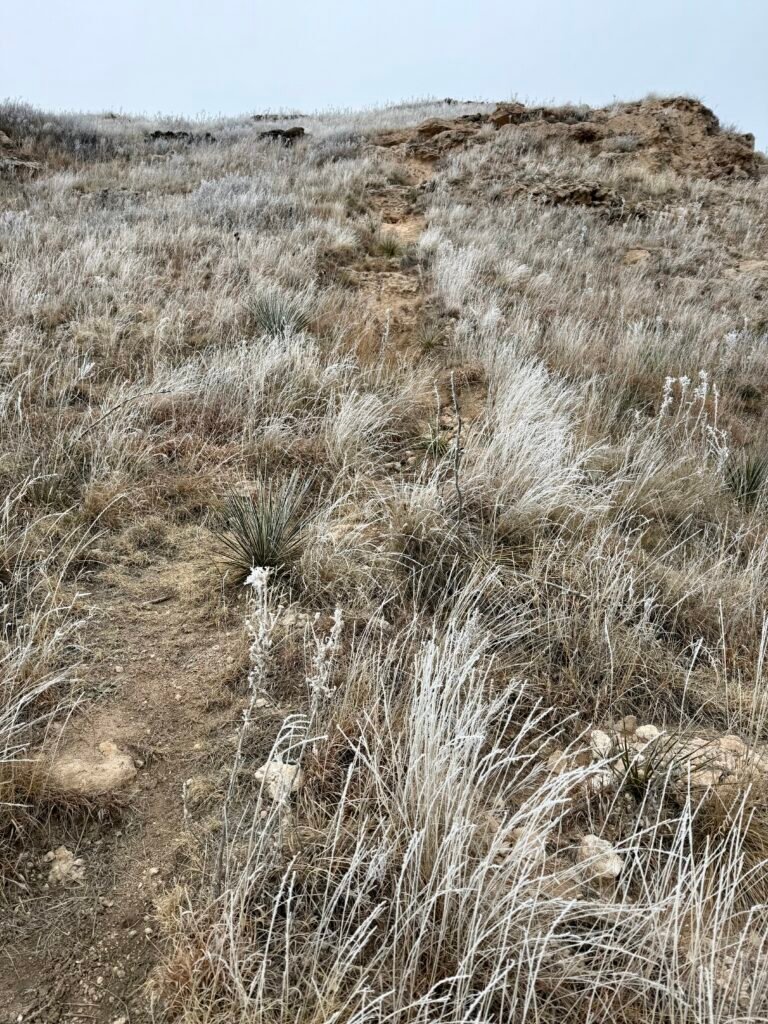
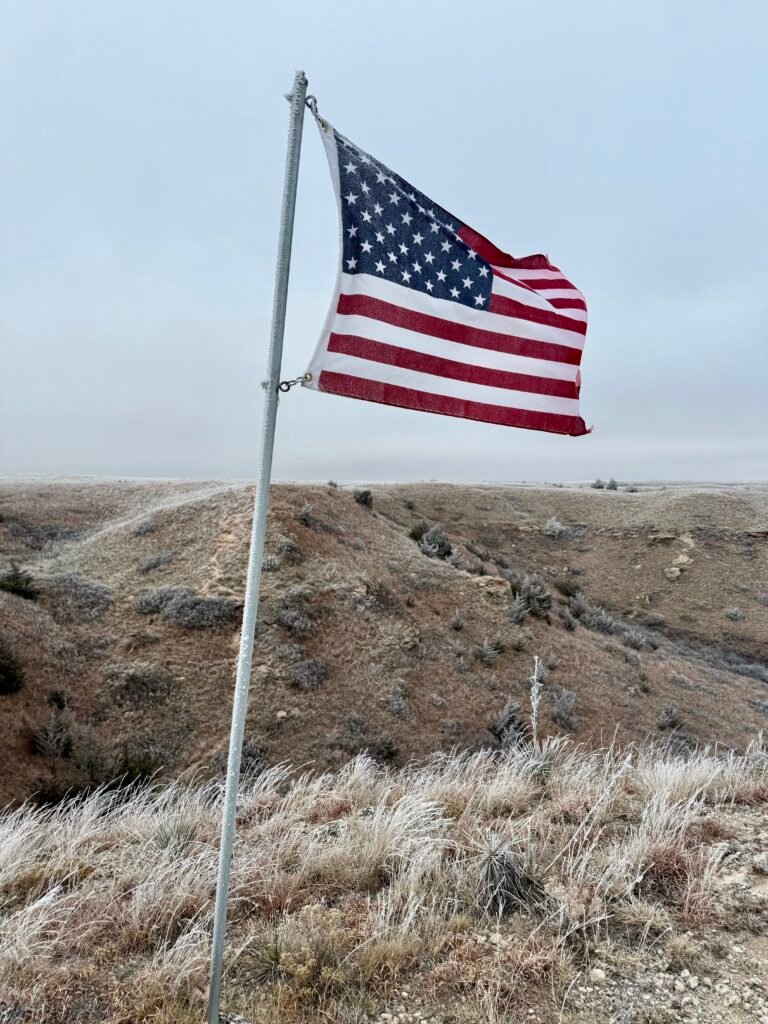
Photos: The trail to the Bluff with the American Flag | Atop the Bluff with Old Glory
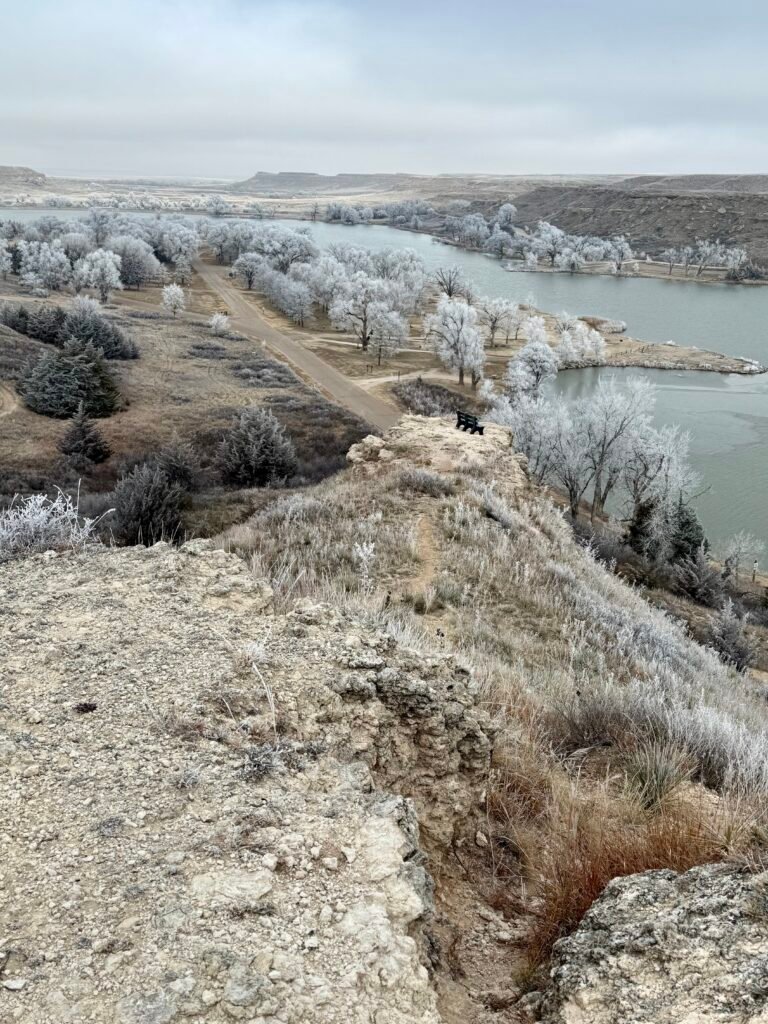
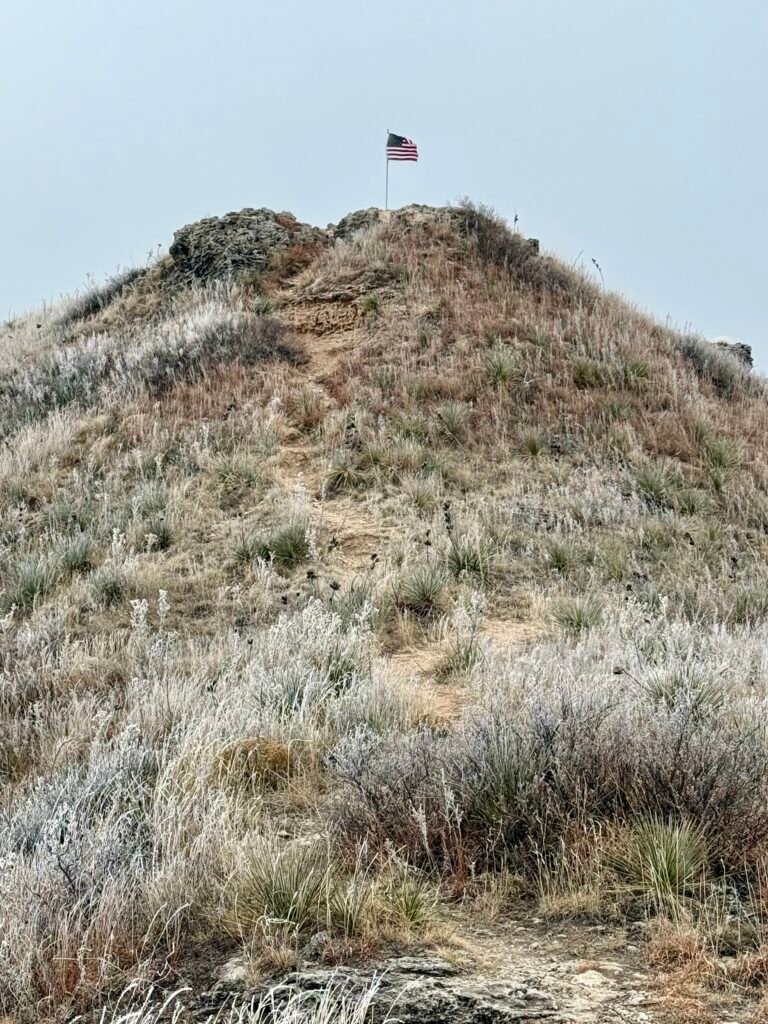
Photos: Looking down at the Point with the Bench | The trail I just came down from the Bluff Top
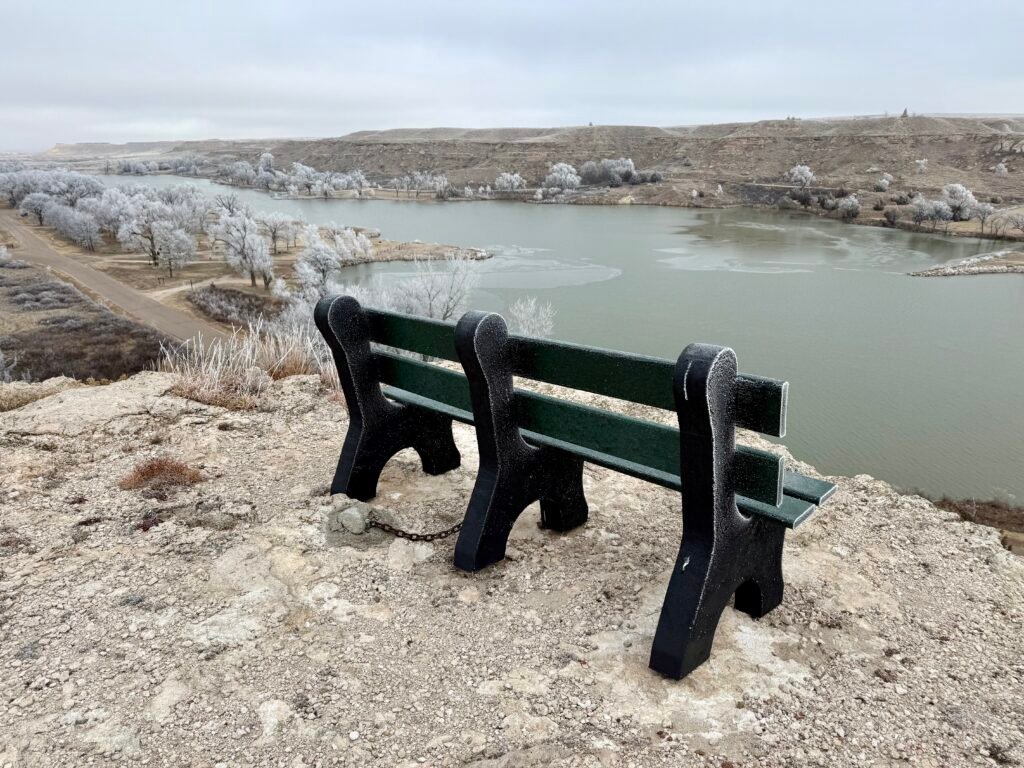
Photo: View from the Point
By this point, I had officially committed to conquering every visible Kansas bluff within eyesight.
Eventually, I reached the end of the ridgeline and spotted a herd of white-tailed deer. They froze. I froze. Then they bolted before I could grab a photo.
Classic.
When AllTrails Ghosts You
At that moment, AllTrails decided to ghost me completely. The app showed a line. The ground showed… something that resembled a path. It may have been a deer trail. It may have been optimism.
Either way, I followed it.
Shortcut or not, it delivered me safely back to the valley floor.
The return hike flattened out and followed the road in sections, occasionally skirting the base of the bluffs I had just climbed. Looking up at them from below, they seemed steeper than they had an hour earlier.
Funny how that works.
Finally, I made it back to my car, scarfed down a snack, and took a moment to appreciate the quiet beauty of Historic Lake Scott State Park.
Because when you’re in a place like this — climbing bluffs, chasing flags, second-guessing trail forks — the exploration doesn’t really end.
It just resets for the next ridge.
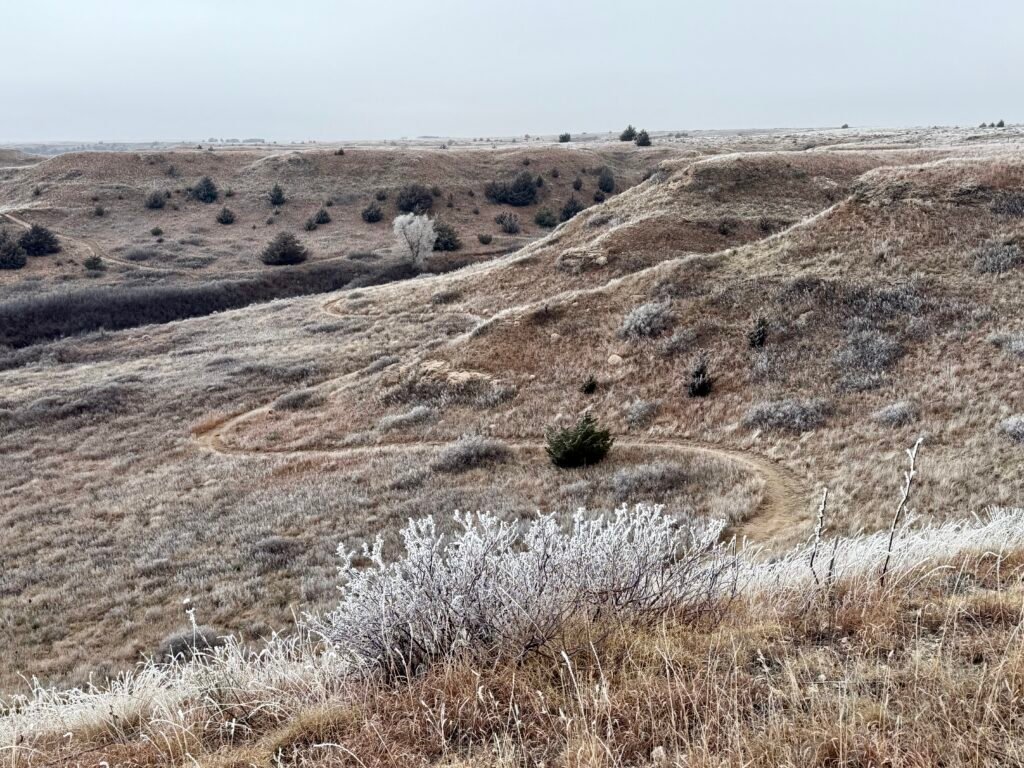
Photo: The winding trail back to my car
Kansas History for 1000, Ken
Just down the road from the bluffs sits one of the most fascinating historical sites in Historic Lake Scott State Park — El Cuartelejo.
And yes, this one’s worth more than 200 points.
El Cuartelejo holds the distinction of being the northernmost pueblo in the United States. Let that sink in for a second. A pueblo. In western Kansas.
Built in 1664 by Taos Indians fleeing Spanish rule in New Mexico, the settlement was constructed using stone from nearby hills. The walls were plastered in adobe. The roofs were made from willow poles layered with mud. Resourceful. Intentional. Remarkably durable.
In 1696, Picuris Indians briefly reoccupied the site. However, by 1727, it was abandoned after pressure from Comanche and Pawnee attacks made continued settlement unsustainable.
Eventually, the site faded into history.
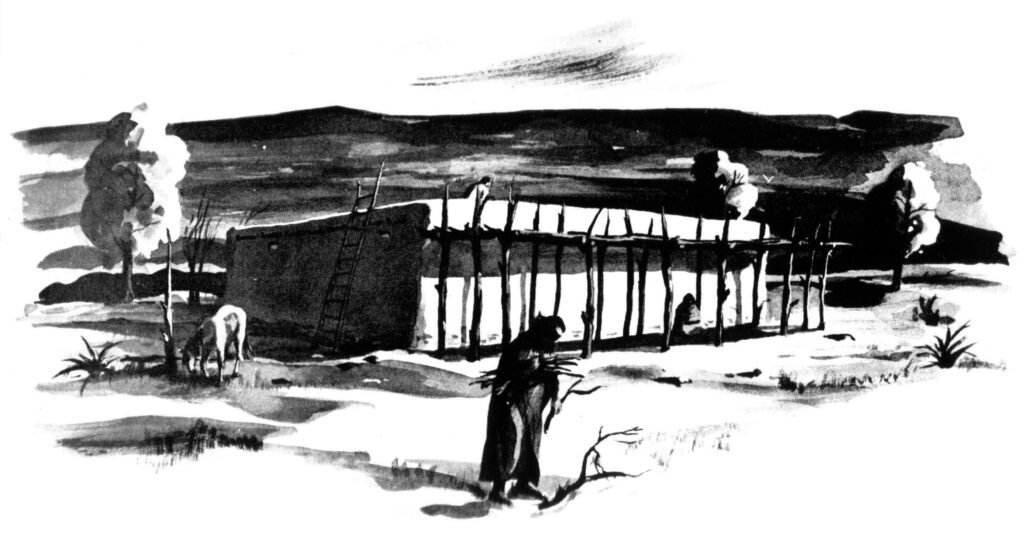
Photo: A depiction of the Pueblo as it might have appeared in its prime
Exploring El Cuartelejo Today
It wasn’t rediscovered until the late 19th century. Later, excavations and restoration efforts in 1970 helped preserve what remains today.
Now designated a National Historic Landmark, El Cuartelejo offers visitors a chance to walk among reconstructed foundations and imagine what life might have looked like here more than three centuries ago.
It’s not what you expect to find inside a Kansas state park.
But then again, Lake Scott State Park seems to specialize in the unexpected.
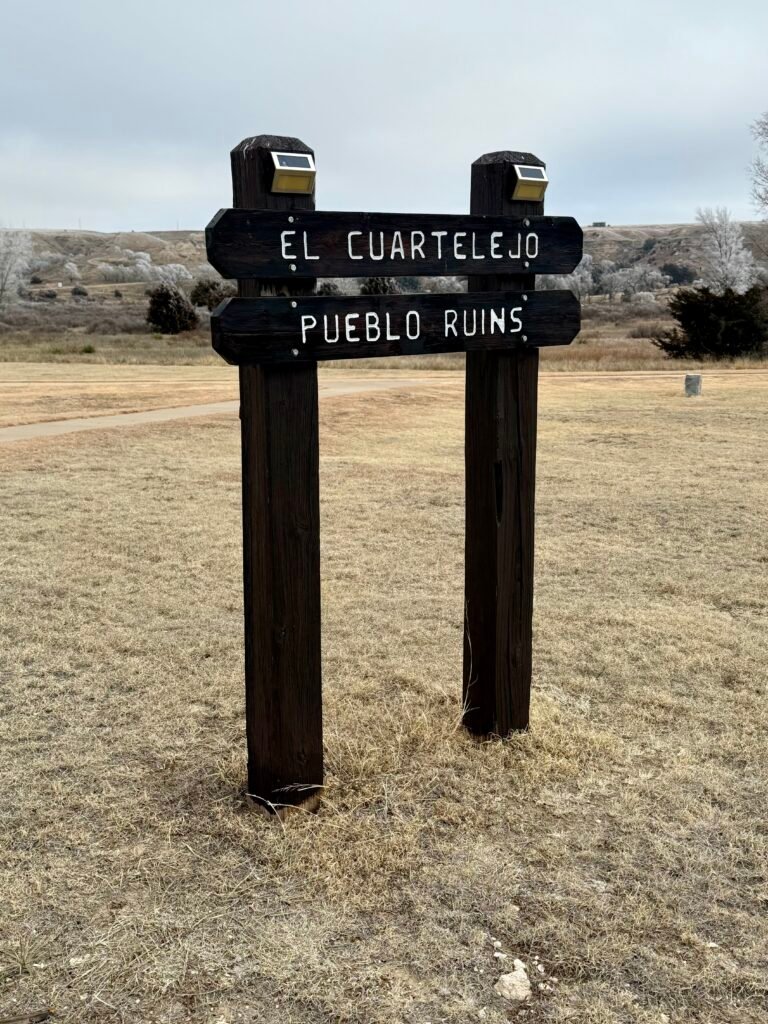
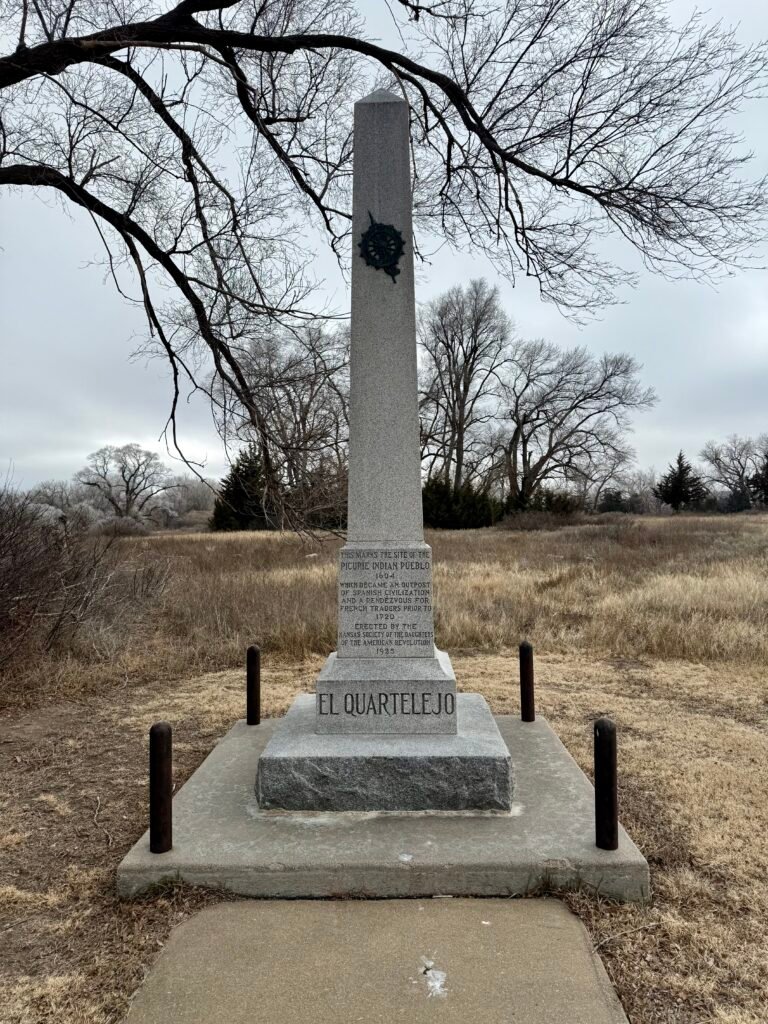
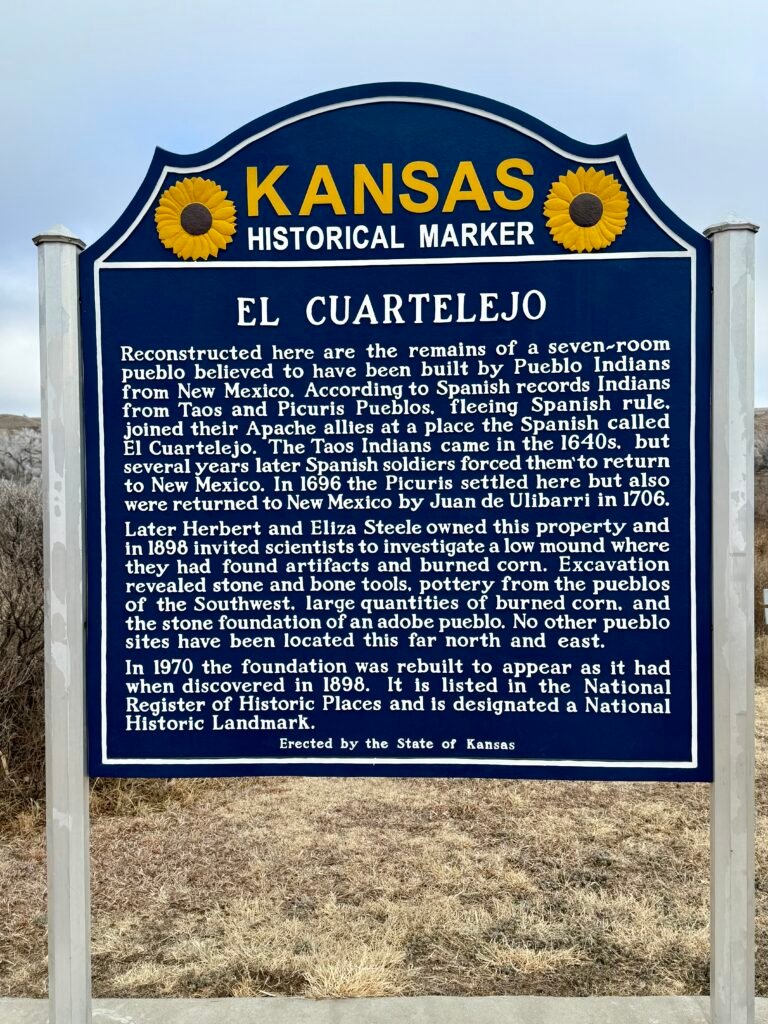
Photos: The sign at the parking lot marks the start of a short walk to the ruins | El Cuartelejo Monument | Historical Marker with detailed information
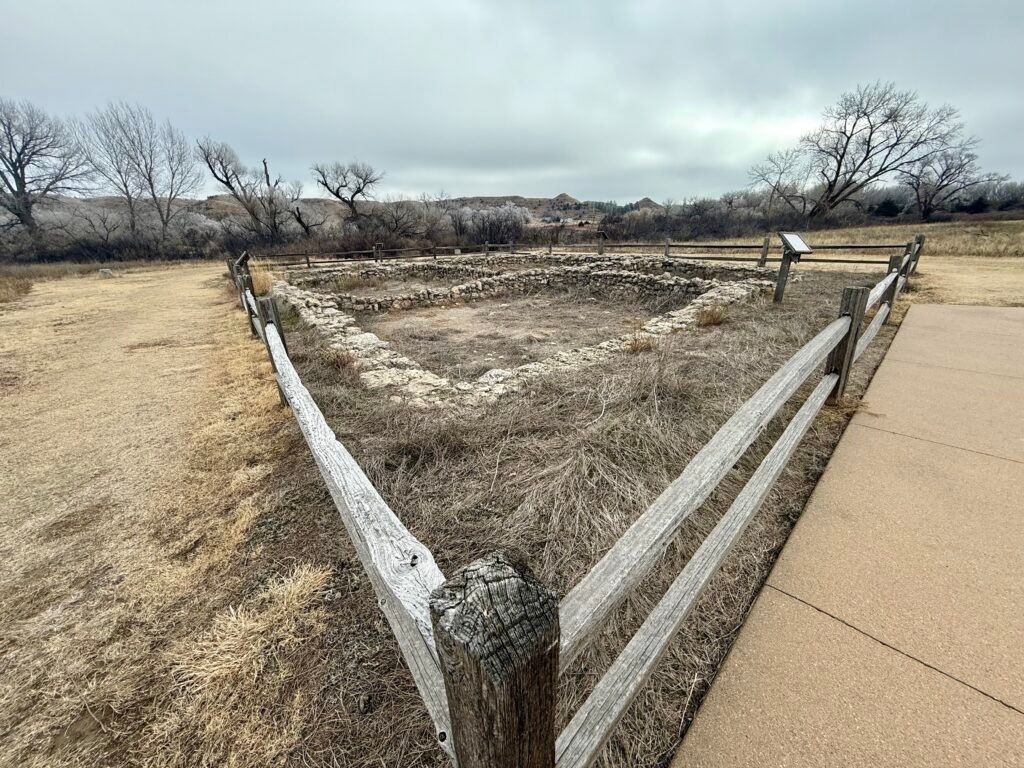
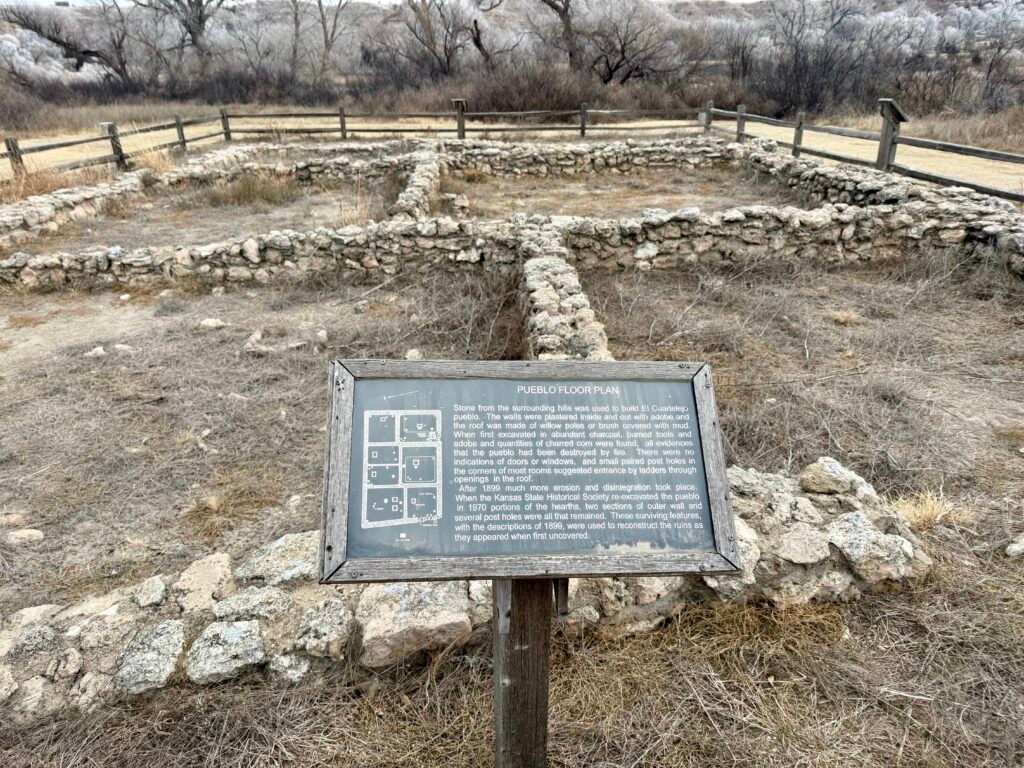
Photos: The Pueblo Ruins | A Detailed Floor Plan
Stagecoaches and Fishing: Living the Frontier Dream
Earlier at the park office, the ranger mentioned a unique addition to Historic Lake Scott State Park — a rentable stagecoach.
Yes. An actual stagecoach stay.
This quirky overnight option sits near a couple of cozy rental cabins, giving visitors more ways to experience the park beyond a traditional campsite. It’s equal parts novelty and nostalgia — a little wink to frontier history in the middle of western Kansas.
Interestingly, this seems to be trending in state parks. I recently spotted a similar setup at Fort Ransom State Park in North Dakota (internal link), which makes me wonder if stagecoaches are quietly making a comeback in the outdoor lodging world.
I’m not saying it’s glamping.
But I’m also not not saying that.
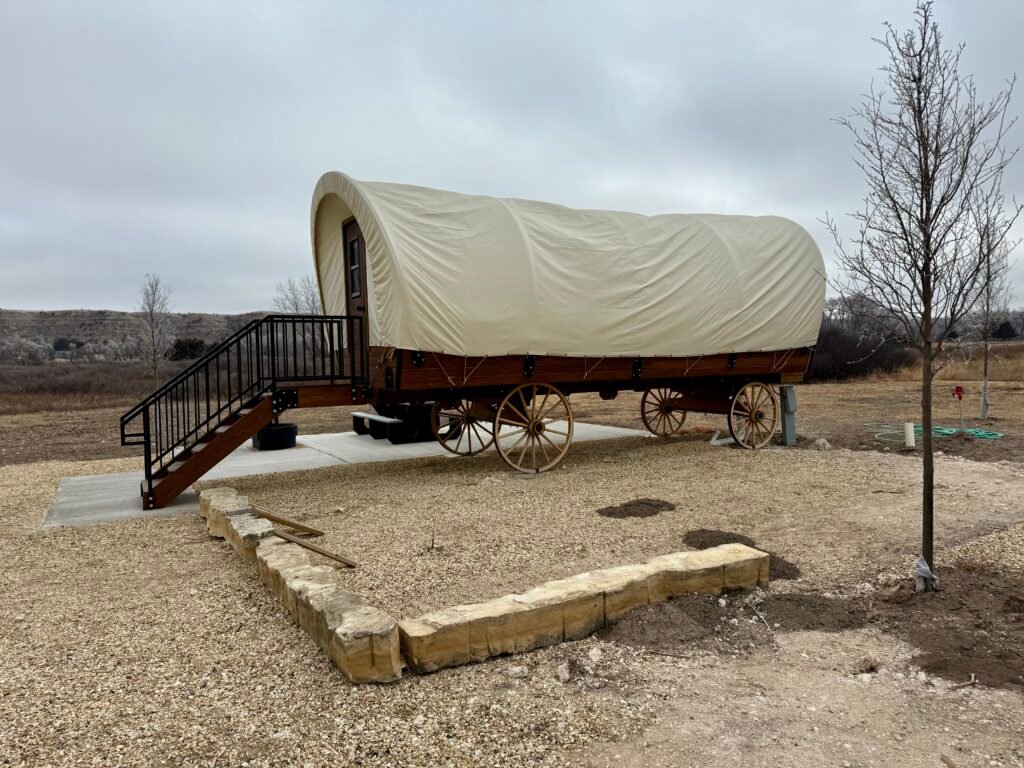
Photo: The Stage Coach
To wrap up the day, I headed toward the beach area along Lake Scott. The park features a large campground surrounding the spring-fed, crystal-clear lake — a popular destination for swimming, kayaking, paddleboarding, and fishing during the warmer months.
Anglers especially appreciate the well-stocked waters, home to largemouth bass, crappie, bluegill, and channel catfish. With fishing piers, boat ramps, and even a small sandy beach, Lake Scott State Park offers plenty of ways to spend a summer afternoon.
In winter, however, the scene shifts dramatically. The campground quiets. The lake stills. And the bluffs stand watch over a much more peaceful shoreline.
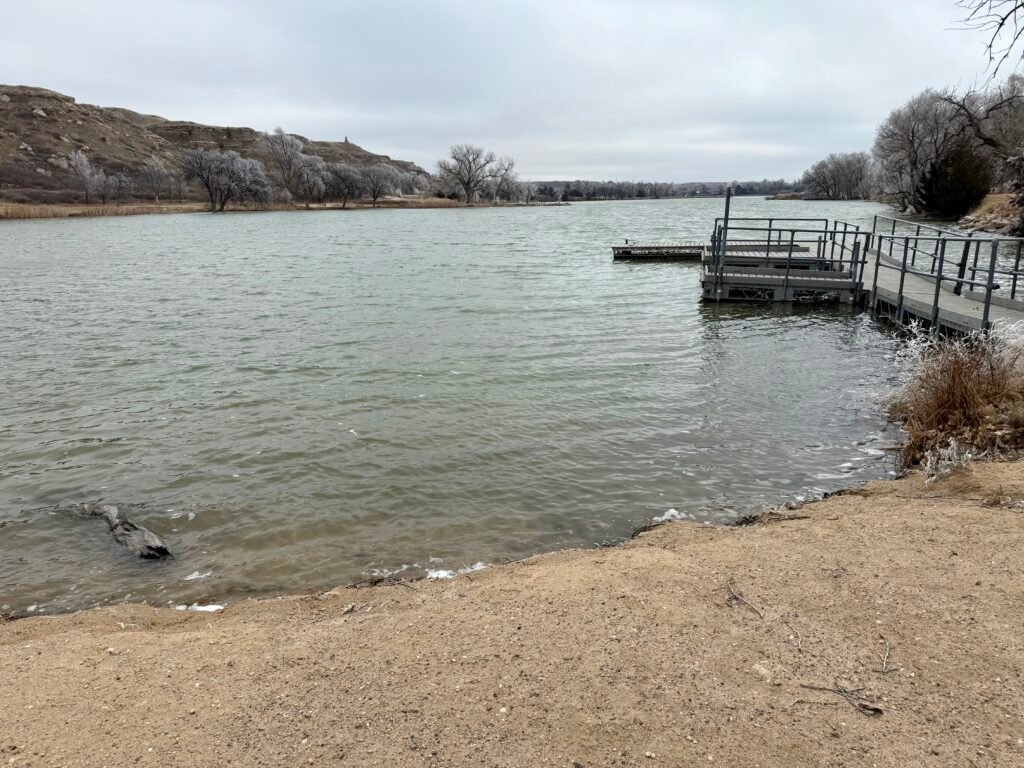
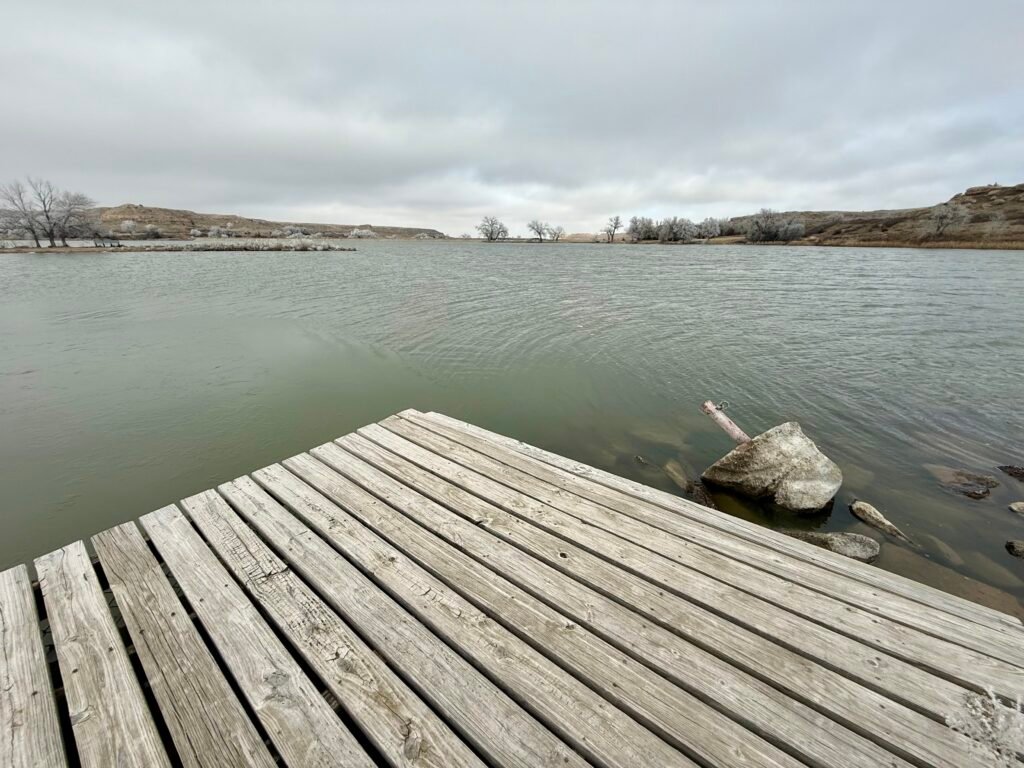
Photos: Lake Scott from the Beach | A chilly Lake Scott
Best Time to Visit Historic Lake Scott
Historic Lake Scott State Park is open year-round, but each season brings a different personality.
Spring delivers blooming wildflowers and fresh prairie color. Meanwhile, fall transforms the cottonwoods into vibrant shades of gold and orange under comfortably mild temperatures — arguably the most photogenic time to visit.
Summer can be hot in western Kansas. However, the spring-fed waters of Lake Scott provide a refreshing escape, especially for campers and families enjoying the beach and boating areas.
Then there’s winter.
Winter visits are less common — but they might be the most underrated. Snow-dusted Kansas bluffs, frost-covered trees, and a partially frozen lake create an atmosphere that feels quiet, raw, and almost cinematic.
Personally, I found the winter solitude to be one of the most compelling parts of the experience.
Wrapping Up: Highs, Bluffs, and Winter Wonders
And just like that, my visit to Historic Lake Scott State Park marked the first official stop of 2025.
The frosted trees. The layered Kansas bluff hikes. The history woven through places like El Cuartelejo and the Steele Homestead. It all came together in a way I didn’t quite expect.
Was it the most jaw-dropping landscape I’ve ever seen? No.
Was it worth the stop? Absolutely.
The trails challenged me — sometimes repeatedly. The views rewarded the effort. And the blend of history, elevation changes, and prairie landscape gave this Kansas state park a distinct identity.
So with one park down and a full year of summits and trails ahead, 2025 already feels like it’s off to a strong start.
On to the next adventure — wherever the road bends next.
Catch you on the trail!
Date of Visit: 3 January 2025
Rest Stop Realities…
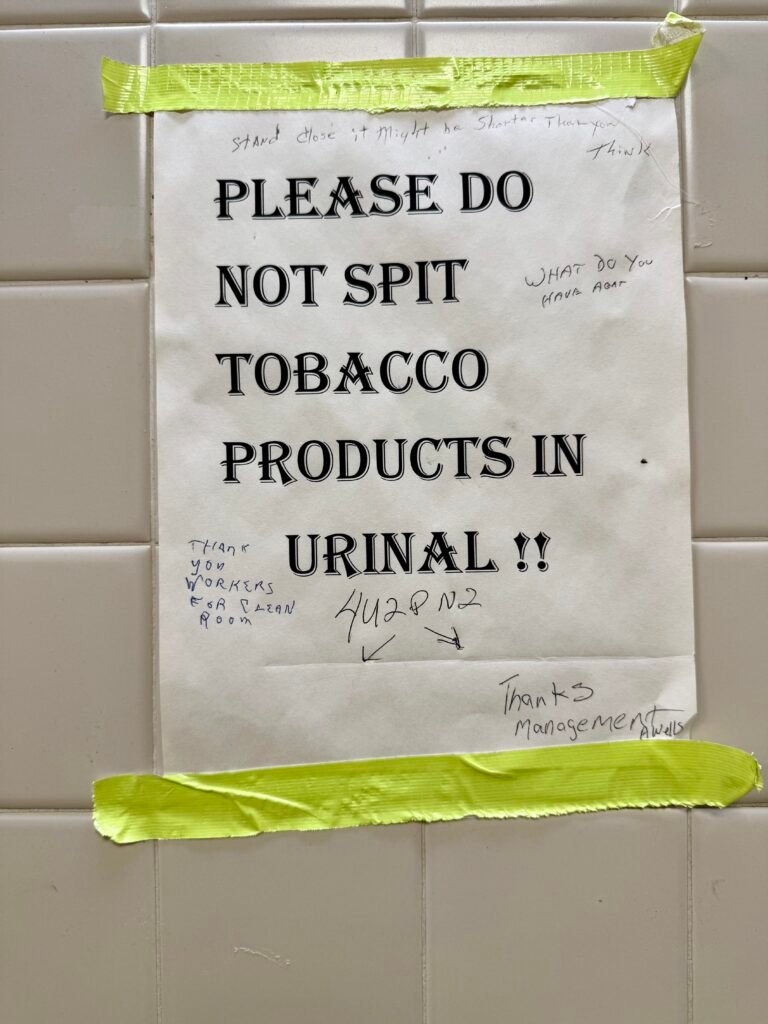
Ah yes. The cultural anthropology exhibit otherwise known as a Missouri rest stop.
These are the places where signage feels less like guidance and more like behavioral intervention.
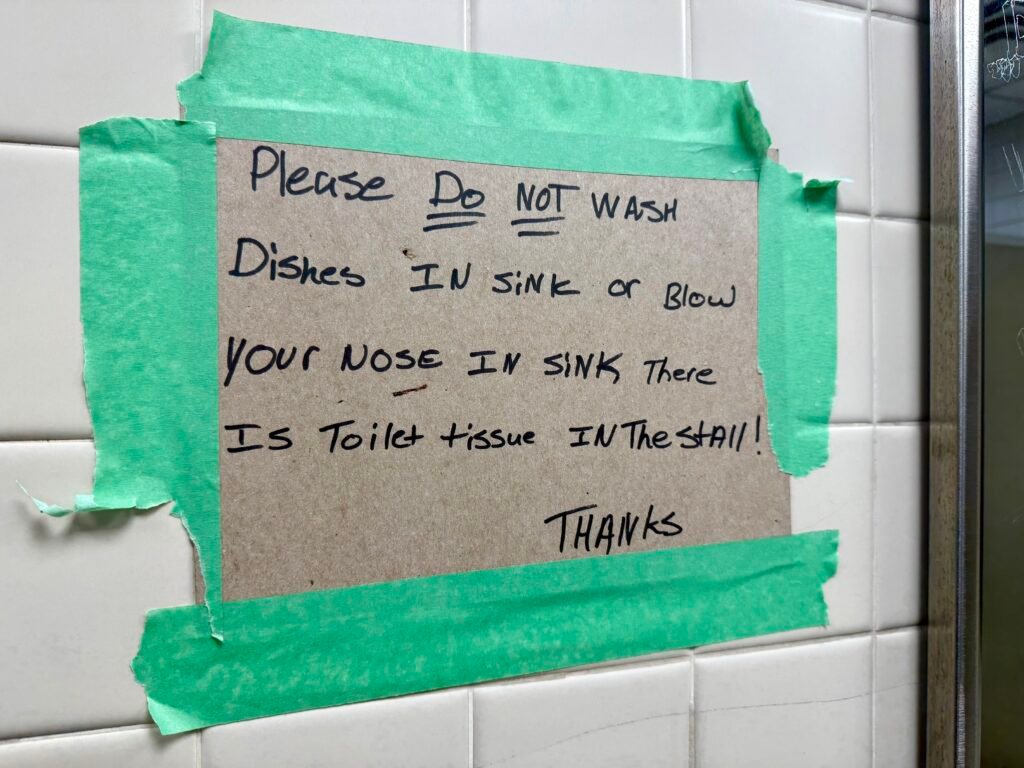
Case in point: one sign politely reminding visitors not to wash dishes or blow their noses in the sink. I understand the dishes rule — fully on board with that. But blowing your nose in a public sink? That’s not a tissue box, friends.
And then there was the sign requesting that tobacco not be spit into the urinal.
I mean… we had to print a sign for that?
Sometimes road trips remind you that the real adventure isn’t the destination — it’s humanity along the way.
Discover more from love cook adventure
Subscribe to get the latest posts sent to your email.
2 Pingbacks