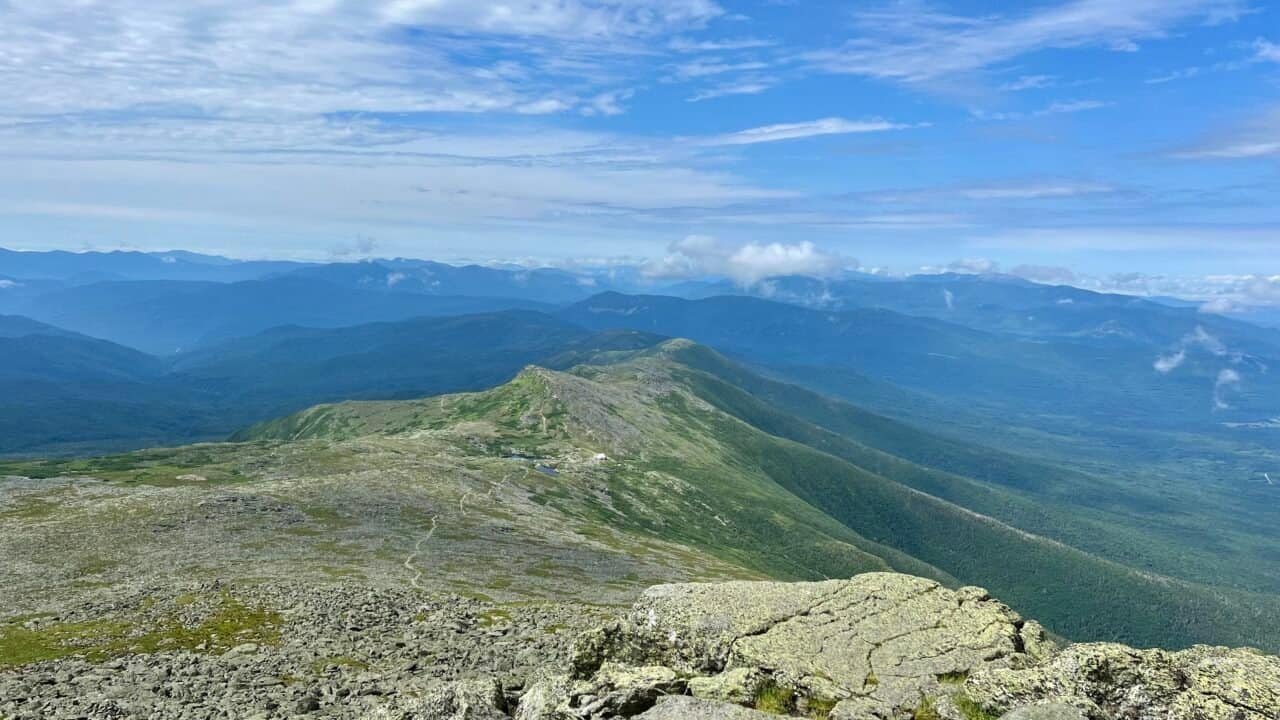
Mount Washington is New Hampshire’s highest point at 6,288 feet above sea level, ranking #18 among U.S. state high points and marking my 11th summit on this journey. It’s also one of those places where the mountain itself is only part of the story.
Before getting into Mount Washington, I should acknowledge the long pause in writing. There’s been a lot to catch up on—and if I’m being honest, I think I was procrastinating a bit. I knew this post carried more weight than most, both personally and historically, and I wanted to take the time to get it right.
At this point in the trip, I had set a personal BHAG—a Big Hairy Audacious Goal—of knocking out four major summits in a row: Katahdin, Mount Washington, Mount Mansfield, and Mount Marcy. That plan unraveled pretty quickly. Katahdin kicked my butt, and my body needed recovery time. Mount Marcy was already spoken for—I had planned to hike it later with my childhood friend John. And Vermont was dealing with record rainfall, closed roads, and mud-soaked trails, so Mount Mansfield went on hold.
That left Mount Washington.
What made the decision easier was knowing there are three ways to reach the summit: on foot, by car via the Auto Road, or by train on the Mount Washington Cog Railway. I opted for the cog. I know some high-point purists consider that cheating, but I also know I’ll be back in New Hampshire—and when I am, I’ll hike it.
Base Camp in the Whites
I set up “base camp” at Bernerhof Inn, a cozy bed-and-breakfast just outside North Conway with an attached pub, Black Bear Pub. Dinner is served nightly for guests, and breakfast is cooked to order each morning—exactly the kind of place you want to land after a long day on the road.
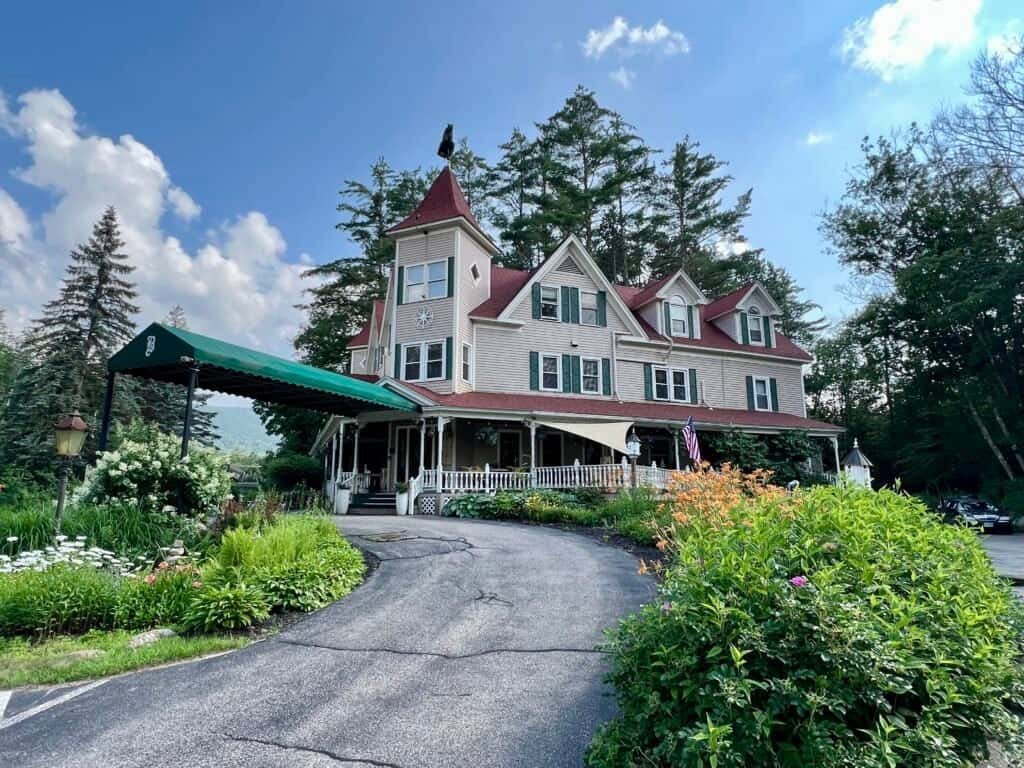
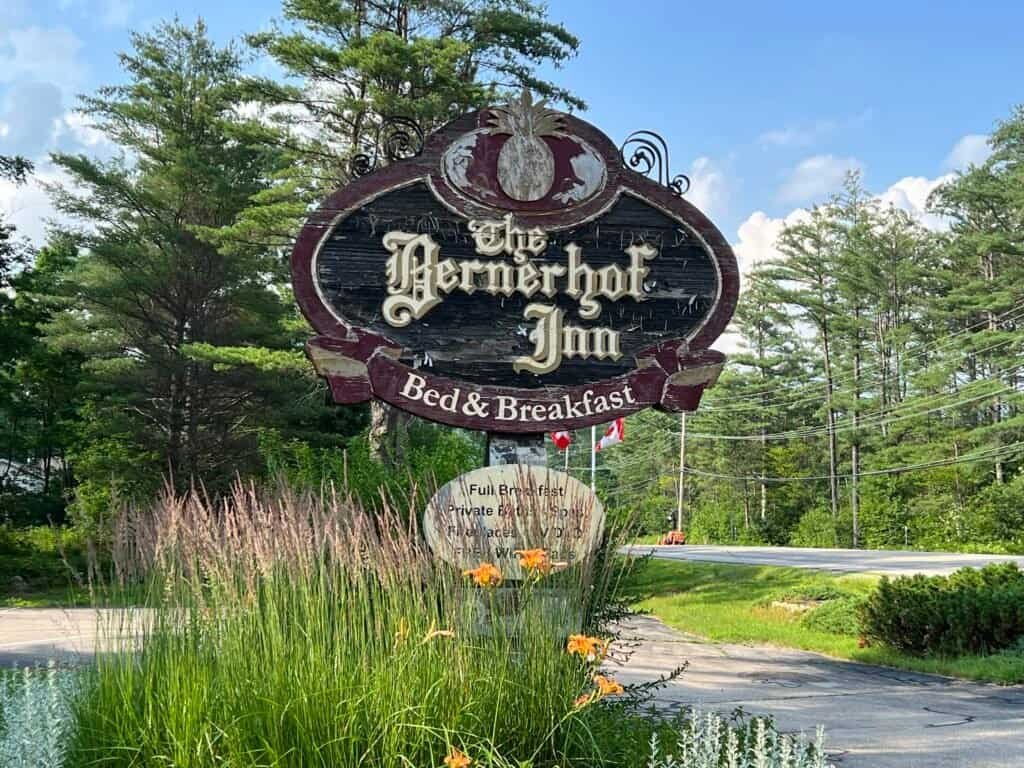
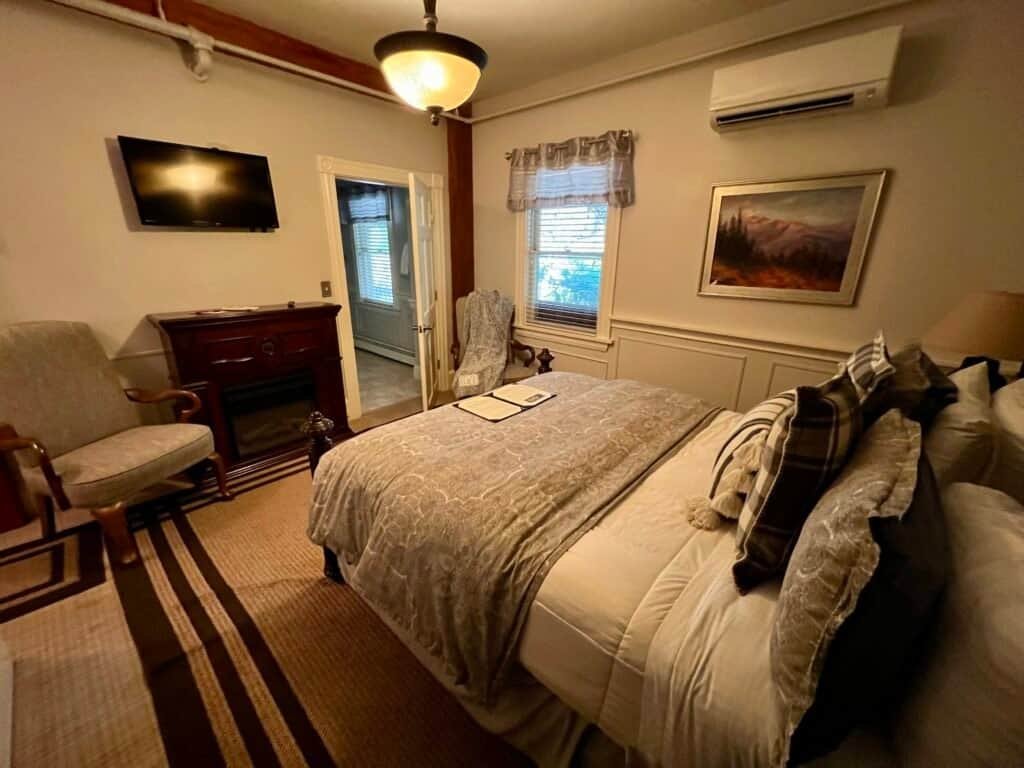
Photos: The Bernerhof Inn | Glen, New Hampshire
After getting settled, I headed out for a low-key evening nearby at Ledge Brewing Company. Set in a beautifully restored barn, it has a relaxed, mountain-town feel and a solid lineup of craft beers. It was the perfect spot to ease into the White Mountains, unwind a bit, and get ready for an early start the next morning.
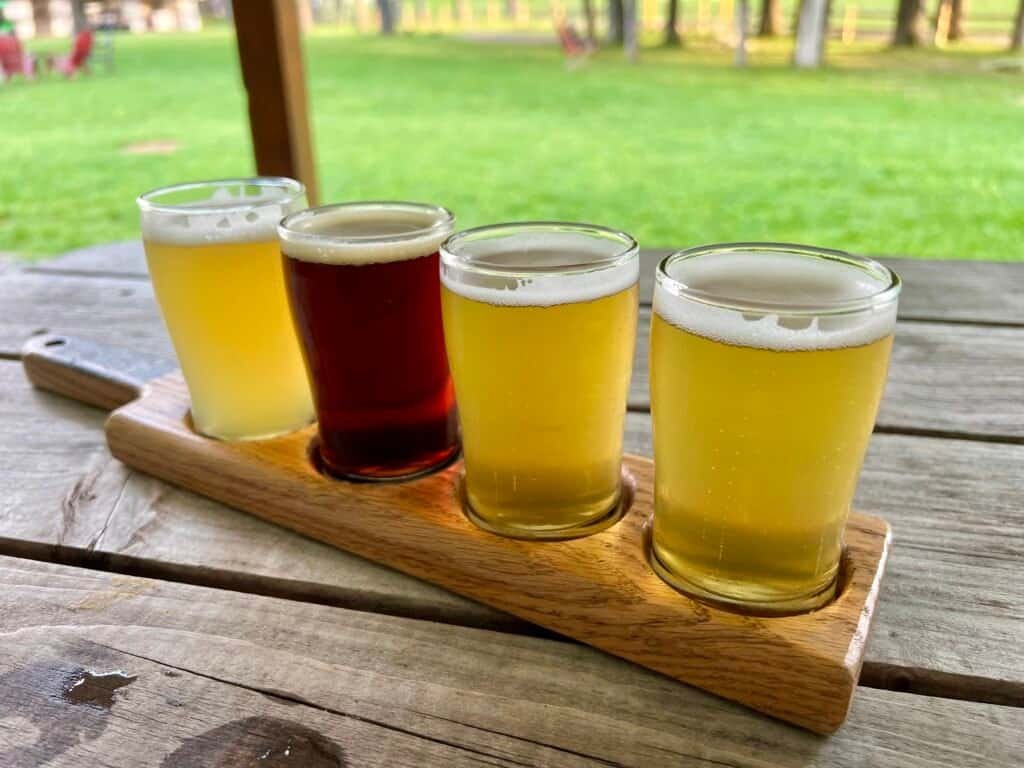
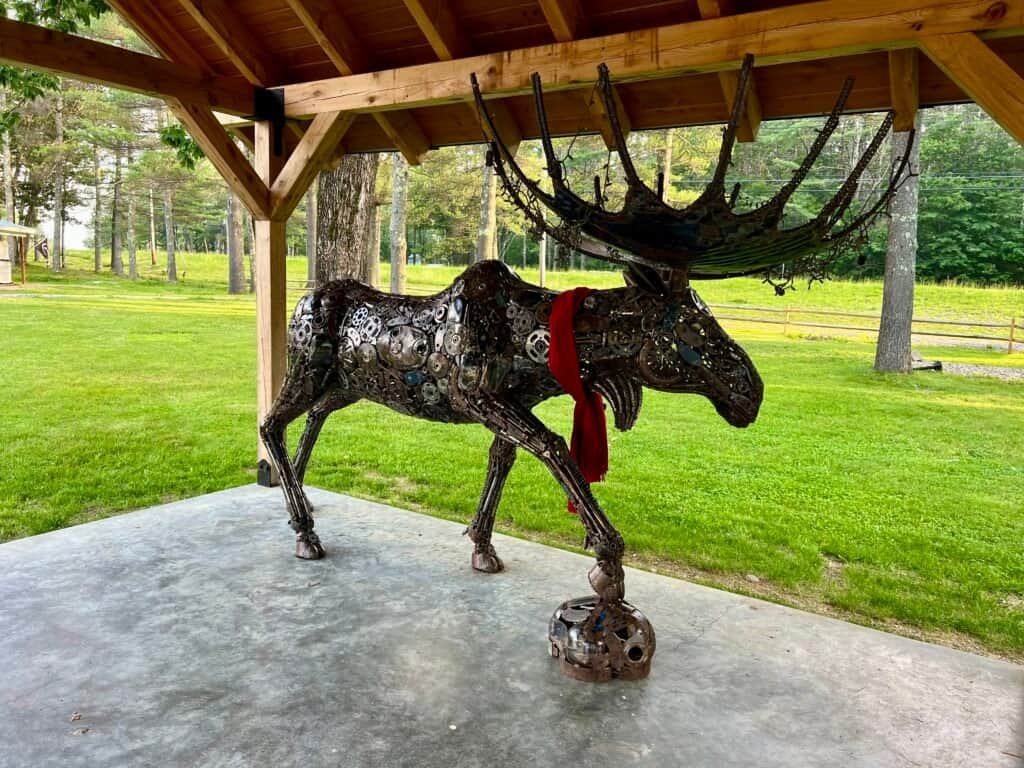
Photos: Ledge Brewing Co
Because I was booked on the 9:00 a.m. train and the cog station was about 40 minutes away, sitting down for breakfast wasn’t in the cards. The staff at the Bernerhof couldn’t have been more accommodating, though, and kindly made me an egg sandwich to go—a small gesture, but one that set the tone for the day.
With breakfast in hand, I headed to the Mount Washington Cog Railway. I opted for an early train to beat the weather, and it paid off. Parking was easy, the summit wasn’t crowded, and the skies cooperated—never a given on Mount Washington.
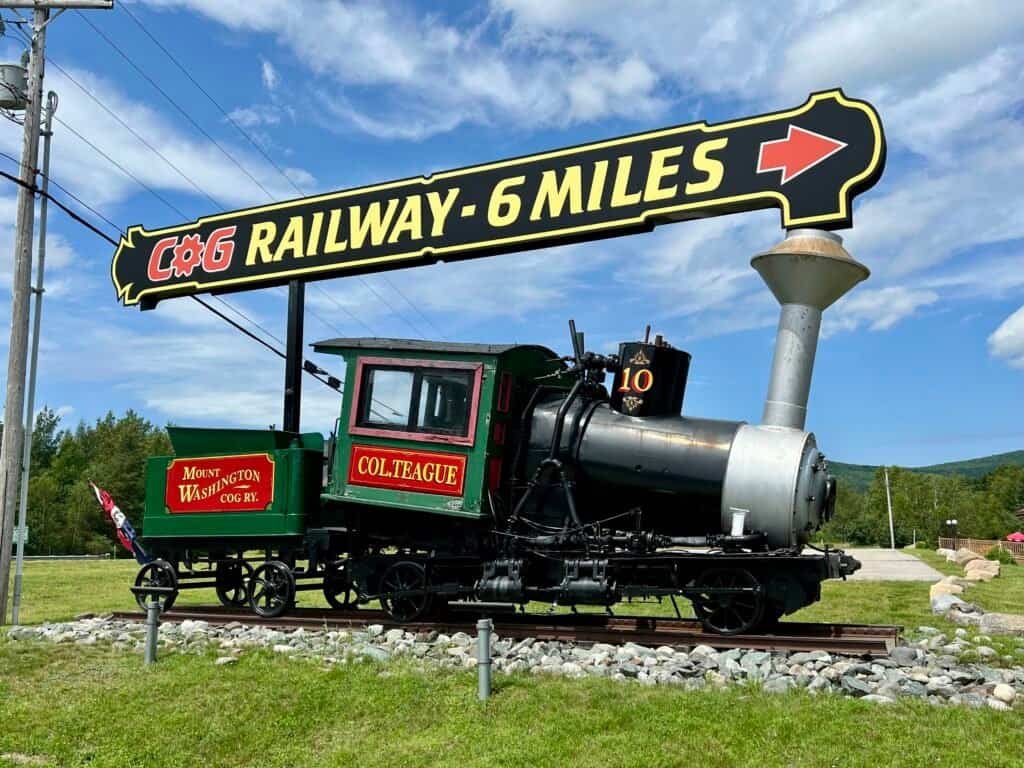
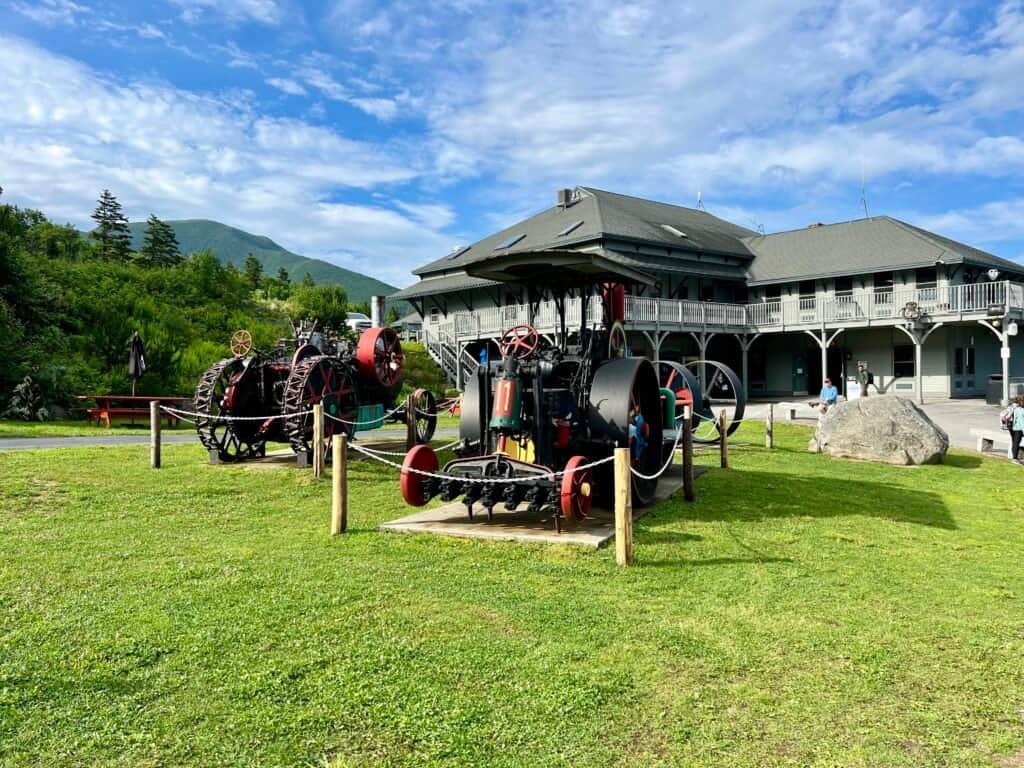
Photos: On the way to the Cog Railway | Marshfield Base Station Grounds
A Family Name on the Mountain
While walking around Marshfield Base Station, I noticed a nearby trailhead: the Jewell Trail. The name immediately caught my attention. “Jewell,” with two Ls, isn’t common—and it happens to be a family name.
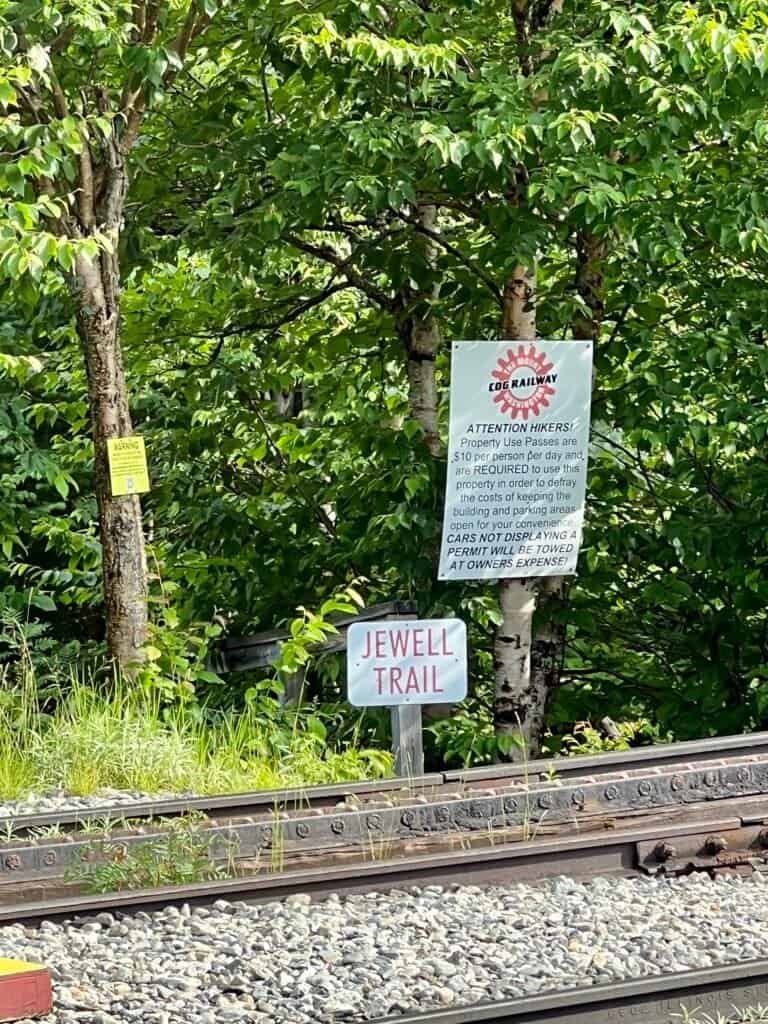
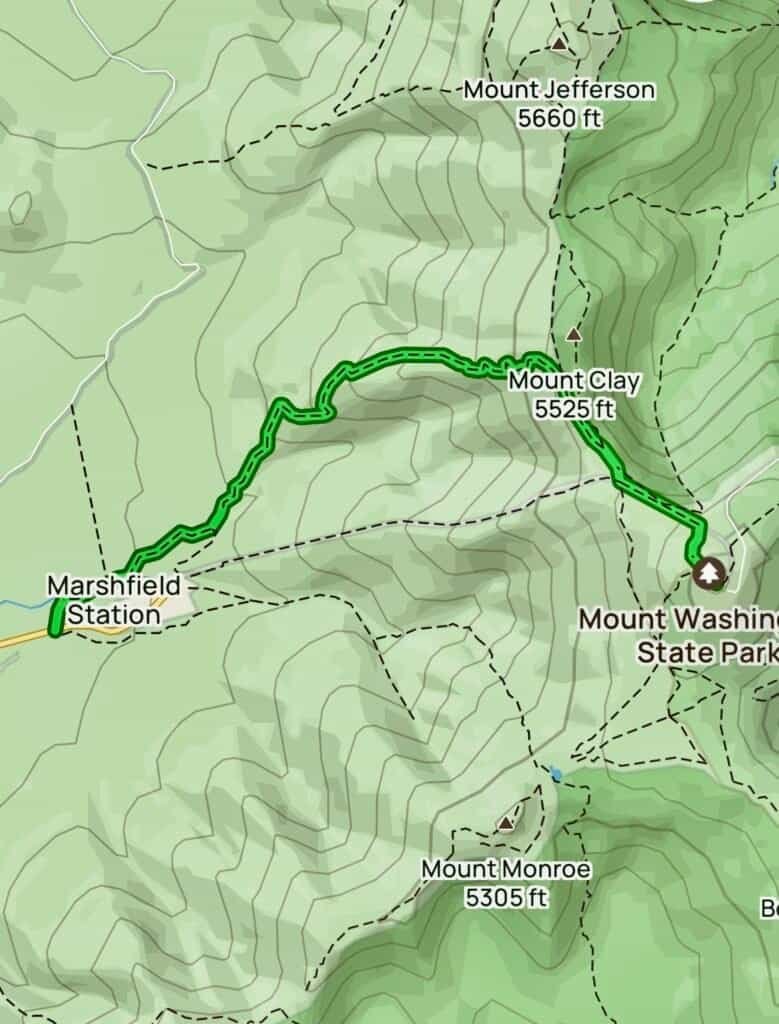
Photos: The Jewell Trailhead | The Jewell Trail to the Summit
I’m a direct descendant of Thomas Jewell of Braintree, Massachusetts, who arrived from England in 1635. As an ancestry buff, I had to dig a little deeper. It turns out the trail is named for Winfield Scott Jewell, an Army Signal Corps observer stationed on Mount Washington from 1878–1880.
Winfield Jewell later joined Adolphus Greely on the Lady Franklin Bay Expedition to the Arctic in 1881, where he was stationed at Fort Conger. The expedition ended tragically—abandoned in the Arctic for three years, only six of the original twenty-five men survived. Despite being described by Greely as having only a “medium” physique, Jewell was noted for his endurance, energy, and even his contribution to morale through humorous dramatic readings.
Jewell ultimately died of starvation and exposure in 1884. His story is documented through the NOAA account of the First International Polar Year (1881–1884), which includes archival material and photographs from Fort Conger, and was later chronicled in the PBS American Experience documentary The Greeley Expedition.
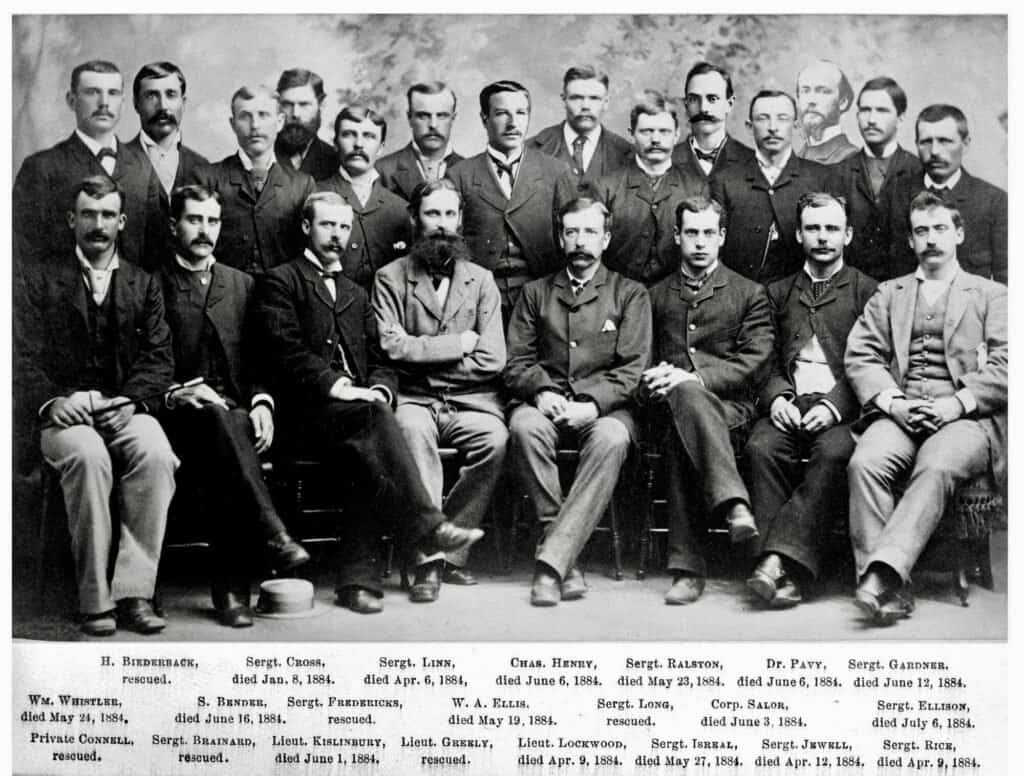
Photo: The Greely Expedition Team – Winfield Jewell is seated,
the second from the right.
The connection? We share a common ancestor. I’m a 12th-generation descendant of Thomas Jewell through his son Joseph. Winfield Jewell descended from Thomas’s son Thomas Jr., making him a distant cousin of my great-great-grandfather, George Winsor Jewell.
Standing there, about to board a train to the summit, that connection felt unexpectedly meaningful.
The Railway to the Moon
The cog railway itself is a feat of vision and stubborn persistence. Conceived by Sylvester Marsh, it was born after he nearly died in a storm while climbing Mount Washington. When Marsh pitched the idea to the New Hampshire legislature, he was mocked as “Crazy Marsh” and granted approval only with the sarcastic suggestion that once he reached the summit, he might as well build his “railway to the moon.”
The railway opened in 1869, becoming the first mountain-climbing cog railway in the world and later inspiring similar systems in places like Switzerland.
There are two trains: the classic steam locomotive and a modern biodiesel engine. I opted for the biodiesel train, which moves a bit faster and doesn’t require water stops along the way.
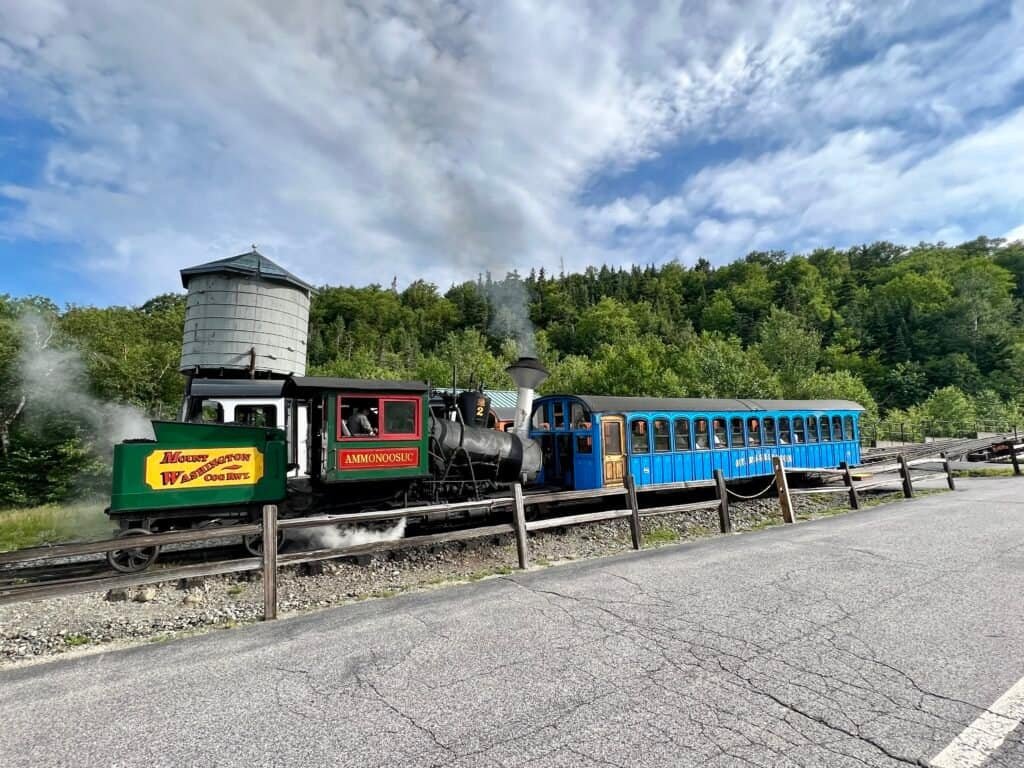
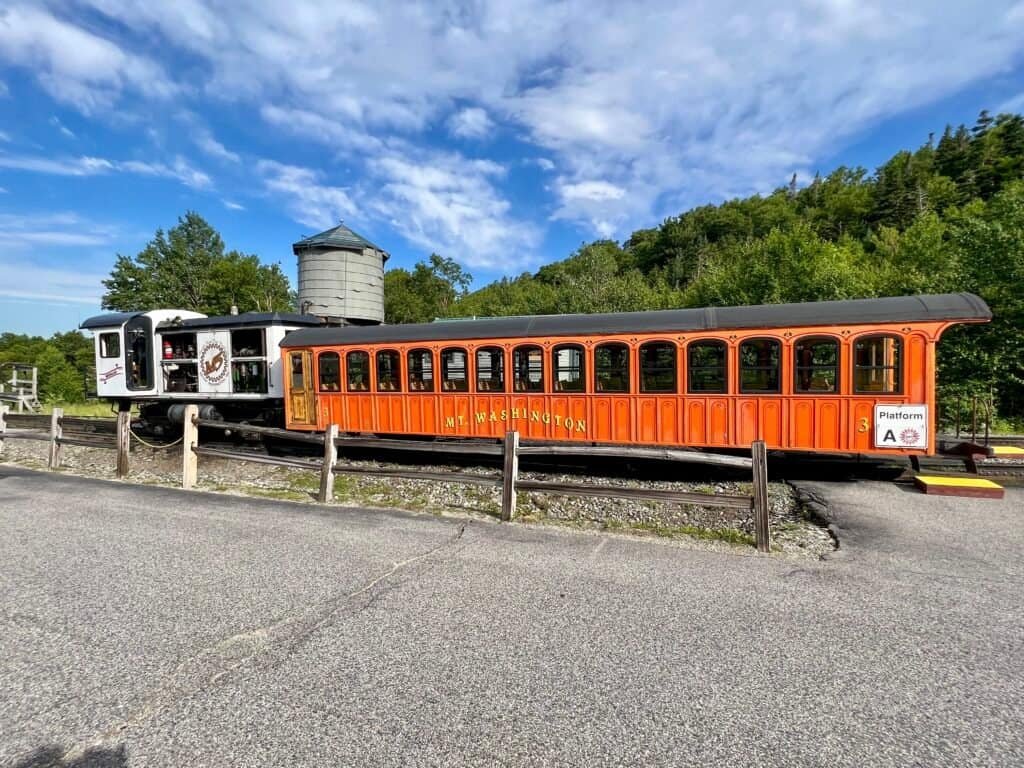
Photos: The Steam Train (it departed before my train) |
The Bio-Diesel Train (which I took)
After passing Waumbek Station, the mountain begins to reveal its true character. The forest drops away, exposing deep ravines on either side—Burt’s Ravine to the left and Ammonoosuc Ravine to the right. Then comes Jacob’s Ladder, where the train climbs at a staggering 37.41% grade, sometimes riding nearly 25 feet above the mountain’s surface.
Forty-five minutes later, we were at the top.
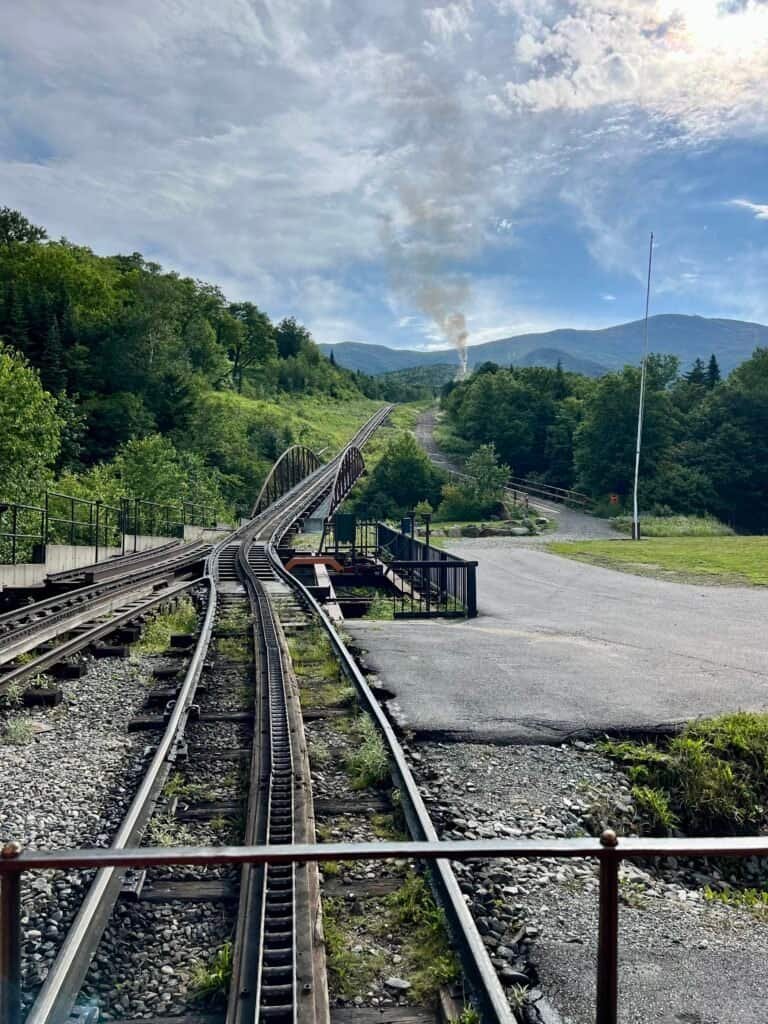
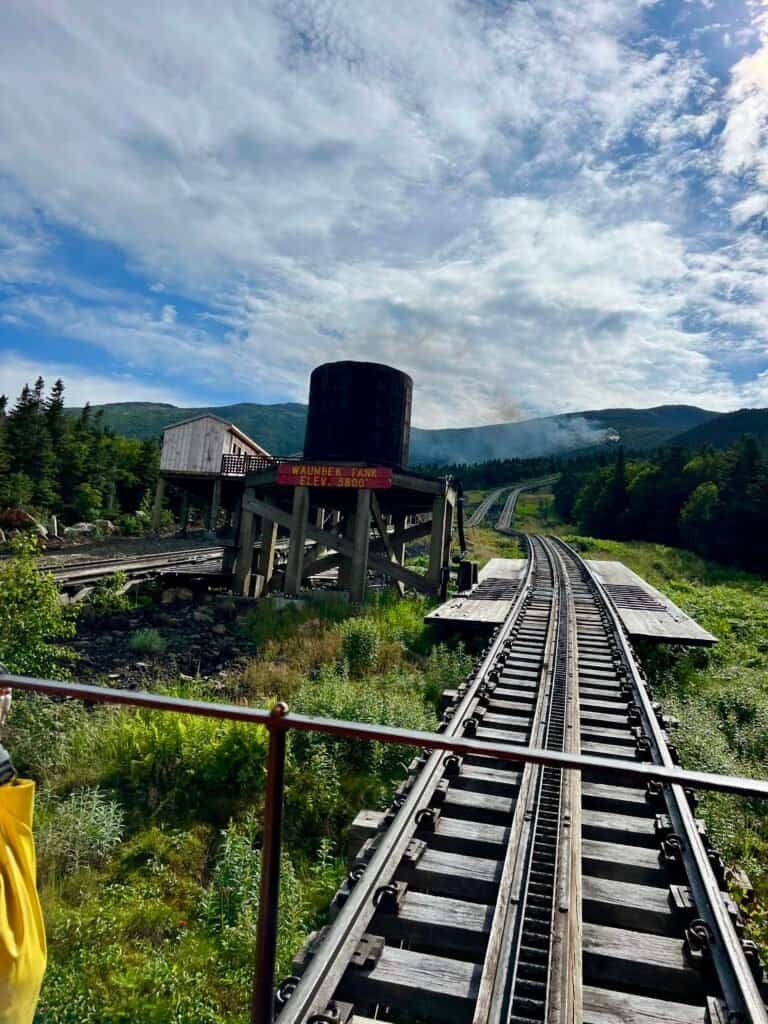
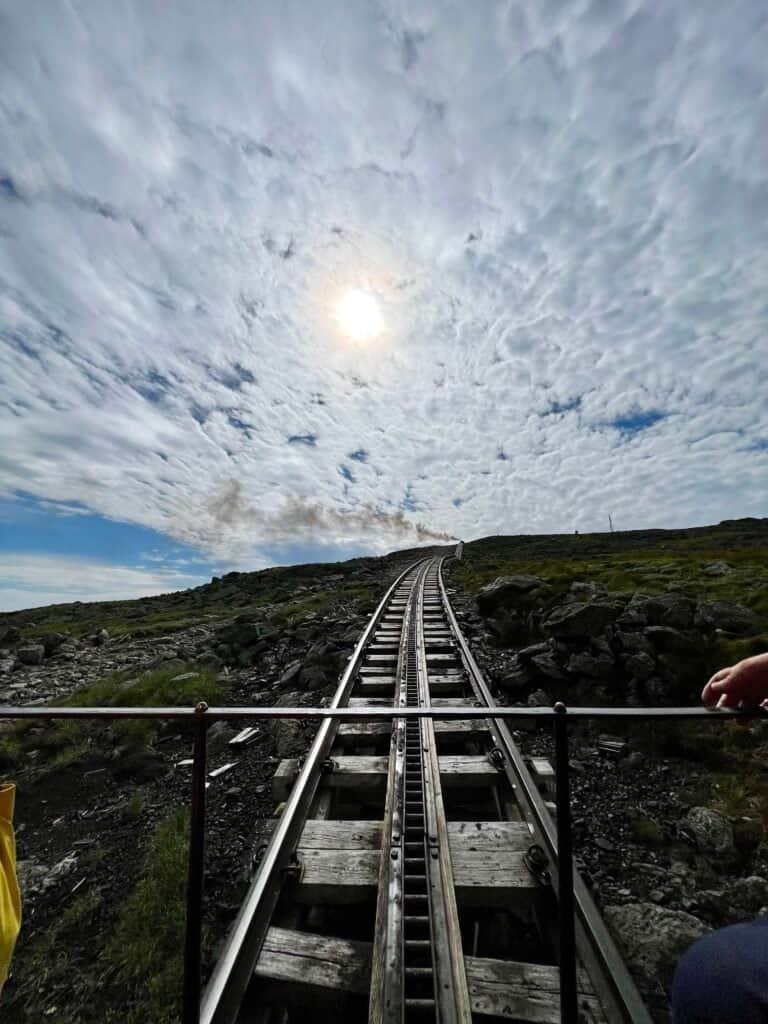
Photos: Ready for Departure – The Steam Train flume in the distance | The Waumbek Station and Water Tank | Jacob’s Ladder
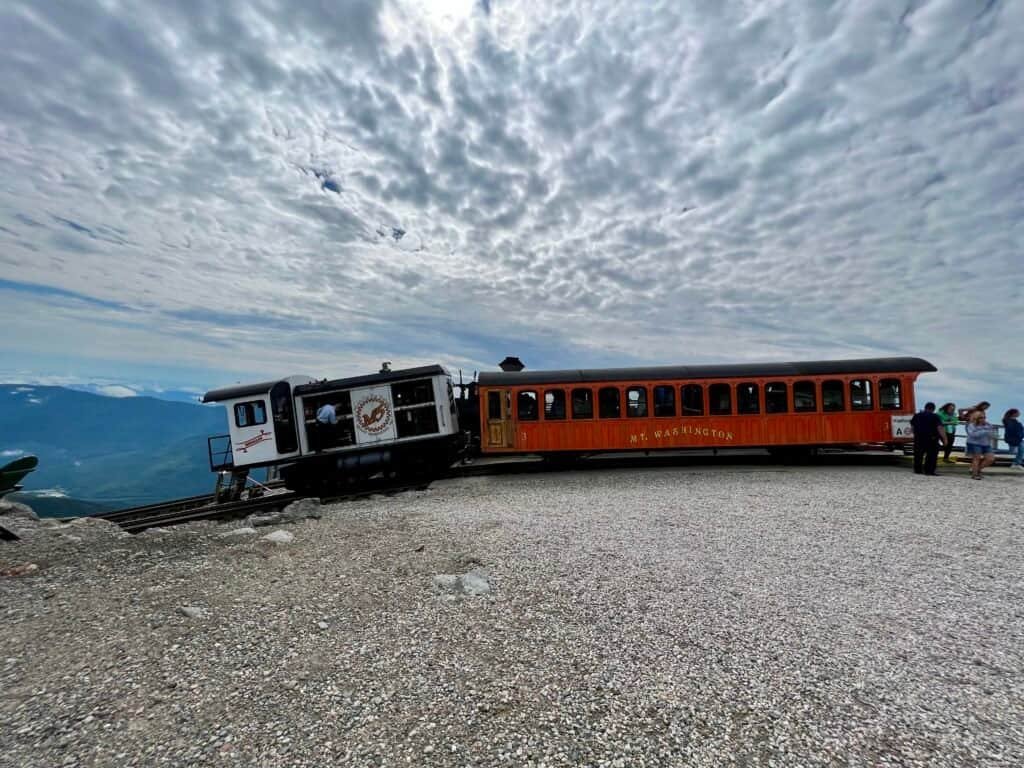
Photo: Our train on the summit
On the Summit
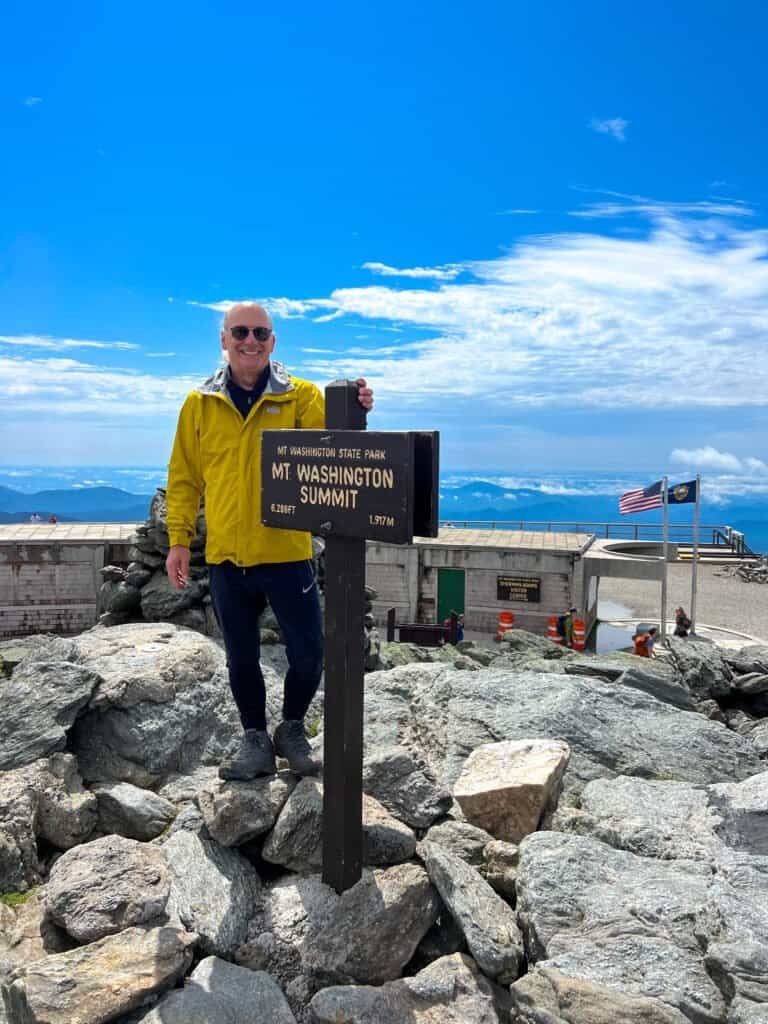
Photo: At the summit of Mount Washington (6,288’).
At the summit, visitors have about an hour to explore. There’s the Sherman Adams Visitor Center, which houses a cafeteria, museum, gift shop, and the Mount Washington Observatory. There’s even a post office where you can mail postcards stamped from the highest point in the Northeast.
Adjacent to the summit building is the historic Tip-Top House, originally built in 1853 as a competing summit hotel. All of its stone materials were hauled nine miles by horse over rough trails—a reminder of how ambitious early tourism here really was.
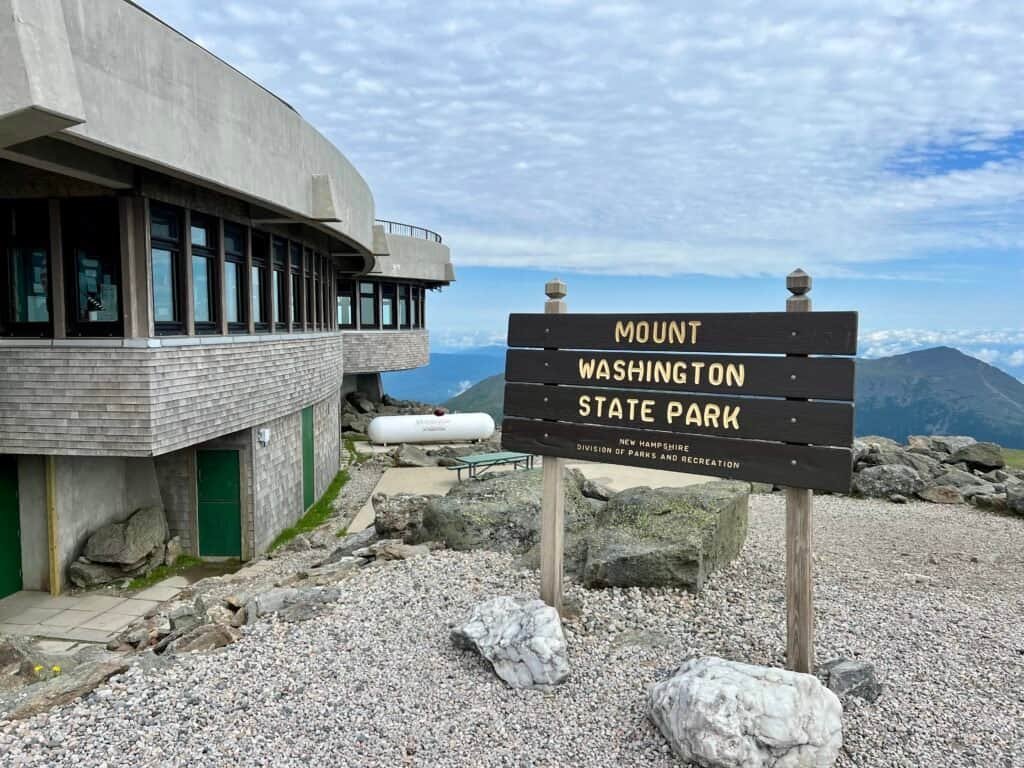
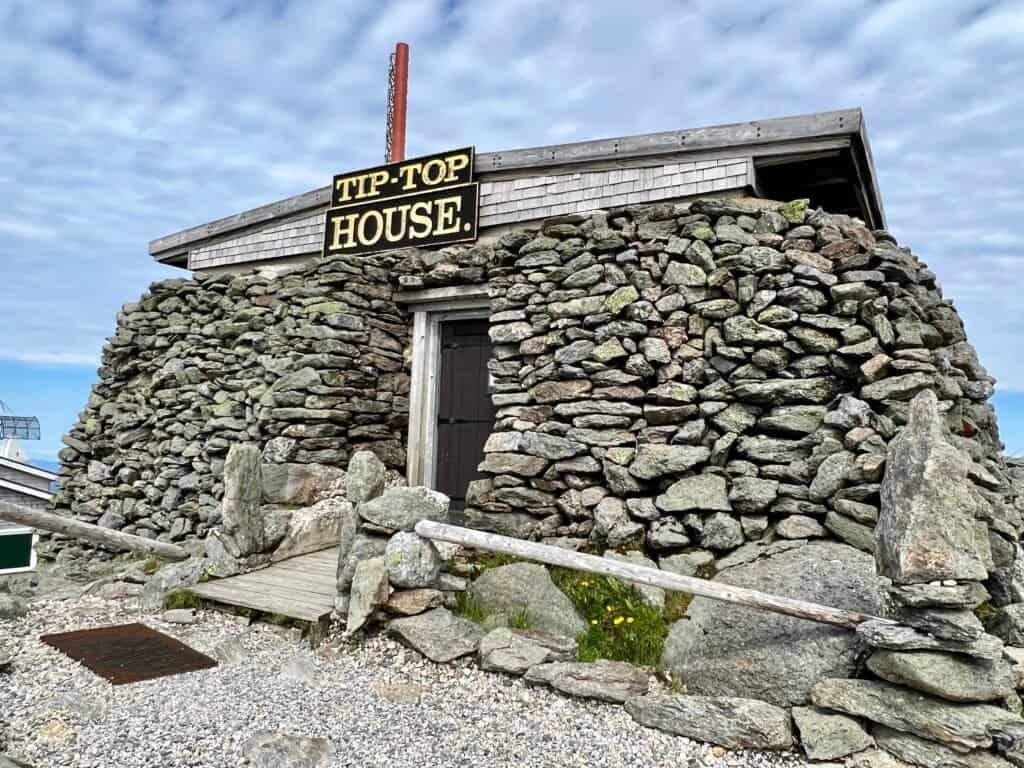
Photos: Sherman Adams Visitor Center | Tip-Top House
The views were exceptional. On a clear day like this one, you can see for miles, including the Omni Mount Washington Resort, one of the last remaining grand hotels of its era.
Mount Washington is beautiful—but it’s also dangerous. The Mount Washington Observatory records some of the most extreme weather on Earth. In 1934, the highest wind speed ever measured—231 mph—was recorded here. More than 160 people have lost their lives on the mountain, including Lizzie Bourne, the first woman to perish here, memorialized near the summit.
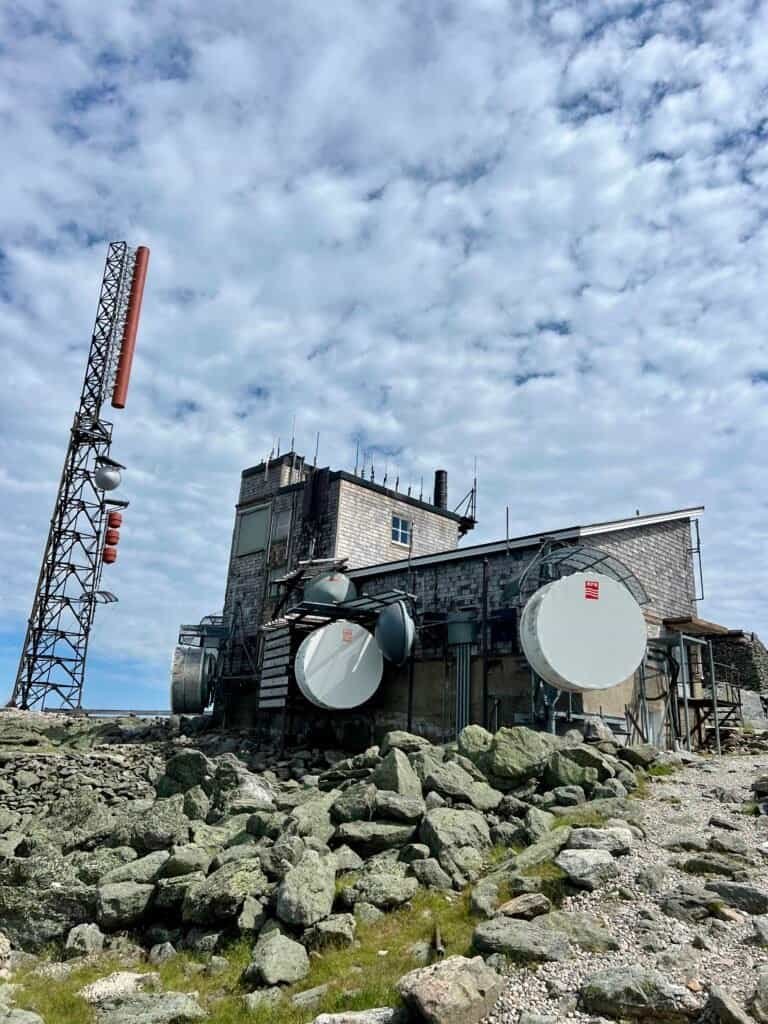
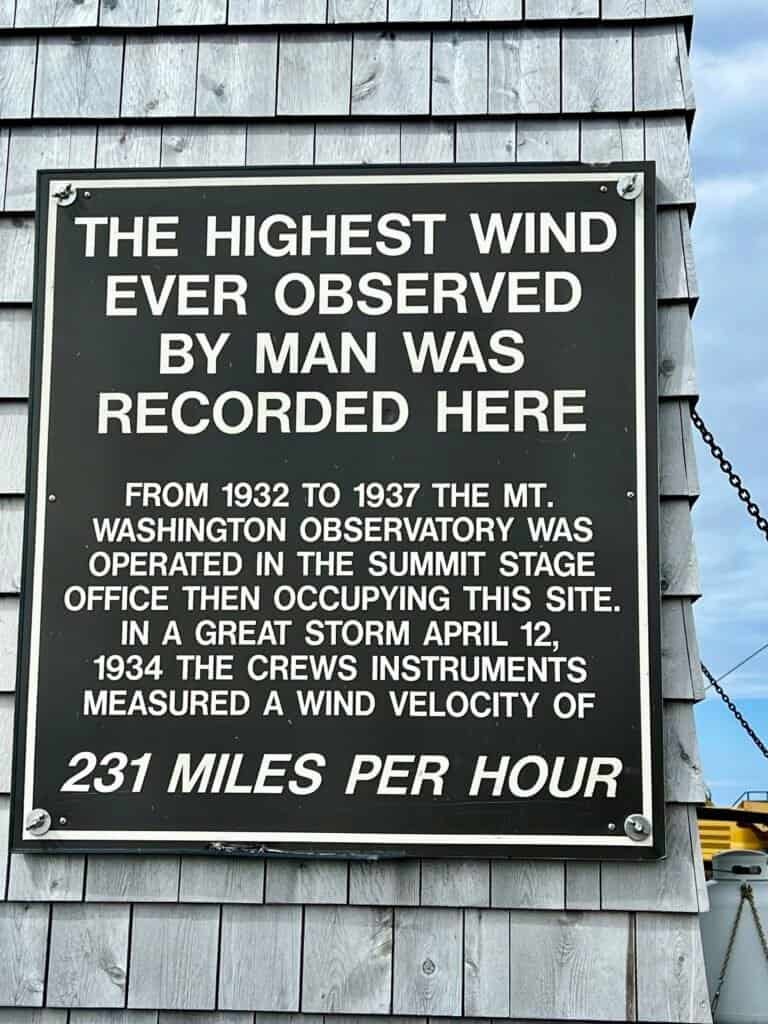
Photos: Summit Observatory & Infrastructure | 231 mph Wind Sign
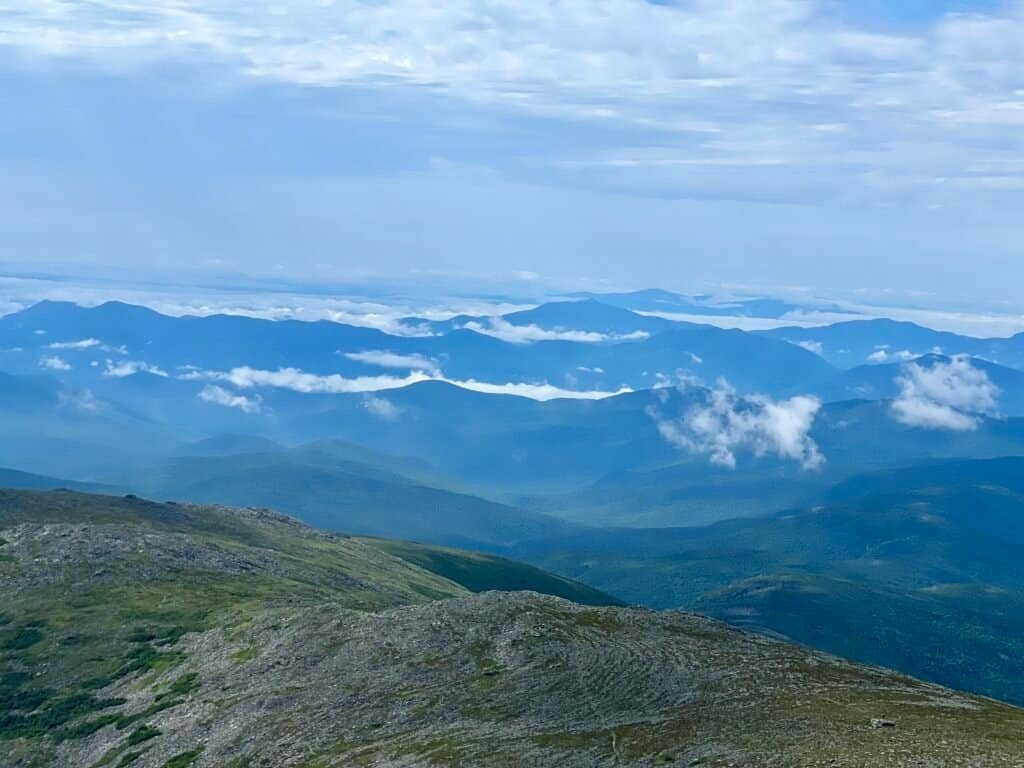
Photo: Final summit view from Mount Washington
The Way Down (and One Last Stop)
The ride down offers a new perspective, with seats flipped to face the descent and wide views of the Presidential Range, named for peaks like Mount Adams and Mount Jefferson.
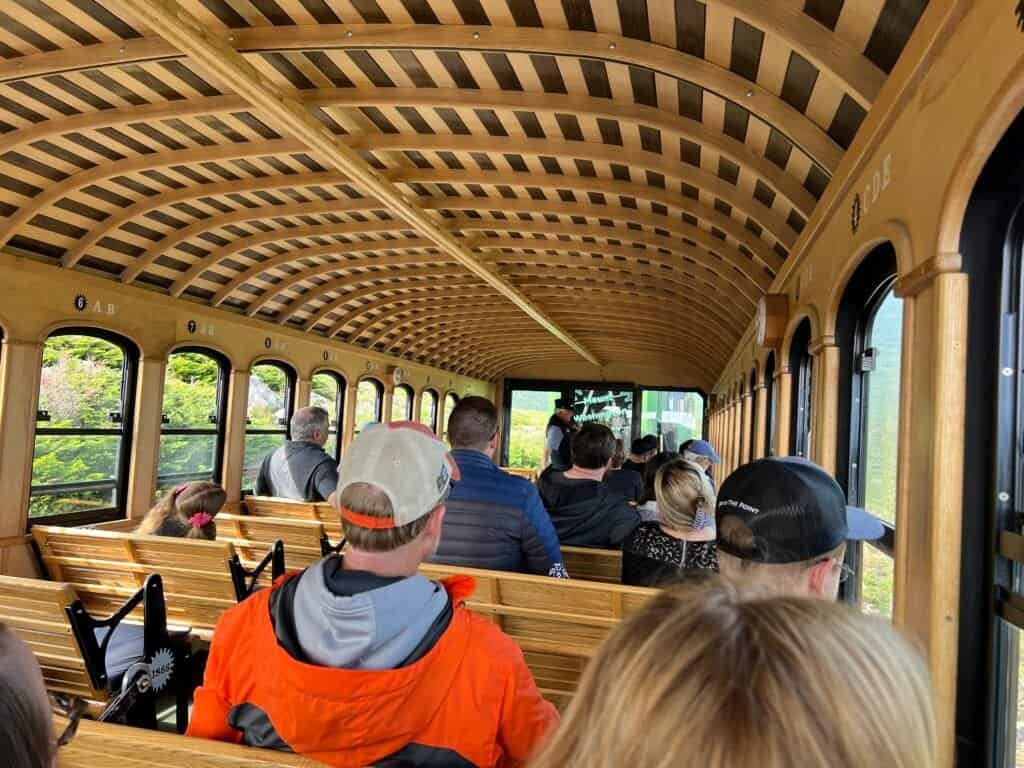
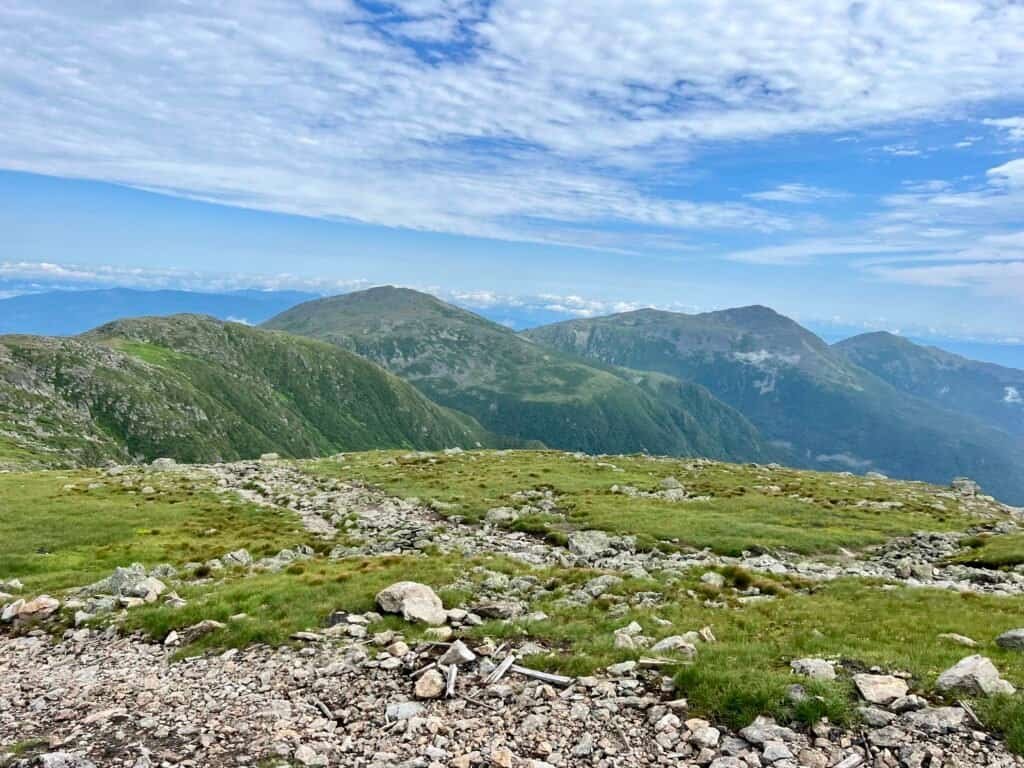
Pictures: Inside the Train | The Presidential Range
On the way back, the brakeman suggested a stop at the Ammonoosuc Riverwalk Scenic Area—a stretch of river with natural swimming holes and rock jumps. A perfect, unexpected detour.
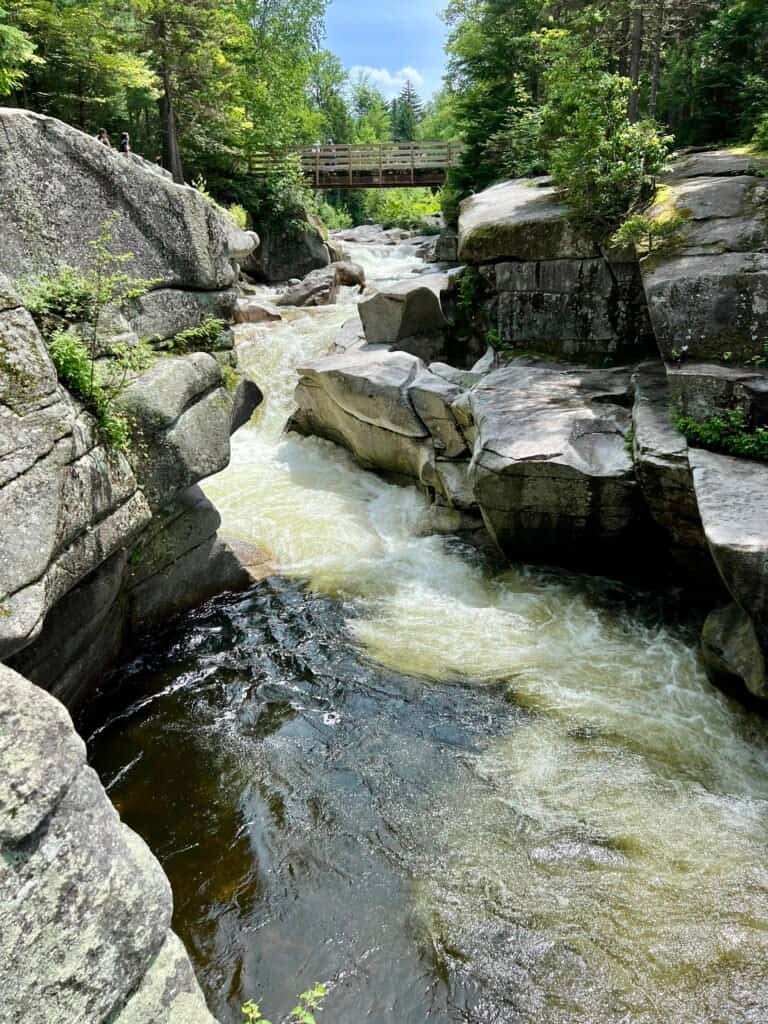
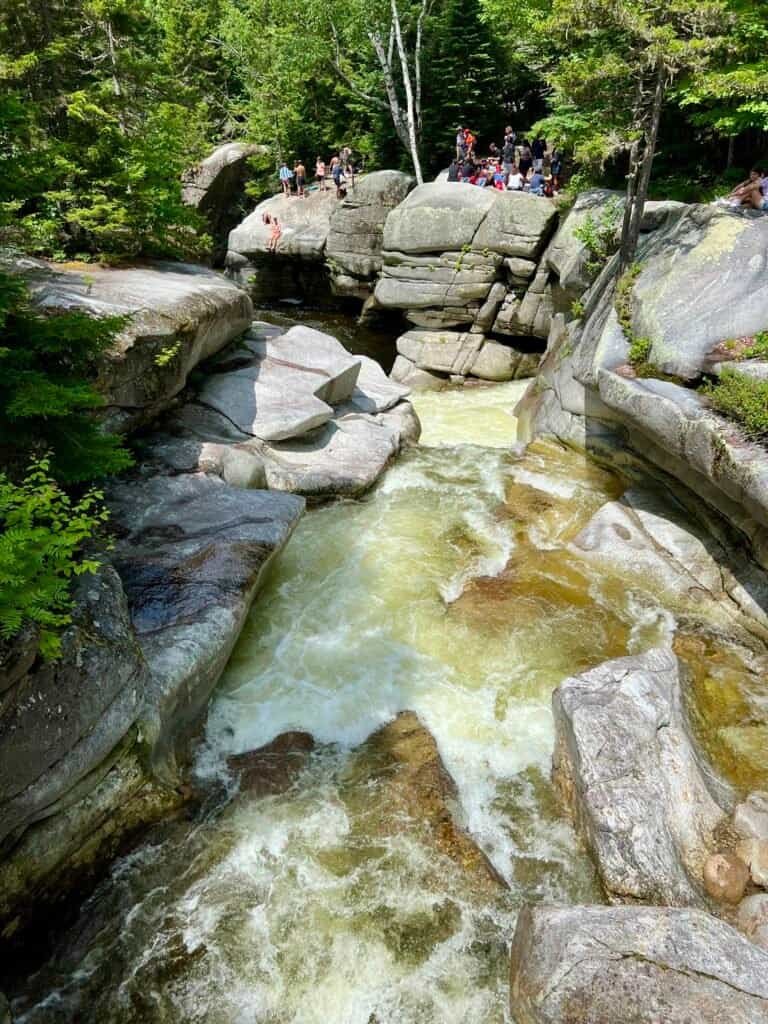
Photos: Ammonoosuc Riverwalk Scenic Area | The rocks you can jump from to the pool below
And finally, because no good mountain day should end without it, I capped things off with soft-serve ice cream from Trails End Ice Cream Shop.
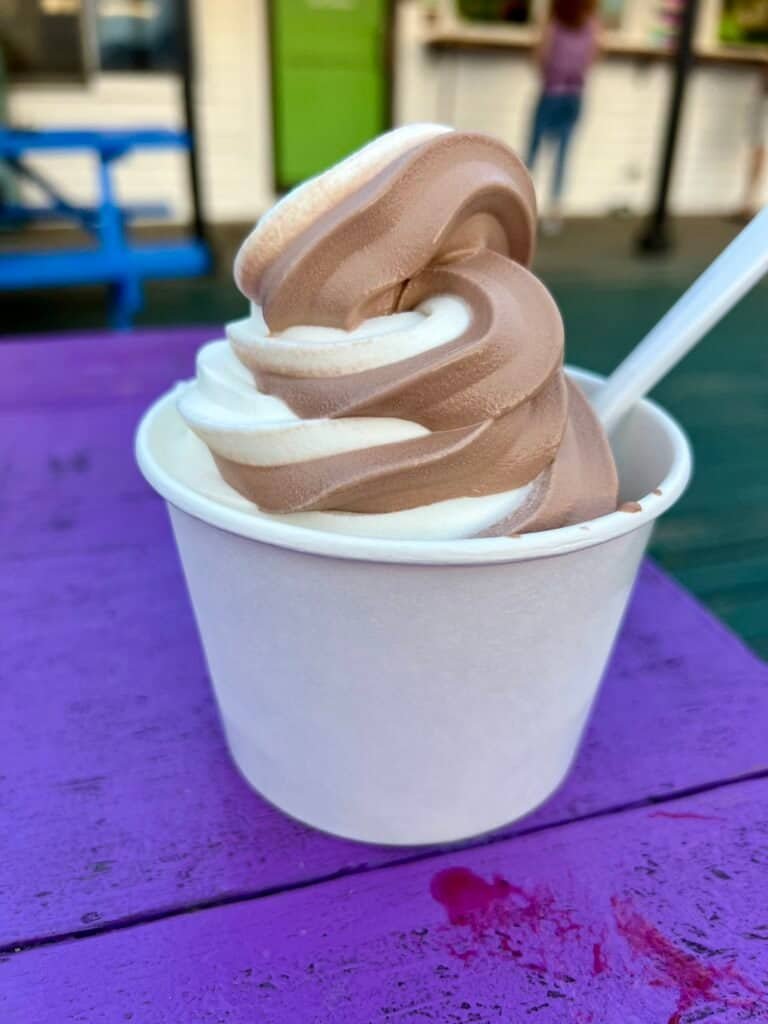
Photo: My reward, not that I exerted a ton of energy.
Mount Washington delivered everything I hoped for: history, family connection, and a reminder that sometimes the meaning of a place goes far beyond the climb itself.
Catch you on the summit!
Date of climb: 14 July 2023
Discover more from love cook adventure
Subscribe to get the latest posts sent to your email.
1 Pingback