Natural Bridge in Virginia is a geological marvel, standing at 215 feet high and 90 feet wide, carved by Cedar Creek. This natural limestone arch was considered sacred by the Monacan Indian Nation. George Washington surveyed the bridge for Lord Fairfax in 1750. Legend has it that Washington carved his initials into the rock, which visitors can still see today. Oh George, defacing our natural resources? 🤦♂️ Maybe the story about him chopping down his father’s Cherry Tree wasn’t a myth? In 1774, Thomas Jefferson purchased the bridge and 157 surrounding acres for 20 shillings, about £1 or $4.44 or roughly $7,200 today with inflation. Quite a steal for the bridge! The site also boasts rich biodiversity, with rare plants and wildlife. Natural Bridge became a National Historic Landmark in 1998, reflecting its historical and cultural significance.
Picture: The Natural Bridge
Camping Adventures
The night before my park visit, I stumbled upon Thunder BRidge Campground, a gem I found on HipCamp. This 100-acre site has quite a history—originally built by the Civilian Conservation Corps in the ’30s, then a boys’ juvenile detention center and a Big Brothers/Big Sisters camp until 2009. Thunder Bridge offers private tent sites, cozy cabins in the woods, and spacious RV spots on a well-kept green space. The host, Adam, was uber friendly, super chill and helpful.
I met Adam at the entrance and arranged to buy some firewood from him. Note: Always buy local firewood to avoid spreading invasive species—many parks ban non-local wood. Adam drove me to my cabin, Woodpecker 1, and dropped off the wood. I chose a cabin because it wasn’t much more expensive, and I didn’t want to hassle with setting up a tent for just one night. The cabin was spacious, had all I needed, and the bathhouse wasn’t far away, complete with a communal room to charge my phone and laptop.
Pictures: Woodpecker #1
Hungry upon arrival, I used some farm-fresh eggs from my previous Airbnb host to make a delicious egg sandwich. Later, I steamed tamales I’d picked up during my travels. Who says you can’t eat well while camping? It was a chilly night in early October, but I survived and enjoyed the adventure!
Pictures: My Egg Sandwich | Cooking Tamales over the Fire
Pictures: My campsite with the wood from Adam | I love making campfires!
Not All Natural Bridges Are Created Equal
A few months back, I had an amazing time at Kentucky’s Natural Bridge, so I was super pumped to check out Virginia’s version. Spoiler alert: it didn’t quite live up to the hype. Sometimes, beautiful spots get too popular and end up feeling more like theme parks than natural wonders, and that was definitely the vibe here. Let’s just say, Virginia’s Natural Bridge won’t be making my list of favorite state parks.
Pictures: The Visitor Center | LOVE sculpture next to the Visitor Center
First off, the entrance fee. If you’ve read my other posts, you know how I feel about high entrance fees. Sure, parks need money for upkeep, but charging $9 per person (13 and over) can make it pretty pricey for families, especially those on a budget. It gave me flashbacks to the pricey Flume Gorge in New Hampshire.
At the Visitor Center, you’ll find the usual suspects: a gift shop, exhibits, and restrooms. From there, it’s a trek down 137 steps to the Cedar Creek Trail. There are a few other trails in the park, but Cedar Creek Trail is the main event. It’s a fairly easy 2.0-mile round trip with a 400-foot elevation change—most of which is tackled by those stairs down to the Trail Store, where you pay your $9 fee at a small window.
Pictures: The start of the walk down to the Trail Store
Picture: Trail Map
A short walk from the store brings you to the Natural Bridge. It’s a cool geological formation, carved over millennia, but it didn’t quite wow me like Kentucky’s. And here’s where things get a bit theme park-ish: rows of benches and spotlights facing the bridge. For almost a century, the bridge has been illuminated on the last Saturday night of every month from April to October. They recreate the first light show from 1927, with the 200-foot-tall arch lit from above and below while Cedar Creek murmurs below. Sounds kind of magical, right? But still, at $9 a pop, it feels a bit commercial.
Pictures: The Natural Bridge – complete with a spotlight in the foreground | Natural Bridge from the other side – notice all the benches at the end of the trail
A Journey Through Time
Walking along Cedar Creek Trail at Natural Bridge State Park in Virginia is like stepping back in time. The trail offers a glimpse into the rich history of the Monacan Indian Nation through its living history exhibit, although it was closed during my visit. This exhibit usually showcases the Monacan way of life, offering insights into their daily activities, traditions, and skills. But based on the pictures, needs a little work.
Pictures: The Monacan Indian Exhibit
Continuing along the trail, you’ll encounter the Saltpeter Cave, a significant historical site used during the War of 1812 for mining saltpeter, a key ingredient in gunpowder. Cool history, but not much to it. Next, you’ll reach Lace Falls, a 30-foot waterfall that provides a serene and picturesque stop. It was nice, but wouldn’t hit my top 100 waterfalls that I have seen.
Pictures: The Saltpeter Cave
Pictures: Views along Cedar Creek Trail
Pictures: Cool Rock on the Trail | Asters or Symphyotrichum
Picture: Lace Falls
Lastly, the trail features the mysterious “Lost River,” which disappears underground, adding an element of natural wonder to your hike. Each of these sites along Cedar Creek Trail tells a unique story, weaving together the area’s cultural and natural heritage.
Pictures: The “Lost River”
I finished my visit back at the Visitor Center to buy some postcards and use the restroom. And since I was there, I decided head downstairs and check out the exhibits. The staff was super cool and showed me the star of the exhibits, a beautiful Eastern Indigo Snake, by the name of Margarita.
Picture: Margarita
Bookend Adventures: The Acorn Inn
Outside of Margarita and yes, the actual Naturall bridge, the hightlights of this trip were camping the night before and then my stay afterwards. Venturing northeast along the Blueridge Parkway from Natural Bridge State Park, I landed in the quaint hills of Faber, Virginia, at the Acorn Inn Bed & Breakfast, about an hour and a half away.
Picture: The Acorn Inn Bed & Breakfast
Nestled amidst the charming hills, Martin and Kathy run this delightful retreat with warmth and flair. Surrounded by lush forests and vineyards, the inn offers a serene escape. Each morning, Kathy’s homemade breakfasts tantalized my taste buds, while Martin brewed some coffee and shared stories and local tips. Turns out, Kathy’s brother shared my college alma mater and major—a small world indeed!
Picture: My Room at the Acorn Inn
Pictures: The Hallway – look at how wide the “stable” doors are! | Communal Men’s Bathroom
Pictures: Communal Living Room | Kitchen (FYI – not set up for cooking) | Banquet Room
Pictures: Outdoor Spaces
With the whole inn to myself for three nights, I soaked in the tranquility. My photos capture the cozy common areas and perfect porch relaxation spots, showing the charm and character oozing from every corner of the inn. How cool is it that the inn was once a stable, transformed by Martin himself? Martin’s craftsmanship is just the start—Kathy’s talent as an artist and photographer shines through the beautiful pieces adorning the walls. I wanted to buy so many of her art pieces! Before opening the Acorn Inn, they lived and worked in Mexico and South America, so the walls are also adorned with folk art, masks, and tapestries from their travels. It’s the perfect spot for remote work and nearby adventures, like exploring the charming town of Nellysford. I couldn’t resist grabbing wine and snacks from Basic Necessities. If you’re in the area, do yourself a favor and check out the Acorn Inn Bed & Breakfast! You won’t regret it.
Pictures: Some of Kathy’s Artwork
Pictures: Some of the Folkart from their Travels & Life in Mexico and South America
Picture: Basic Necessities in Nellsyford | VA
Wrapping Up the Adventure!
As we wrap up this adventure, let’s take a moment to reflect on the highs and lows, the triumphs and tribulations. While Natural Bridge State Park didn’t quite knock my socks off like we hoped (cue sad trombone), my journey wasn’t all doom and gloom. Oh no, my friends, Thunder BRidge Campground was an uber cool find and nestled in the hills of Faber, Virginia, lies a hidden gem—the Acorn Inn Bed & Breakfast, run by the dynamic duo, Martin and Kathy. After all, life’s too short for boring adventures! 🌟
Picture: Entrance with the City of Rocks in the distance
A Tale of Two CIties
As I sit here, I grapple with finding the words to capture the essence of this State Park. I want to remain positive, despite these arduous times where negativity often feels easier. So much like the opening lines of Dickens’ masterful narrative, A Tale of Two Cities, one could say that my experience embodies a paradoxical duality: “It was the best of times, it was the worst of times.” With that profound prelude, let’s embark on this journey and explore City of Rocks State Park.
A little about the park from their website
The park encompasses a one-square-mile area in the scenic Chihuahuan desert region of southwestern New Mexico at an elevation of 5,200 feet. The “city” is a geologic formation made up of large, sculptured rock columns, or pinnacles, rising as high as 40 feet and separated by paths or lanes resembling city streets and a city skyline. These rocks were formed about 34.9 million years ago when a very large volcano erupted. Then, erosion over millions of years slowly formed the sculptured columns seen today, creating a stunning, otherworldly landscape.
Located about halfway between Silver City and Deming, City of Rocks offers over 50 campsites, hiking trails, excellent mountain biking, wildlife viewing, birding, stargazing, picnic areas, and a desert botanical garden. The uniquely designed, new Visitor Center includes a large display area and modern restrooms with hot showers. The park charges a Day Use Fee of $5 per vehicle.
Pictures: Entrance with Visitor Center in the Background | Mural at the Visitor Center
Getting there and the Visitor Center
The night before my visit I stayed in Las Cruces, New Mexico, the second largest city in New Mexico. I remember Las Cruces fondly from childhood as we took a day trip to nearby White Sands National Park while visiting friends in El Paso, Texas. To get to the park from Las Cruces, you need to head west on Interstate-10 to Deming, which takes about 1 hour and 30 minutes and you’ll also pass through a US Customs and Border Patrol (CBP) checkpoint. Bet you didn’t know their jurisdiction spans 100 miles into the interior of the United States from any land or maritime border. Considering two-thirds of the U.S. population falls within this zone, you may want to read about their authority and your rights. Anyway, from Deming, it’s still a long drive to the park entrance and then a bit more to the visitor center.
I chatted with this really nice volunteer at the visitor center who gave me the lowdown on the park. She asked if I wanted to watch a 10-minute video about the park, and even though I wasn’t thrilled about it, I said yes because I could tell it was important to her. When I sat down to watch it, I felt like I had been thrown back in time – there were just a few chairs around a small TV and DVD player – something reminiscent of grade school.
Picture: Park Map – pretty easy not to get lost here
Why New Mexico?
While not exactly the Bastille, my visit to what felt like the Start Park Prison had me questioning if I had unwittingly stumbled into a rocks-and-boulders-themed incarceration. Imagine exploring the rocks or “the city,” only to discover that the campsites are cleverly hidden within the very rocks you’re trying to admire and to unknowingly gatecrash someone’s camping turf – talk about awkward rock encounters. Luckily, there were only a few campers during my visit. Now, if the park was bursting at the seams with campers, navigating the rocky metropolis would be a bizarre dance of dodging tents and campers – not my idea of a fun park visit. And consider the reverse: camping amidst the rocks, only to have enthusiastic rock enthusiasts meandering through your campsite – a perplexing scenario, indeed.
I just don’t understand why the State decided to do this? Why not keep the campsites in the serene outskirts, letting people camp in peace and explore the “city” without inadvertently intruding on someone’s tent/camper territory? After all, the “city” is THE focal point and reason to visit this park, you’re not coming here to stroll around campsites.
Pictures: Some of the campsites you’ll encounter
Pictures: More campsites you’ll encounter
Let’s get out of the city
Shortly into my walk through the rocks, I decided I needed a change of pace and decided to head towards the back of the “city” to the Hydra and Table Mountain Trailheads. My legs were feeling a bit like Jell-O from my hike the day before – Guadalupe Peak – so I wasn’t sure how far I would hike, let alone go up to Table Mountain. It’s 1.87 miles up to Table Mountain, with the last 1/4 mile having the largest elevation change. The trails are well marked and also dual-use – both for hiking and mountain bikes – so keep an eye out for bikers. I found it ironic that these trails were marked better than Guadalupe Peak, but much harder to get lost here. As you hike along the trails, you’ll see some cool desert floral and fauna, as well as some wildlife – holes in the ground.
Pictures: Some of the boulders on the “outskirts” of the city | Hydra Trail Directional Sign
Pictures: Hydra and Table Mountain Trailheads | Another campsite near the Trailheads
Pictures: Soaptree Yucca | A critter hole
Pictures: Another Hydra Trail Marker | Where Table Mountain Trail and Hydra Trail split | In both pictures Table Mountain is in the background
Picture: Looking up at the left side of Table Mountain and the trail to the summit
Worth the Hike!
As you start to ascend from the desert floor, the impressive scale of the “city” becomes apparent. The trail leading up to the summit is a gradual incline, with a few resting spots along the way to catch your breath and admire the views. There are also some sections of the trail that may make you wonder how mountain bikers navigate through them. The ascent to the summit has an elevation change of 695 feet and treats you to breathtaking views of the Chihuahuan Desert and the City of Rocks – definitely one of the highlights of my trip. Once at the top, I took a quick break before running back down the trail, which was a fun experience, despite my legs feeling like Jell-O and not having my knee braces on.
Pictures: View as you begin to rise above the desert floor | The trail
Pictures: One of the resting areas | The last push up to the summit
Picture: View from the summit with “City of Rocks” in the distance
Pictures: Summit Selfie | Looking down (It’s much higher than it looks in the picture)
Picture: Another view from the summit showing the vastness of “City of Rocks”
Picture: Another spot to rest | The desert below
Picture: The beautiful Chihuahuan Desert
The Desert Botanical Garden
Exploring the Desert Botanical Garden proved fascinating; it offered insights into the local fauna, and the opportunity to wander among rocks without maneuvering through campsites. They’ve got a couple of picnic tables too, so I grabbed my lunch there. It was a good spot, even though it was right by the dirt road. And it was peaceful until some yahoo in a pickup truck decided to blast up the road, kicking up sand and dirt in my direction. Seriously Dude?!
Pictures: The Botanical Garden | Info about the Chihuahuan Desert
Pictures: Barrel Cactus | Cholla Cactus
Pictures: Parry’s Agave | Cow’s Tongue Cactus
Pictures: Sotol | Engelmann’s Prickly Pear
Pictures: Rocks near the Botanical Garden, sans campsites
Pictures: More rocks near the Botanical Garden, sans campsites
Pictures: Picnic Area | Cool, almost petrified, trunk of the tree near the picnic tables
Let’s Tour the City – complete with City Folk!
After lunch, I headed down the trail right across from picnic tables, and into the heart of the “city.” The trail is about 1.4 miles out and back, but you’ll probably end up hiking more as the trail isn’t well marked and you just end up meandering through the rocks. It’s amazing to think as you walk around these massive boulders that they have spewed from a volcano millions of years ago. As I wandered around, I felt like I was in a city – complete with kid’s screaming and yelling at each other as they ran through the boulders and climbed on them. Ah, city folk.
Pictures: Trailhead | Part of the trail through the “City”
Pictures: Meandering through the “City”
Pictures: Some of the more interesting Rocks
Picture: Table Mountain from the “City”
Stars and Planets
The first state park astronomical observatory, equipped with a 14’’ Mead Telescope powered by solar energy, is located in the City of Rocks State Park, New Mexico. It offers a unique opportunity to observe planets, stars, and constellations. Together with the National Public Observatory, the park organizes a monthly Star Party, featuring programs that typically extend over a 2-hour duration. Informative signs about various planets are placed in the vicinity of the observatory. Interestingly, it was near the Observatory that I encountered wildlife, spotting a beautiful rabbit among the distinctive boulders.
Pictures: The Observatory | Planetary Informational Sign – this one is for Pluto
In Summary
City of Rocks State Park stands as a fascinating testament to the wonders crafted by Mother Nature while showcasing desert flora and fauna. But I would deem this a People’s Park and honestly, if I weren’t looking for a place to camp, I wouldn’t go out of my way to visit the park. Perhaps a convenient stopover on a trip to the Gila National Forest or if you happen to be exploring nearby Hatch, New Mexico, renowned for its famous Hatch Chile. While not claiming expertise, I can’t help but feel that a more thoughtfully designed park could enhance the overall experience. Perhaps it has something to do with the fact that State Parks fall under the jurisdiction of the Energy, Minerals and Natural Resources Department?
The night before I visited Palo Duro Canyon State Park, I stayed in Amarillo, just a short 25-minute drive to the park entrance. When I arrived in Amarillo, the skies were blue, but that morning I woke to dense fog. With the hope of the fog burning off, I ventured out early, only to be greeted by a Texan wake-up call: a lingering essence of cow manure, an aromatic reminder of cattle country.
From Amarillo, I drove south on Interstate 27, then east on Texas 217, a two-lane road. One of the things I appreciate about driving in Texas is the speed limit – 75 mph on both roads! About a mile from the park entrance, you get a glimpse of what you are about to see, and at the time I was thinking how awesome it was going to be.
The Hype is Real!
Palo Duro Canyon State Park lives up to the Texas hype. Known as the “Grand Canyon of Texas,” Palo Duro Canyon, at 120 miles long, and 20 miles wide, is the second largest canyon in the country. The park spans over 28,000 acres and includes 60 miles of the canyon that reaches depths of 800 feet. Home to the iconic Lighthouse rock formation, the park offers 30 miles of hiking, biking, and equestrian trails, many of which traverse million-year-old rock formations. The park’s scenic drive covers 16 miles, providing panoramic views of the canyon’s majestic red cliffs and vibrant colors. Palo Duro Canyon offers a variety of camping options, from primitive sites to RV hook-ups, allowing visitors to immerse themselves in the tranquility of the surroundings. As the site of the renowned Texas Outdoor Musical at the Pioneer Amphitheatre, the park combines natural beauty with cultural entertainment. Access to the park costs $8 per person for a day pass, with complimentary admission for children aged 12 and under. Holders of the Texas State Park Pass also enjoy free entry.
The Civilian Conservation Corps (CCC) played a vital role in the development of Palo Duro Canyon State Park, Texas, during the 1930s. CCC workers constructed trails, bridges, and buildings, enhancing accessibility and preserving the park’s natural beauty. Traveling from one state park to another, many a testament to the CCC’s dedication and the hard work of its young men, I am struck by the invaluable contribution to conservation. The enduring legacy of the CCC is evident in the transformative impact on parks, promoting environmental stewardship and recreation. These parks stand as vital green spaces, nurturing physical and mental well-being for generations to come.
Picture: The Park Entrance – notice the overcast/foggy morning
Top 5 Activities at Palo Duro Canyon State Park
Hiking:
Palo Duro Canyon boasts numerous hiking trails, ranging from easy walks to challenging hikes. The Lighthouse Trail is particularly famous for its iconic rock formation, but there are many other trails with varying lengths and difficulty levels to explore. And as you hike, the park has several geocaching sites to discover and part of the Texas State Parks Geocache Challenge.
Scenic Drives:
The park features a scenic drive that offers breathtaking views of the canyon. The Palo Duro Canyon State Park Scenic Drive is a 16-mile route that allows visitors to appreciate the stunning landscapes and geological formations from the comfort of their vehicles.
Mountain Biking:
Mountain biking enthusiasts can enjoy the park’s designated biking trails. The terrain provides a mix of challenges suitable for different skill levels. Make sure to check for trail conditions and any specific regulations before heading out with your bike.
Camping:
Palo Duro Canyon State Park offers various camping options, including tent camping and RV camping. The park has both developed and primitive campsites, allowing visitors to immerse themselves in the natural surroundings. Reservations are recommended, especially during peak seasons.
Cultural Performances:
The Texas Outdoor Musical, hosted at the park’s Pioneer Amphitheatre, is a popular event that provides entertainment and a glimpse into the area’s history. The musical, known as “TEXAS,” celebrates the pioneer spirit and features live performances against the stunning backdrop of the canyon.
Longhorns, again?!
As you enter the park, you are greeted by several members of the official State Longhorn Herd. They represent the history of longhorns in the area, which roamed here for 200 years and were part of the Old JA Ranch, which was headquartered in the canyon and one of the greatest cattle operations in the world. I am happy to report, that unlike my longhorn encounter on Mount Rogers in Virginia, these longhorns were in a corral and a bit further away.
Pictures: Longhorns | About the Old JA Ranch
I headed over to the Canyon Gallery & Visitor Center, just a short drive into the park—something I always suggest checking out when exploring a new park. The road leading to the visitor center is one-way with an upper parking lot by the observation point and a smaller lot down the hill. Inside, the Gallery showcases historical videos, archaeological and nature exhibits, and features a beautifully arranged display of Southwest art for sale, including handmade Native American pottery, Navajo, Zuni, and Santo Domingo silver and turquoise jewelry, hunting knives, and a unique selection of hard-to-find regional tools like Comanche and Kiowa beaded items, along with t-shirts and hats. The gentleman at the gallery, who shared some info about the park, was really pushing to sell items. I ended up getting a few postcards, though not exactly what he was suggesting. I did discover that the park is an in-and-out park, meaning the road is a loop and there is only one way in and one way out.
Pictures: The Visitor Center & Canyon Gallery (left picture courtesy of Palo Duro Canyon Foundation)
As I continued to tour the park, I saw a lone fireplace, the remains of a recreation center built by the CCC. The CCC constructed their own barracks, a mess hall, a blacksmith shop, a tool shed, and a recreation center before they began work on the park. They spent their downtime at the recreation center, playing games and socializing. I will have to say, if it were not for the internet, I would not have known this as the informational sign for this point of interest was in disrepair.
Pictures: CCC Recreation Center Fireplace | Informational sign in disrepair | Notice the skies clearing
From here, the road winds down to the canyon floor. At the base on the hill you’ll find the Mack Dick Group Pavilion and the Pioneer Amphitheater. The Mack Dick Group Pavilion is a great place for events as it can hold 169 people and has a full-size commercial kitchen. From this parking lot, you can take the Upper Comanche Trail a difficult 3.3 mile one-way trail that takes you half way up the side of the canyon wall. The Pioneer Amphitheater is home to the Texas Outdoor Musical and Shakespeare in the Canyon which run during the summer months (June through August).
Pictures: The Upper Comanche Trail from the Mack Dick Group Pavilion – you can see the road down to the canyon floor in the distance
Let’s Hike!
At the heart of Palo Duro Canyon State Park lies the iconic Lighthouse Rock, a must-visit destination prominently featured in the park’s marketing materials. To beat the midday heat and avoid the crowds, I opted to tackle this trail as my first adventure. It’s a moderate 5.6 miles roundtrip trail, that took me 2 hours 18 minutes to complete and this included a long stop at Lighthouse Rock. Apart from the trail’s length, I found it to be quite easy, except for the final half-mile, which encompasses the majority of the 512 feet elevation change.
As you approach any of the trailheads, you can’t miss the heat warnings and thermometers. Despite it being November, the temperature stood at a comfortable 65 degrees when I began my hike. Being an experienced hiker, I often pass along these safety tips to beginners:
Know your physical limitations and don’t push yourself.
Hiking is not a race, so pace yourself.
Hike with someone and/or make sure you tell someone where you are, when you start, and that you are back safe.
Watch your feet, especially in Texas. Not only should you be aware of rocks, but snakes. I use poles when in areas prone to snakes. Most snakes, like rattlesnakes, will typically move when they feel the ground vibrating from your poles or steps, but copperheads don’t typically move. Juvenile rattlesnakes can be the worst as they have finer fangs to penetrate sneakers and they haven’t learned to control their venom, so they will give you a full dose of venom.
Bring water and snacks for energy. The Texas sun and heat can be brutal, so stay hydrated and remember your body needs fuel.
Check the weather and be prepared. In many areas, storms will come in without advanced notice.
Pictures: Lighthouse Trailhead | Lighthouse Trail
Pictures: Thermometer and warning signs at the trailhead
The morning was absolutely stunning for a hike, and kudos to the park service for an excellent job marking the trails—many markers even include the distance from the trailhead. Early into my trek, the lingering fog dissipated, revealing a picturesque scene. In the snapshots of Lighthouse Rock, you’ll notice clear blue skies adorned with a few wispy clouds high above. As you traverse the canyon floor, be prepared to marvel at the stunning canyon walls, vibrant cacti, and diverse fauna, as well as encounter some animal droppings.
Amidst the beauty, the echoing calls of what seemed like geese high in the sky caught my attention. It fascinated me how the canyon walls magnified their sounds, making the birds surprisingly loud. Continuing my hike, I encountered several dry river beds and I could only imagine how full and dangerous these are when it rains. I did see some signs of the recent rains, but nothing that you couldn’t navigate.
Pictures: Some of the different trail markers and trail guides
Pictures: Cacti | Animal droppings
Picture: Canyon Walls along the beginning of the trail. Also, that’s not Lighthouse Rock – I thought it was at first.Picture: The Beauty of the Canyon Walls
Pictures: Bench and Tree | Another Heat Warning along the Trail – this is a serious situation here!
Picture: More of the Canyon
Pictures: Dry River Bed | The little water I saw on the trail
A New Career: Lighthouse Rock Docent
As you get closer to Lighthouse Rock and as you begin to ascend up the trail, the trail gets much narrower. It wasn’t crowded on the day of my visit, but I can only imagine how challenging this portion of the trail is when there are a lot of people on it. There are a couple of places to rest on your way up to Lighthouse Rock where you get a view of the canyon floor below you.
When you reach Lighthouse Rock, you’ll be directly in front of the rock and as it was around 11 AM when I got there, it was a backlit and not ideal for pictures. So, went around to the left of the rock and then came back and went around to the right of the rock. I’d recommend doing this as it gives you a much better perspective of the rock formation. As you walk around each side of the rock, be prepared as there are no marked trails.
I decided to have a little snack after getting some great pictures of lighthouse rock and before heading back to the parking lot. As more and more people came to the rock, I began to act as a docent, giving them tips on where to go and get pictures of this impressive rock formation. I think I found a new career calling!
Picture: View of the canyon floor belowPicture: Initial view of Lighthouse Rock, with the sun behind the top, causing the photo to be backlitPicture: View of Lighthouse Rock from the left sidePicture: View of Lighthouse Rock from the right sidePicture: Lighthouse Rock
Refueled and recharged after a quick snack, I zipped back to the parking lot with a brisk pace, eager to uncover more adventures. I passed several hikers on the way to Lighthouse Rock, including one couple that had just started their trek, and were already breathing heavily and panting. Needless to say, it became evident why so many cautionary signs. All I kept thinking was of my time on Mt. Kilimanjaro and the guides saying “pole, pole,” in Swahili or “slowly, slowly” – remember this is not a race. Lighthouse Trail was a great way to kick off my visit to Palo Duro Canyon State Park!
Pictures: The Canyon as I hiked back to the Lighthouse Trailhead and Parking Lot
Picture: Palo Duro Canyon from the canyon floor
Rock Garden
As you exit the Lighthouse Trail parking lot, Park Road splits and becomes a large loop. You can go in either direction and I decided to go left and head to Rock Garden Trail. This 2.4-mile one-way trail takes you through an ancient landslide up to the canyon rim, with an elevation change of 600 feet and it is rated difficult. There are several areas to pull off and park here, but no formal parking lot. This trailhead had a thermometer as well and the day was getting warmer – it was now 81 degrees. Time to hydrate!
I decided not to hike this entire trail as I knew I had a major hike and climb in 2 days and I wanted to save my legs and strength for that hike. As I looked up the side of the canyon, there seemed to be some cool and interesting rocks and boulders, so I decided to climb up a portion of the trail. I ended up hiking about 1/2 mile, which gave me some incredible views of the valley below as well as seeing some cool rocks and boulders.
After Rock Garden Trail, the road begins to loop back around towards the entrance. There are several places to park and at one I came across an interesting historical sign about the Battle of Palo Duro Canyon, one of the most significant battles of the 1874-75 Indian Campaign.
Pictures: Rock Garden Trailhead | Trail Thermometer – the temperature is now 81 degrees!
Pictures: Rock Garden Trail
Picture: The canyon below from Rock Garden Trail
Pictures: From Rock Garden Trail | Rock Garden Selfie
Picture: Historical Marker for the Battle of Palo Duro Canyon
The Big Cave
After coming around the bend and heading back towards the entrance, you’ll come to the Big Cave. Although this is on the park map and one of the Points of Interest, it is not well marked, nor is the trail to the cave. There is a picnic table by the side of the road, which is the best indicator that you are in the right place, and you park along the side of the road. It’s a relatively short hike up to the cave and due to the red clay soil, it can be a bit of a challenge – slippery – as you hike up into the cave. At first, I went up the left side of the cave but realized this was not really a viable path to the cave entrance. I end up hiking straight up into the cave. There is a little bit of a boulder scramble, and it looks much worse than it really is. Once in the cave, I was so happy I persevered and would recommend this as a stop.
Picture: Looking up to the Big Cave
Pictures: Going up the left side of the cave | Looking down from the left side of the cave
Pictures: Looking into the Big Cave | Initial view out of the Big Cave
Picture: Inside of the Big CavePicture: Looking out from the Big CavePicture: The side of the Big Cave entrance
After the Big Cave, I continued along Park Road on the floor of the canyon stopping at the Lone Star Interpretive Theater, the Old West Stables, and the Trading Post for more views of the canyon before I headed back up to the Visitor Center and for the last hike of my day.
Pictures: View of Palo Duro Canyon | One of the many informational signs
Picture: Final view of the canyon from the canyon floor before I headed back to the Visitor Center
CCC Trail
Embarking from the Visitor Center, the CCC Trail stretches 1.4 miles one-way, with a descent of 500 feet, earning its difficult rating. The journey takes you across four historical CCC bridges and through four distinct geologic layers, from the canyon rim to the floor below. Despite its challenging label, I didn’t find the trail overly strenuous. Having already explored the canyon floor, I decided to forego the final descent but covered a mile of the 1.4-mile trail. With a massive hike looming in two days, I wanted to conserve energy and focus on preserving my legs.
Completing the 2-mile out-and-back hike in a brisk hour, I highly recommend this trail if time allows. It treats you to some of the most breathtaking views of the canyon, offering unique perspectives of Park Road winding its way down to the canyon floor. Don’t forget to explore the various viewpoints along the trail; they might not be directly on the path, but they offer unparalleled glimpses of the canyon’s beauty.
Pictures: The view at the top of the CCC Trail
Picture: Looking back at the beginning of the CCC Trail and one of the geological layers
Pictures: The first of four CCC Bridges that you’ll cross
Picture: View Point just off the trail
Pictures: View of the Canyon as you hike down
Picture: Another CCC BridgePicture: Amazing view of Palo Duro Canyon
Pictures: Park Road winding down to the Canyon floor
Pictures: Trail Marker | Cool tree on the edge of the canyon
Picture: Where I turned around on the CCC Trail, just before the final descent to the canyon floor
So, gear up for an unforgettable adventure at Palo Duro Canyon State Park! Dive into a multi-day expedition, setting up camp right in the heart of this natural wonderland. Imagine waking up to the breathtaking beauty each morning, ready to conquer a different trail each day. Trust me, it’s not just a trip; it’s a journey that promises to etch a lifetime of vivid memories into your soul. Don’t miss out—seize the opportunity for an immersive experience that will linger in your heart forever!
As I headed westward from Louisiana to San Diego, I stopped at Lake Murray State Park in Ardmore, Oklahoma. I went via Dallas, Texas, and didn’t even recognize the city I used to live in. From the explosive growth came a concrete jungle with highway interchanges as tall as skyscrapers and strip malls covering every inch of land from Dallas to to Denton – some 40 miles. Lake Murray State Park is located about 1/2 way between Dallas, Texas, and Oklahoma City, Oklahoma, just off Interstate 35 and about 10 minutes from the center of Ardmore, Oklahoma.
Picture: Northern Park Entrance at US-70 and Route 77S
About the Park
Named after Oklahoma Gov. William “Alfalfa Bill” Murray, Lake Murray State Park comprises a 12,496-acre recreational area and a 5,728-acre, man-made lake created by the damming of the Fourche Maline and Anadarche creeks. Lake Murray’s crystal-clear spring-fed waters and 150 miles of shoreline welcome a variety of outdoor recreation opportunities including hiking, biking, boating, fishing, and camping. There is a $10 fee per day to park anywhere in the park that you pay through an app or you can pay cash at the park office. You’ll see signs at every parking lot, but only need to pay once per day.
Lake Murray State Park is the first and largest state park in Oklahoma and was constructed during the era of Pres. Franklin Roosevelt’s New Deal and part of several New Deal Agencies including the Civilian Conservation Corp or CCC, which I have written about in my past blogs about other state parks; and the Works Progress Administration or WPA. The solons envisioned the park as a relatively cheap recreational environment for the citizens of Oklahoma (I beg to differ with a $10 parking fee). Two main group camps were created, along with a “Negro” camp. Lake Murray State Park became the only state park built by the National Park Service to provide permanent camping facilities for black youth.
Staying at the park is easy with your choice between RV and tent campgrounds, 56 cabins dotted throughout beautiful Lake Murray State Park, and The Lake Murray Lodge with 32 rooms. The Lodge has a restaurant, an outdoor pool, a splash pad area, and a miniature golf course.
Pictures: Northern Park Map | Southern Park Map
Top 5 Activities at Lake Murray State Park
Lake Murray State Park is definitely a destination for boating and water activities, as well as camping. My impression was that it’s more of a “resort” and not the woodsy, outdoors, and rustic parks that I personally prefer to visit. This particular list of activities is ranked in what I feel are the common uses for the park.
Boating and Water Activities: Lake Murray is a large reservoir, and visitors can enjoy boating, fishing, swimming, and other water activities. The park has boat ramps, a marina, and designated swimming areas.
Camping: For those looking to extend their stay, Lake Murray State Park offers camping facilities. Whether you prefer tent camping or RV camping, there are options available within the park.
Golfing: Lake Murray State Park features an 18-hole golf course known as the Lake Murray State Park Golf Course. Golf enthusiasts can enjoy a round of golf surrounded by the park’s picturesque scenery.
Visit the Tucker Tower Nature Center: Tucker Tower is a historic structure located within the park that now serves as a nature center. It was originally designed to be a summer home for the governors of Oklahoma and today it is the home of the Nature Center and providing educational exhibits about the area’s natural history and offering panoramic views of Lake Murray.
Hiking and Nature Trails: Explore the natural beauty of the park by taking advantage of its hiking and nature trails, which span over 30 miles in total. These trails offer a chance to see local wildlife and enjoy scenic views of the lake and surrounding landscapes.
Let the Driving Tour Begin!
I spoke with the receptionist at my hotel in Ardmore and she gave me some good recommendations on the sights to see which included the Fishing Pier and Tucker Tower, but added that Tucker Tower was currently closed for repairs. After breakfast, I headed out to the park, entering from the north entrance by the Lake Country Store, then taking Route 77S, the scenic highway around the park and lake. I did find it odd that the speed limit on 77S is 45 mph, which I thought was fast and not conducive to enjoying your drive around the park.
Before I continue, I wanted to give you some background and context on my visit. I felt as if Lake Murray State Park is best explored if you are staying there for a couple of days, which I did not do. I also think having access to a boat is key to fully enjoying the park, which I did not have. I personally love hiking, and to be frank, outside of my jaunt to Buzzards Roost, I didn’t find the trails very interesting. I also think that because my visit was in November, there wasn’t a lot open at the park and it lacked energy from having people around. So hopefully that will help if you are looking to visit the park.
With that said, I first stopped at the Pecan Grove Picnic Area, and yes, you have to pay to park here. It is a typical picnic area and there is a trail that you can take back north to the Lake Country Store and along the lake.
Pictures: Pecan Grove Picnic Area
Pictures: The trail at Pecan Grove Picnic area
Next up was the North Boat Ramp, where you get your first view of the lake. I had to laugh as I pulled into the parking area and saw a parking enforcement officer in his car, which I certainly didn’t expect to see, especially on a quiet Monday. So I guess they take their parking fee seriously.
As I continued south, Dukes Forest Campground was next, but it was closed for the season. Shortly after this, there is a small parking area and the Johnson Memorial Bridge, an arched bridge named in honor of E.J. Johnson, project superintendent for the CCC work projects here at Lake Murray.
Pictures: Memorial Bridge | Large Boulder by the Bridge | Plaque about the Bridge
Next, I took Gatehouse Road towards the lake, which will take you to several camping areas and sights – Elephant Rock Camp, Cedar Point Camp, and Tipp’s Point Boar Launch. Gatehouse Road also dead ends into a parking lot with a view of the lake. As I drove through this area, I saw the only wildlife on my tour, some deer.
Pictures: Lake Murray from Elephant Rock Campground
The Lake Murray Lodge
Lodge Road, the western park entrance, is next on the tour. At the intersection of Route 77S and Lodge Road is one of the Park Offices, which to my surprise was closed. As you drive towards the lake, you’ll first pass some of the park’s cabins and then you’ll arrive at The Lake Murray Lodge – home to an outdoor pool, miniature golf, and a water sports rental center. There are also floating cabins nearby. As you leave the area, you’ll pass the Historic Water Tower, vital to the park’s cabins and lodge during their initial years of operation.
Pictures: One of the Cabins | The Lodge’s Outdoor Pool
Pictures: Miniature Golf Course | Water Sports Rental Center
Pictures: Lake Murray Lodge
Pictures: The Historic Water Tower
Some of the Water Activities
The Fishing Pier, recommended by the hotel receptionist, is right after the Lodge Area. For the record and as I know it, a pier is built out into the water, while a bridge crosses the water from shore to shore. Sorry State of Oklahoma, this is a bridge and not a pier. I walked across the “pier” as I wanted to hike some of the trails in the park, only to find a yellow stake in the ground, a trail guide of sorts, that was hardly legible and written with a Sharpie. Really?!
I ended up hiking about 1/4 mile and as I was unsure where the trail went, I turned back and went up another trail along the water’s edge. From here I got a nice view of the “pier” and the cove. This trail wasn’t well marked, so I turned around and headed back to my car. On my way, I ran into a woman with a strong accent, either Eastern European or German, walking her dogs. She stopped me to see if I knew about the trails and where this trail went. I told her that the Park Office was closed and I wasn’t able to get a trail map. With that she pulled out the maps she got from the Park Office – they were detailed topographic maps, that were so small you needed a magnifying glass to read, and so detailed you needed a PhD in Rocket Science to decipher them. I think the State needs to hire me as a Park Consultant.
Pictures: Sign at the Parking Lot | The Fishing “Pier”
Pictures: Trail Guide? | View of the Cove and Lake
Picture: The Fishing “Pier”
The Marina
Lake Murray Marina currently features 352 boat slips which should not be a surprise as boating is probably the number one feature of the park. The marina is accessible from Boat Dock Road and a portion of it is accessible from Buzzards Roost. For those wanting to just enjoy the water, there is the Lake Murray Marina Beach. From the marina, you also get a direct view of Tucker Tower Nature Center. This happened to be my only view of the infamous Tower as the road to the tower was closed on the day of my visit.
Pictures: The Marina
Pictures: My only view of Tucker Tower | The Entrance to Tucker Tower Nature Center
Picture: Tucker Tower Nature Center with the Marina in the background
The Best for Last
Buzzards Roost Road ends on the south side of the Marina. Along this road, you’ll see one of the original CCC Picnic Pavillions, constructed of large timbers and native stones. Next to the Buzzards Roost Campground, there is a small parking lot and the remnants of a cabin or building. To the right of the building is a set of stone stairs that will take you up to the Roost. Once on top, you can hike to either the left or right. I went in both directions and eventually found openings in the rocks where I had the most incredible and magnificent views of the lake and surrounding area. You can tell hiking, especially up and through rocks, is my jam!
Pictures: CCC Picnic Pavillion
Pictures: Building Remnants
Pictures: Some of the Stairs to the Roost
Pictures: Trail along the Roost | Selfie on the Roost
Picture: View from the Roost
Pictures: Views from the Roost
I finished my tour with a stop to get a view of the lake from a higher elevation, then a stop at Rock Tower. Overall it was a nice and interesting park that I would probably visit if I lived in the area, but I certainly wouldn’t list it as a destination park or a park I would make a special trip to.
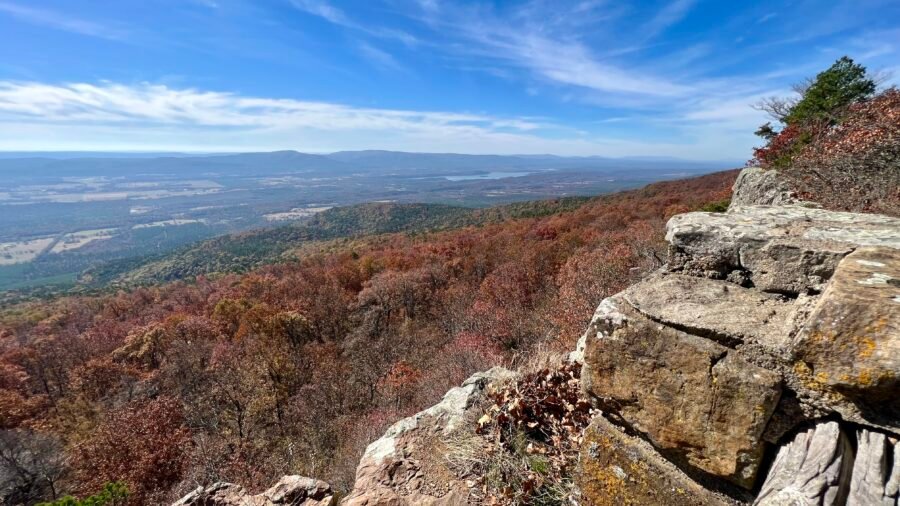
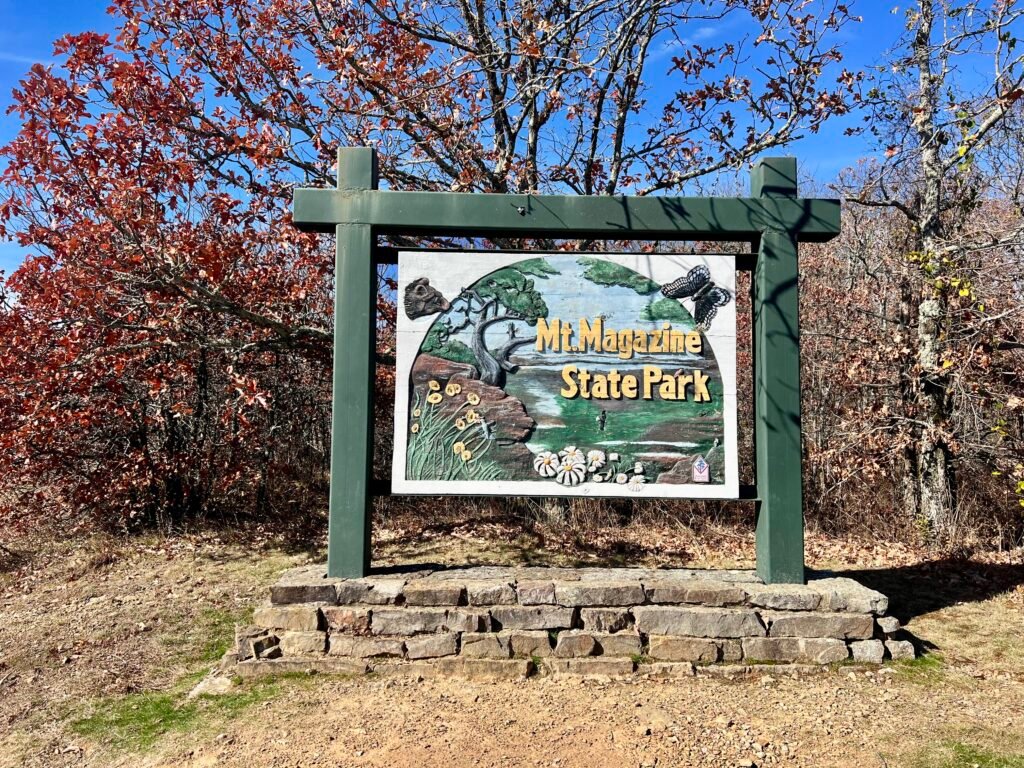
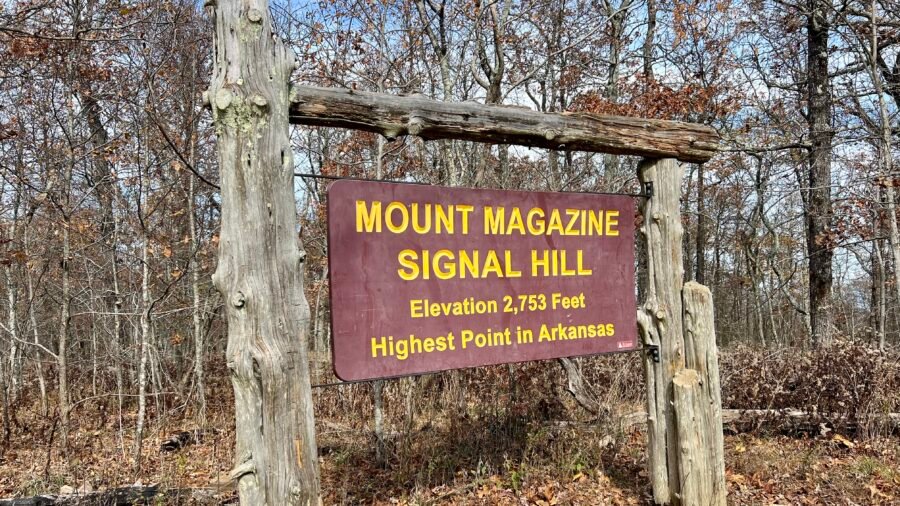
Since Mount Magazine and Signal Hill (the highest natural point in Arkansas) are both located within Mount Magazine State Park — which is on my list as the Best State Park in Arkansas — I decided to cover them together in one blog post.
Since Mount Magazine / Signal Hill sits inside Mount Magazine State Park — which is on my list as the Best State Park in Arkansas — I decided to combine both into one post.
The park is about 2 hours west/northwest of Little Rock, roughly 1 hour 15 minutes east of Fort Smith, and a little over 2 hours south of Bentonville — home of Walmart, for you trivia buffs.
Cape Henlopen State Park is a fascinating park, that offers so many different experiences and is worthy of visiting on multiple days. In fact, I would suggest using Lewes, Delaware or another nearby city as a vacation hub – Cape May, New Jersey (blog post coming soon) is a short ferry ride across the bay and Assateague State Park and Assateague Island National Seashore are about an hour away. There is so much to do in the area.
Picture: Park Entrance
A Guys Day
I specifically came to Lewes, Delaware to visit my friends Amanda and Phil. We all took the short trip to Assateague State Park and had a blast. However, on this day, Amanda had to work, so it was just Phil and I for a guy’s day out. That morning both Phil and I had a little work to finish before we headed out. I also made a little breakfast nosh, Smoked Salmon & Avocado Toast with Everything But the Bagel Seasoning. Delish! On the way to the park, we stopped by to see Amanda at the local Golf Club she bartends for a Bloody Mary. Let’s get this party started!
Picture: Smoked Salmon & Avocado Toast
About the Park
Cape Henlopen State Park, nestled on Delaware’s picturesque coast, offers a captivating blend of natural beauty and recreational opportunities. Spanning over 5,000 acres, this coastal gem boasts pristine beaches, rolling sand dunes, and lush maritime forests. Outdoor enthusiasts can explore a network of scenic trails, ideal for hiking and biking, while birdwatchers delight in the park’s diverse avian inhabitants.
History buffs can explore the iconic World War II observation towers that stand as silent sentinels along the shoreline. The park’s centerpiece, the historic Fort Miles, provides a fascinating glimpse into the region’s military past. Visitors can also indulge in water activities, from swimming in the Atlantic to fishing and kayaking in the park’s tidal salt marshes. With its rich ecological diversity and recreational charm, Cape Henlopen State Park beckons nature lovers and adventure seekers alike to discover the magic of Delaware’s coastal wonders.
Pictures: Park Maps were the focus of our visit, specifically the left-hand map.
Top 5 Activities
Explore the Beaches: Cape Henlopen State Park offers pristine beaches along the Atlantic Ocean. Visitors can relax on the sandy shores, swim in the refreshing waters, or engage in beachcombing and seashell collecting.
Hiking and Biking Trails: The park features an extensive network of scenic trails, including the popular Gordon’s Pond Trail and the Seaside Nature Trail. Hikers and bikers can immerse themselves in the park’s diverse landscapes, from coastal dunes to lush forests.
Visit Fort Miles: History enthusiasts can explore the historic Fort Miles, which played a crucial role in coastal defense during World War II. The fort features bunkers, observation towers, and informative exhibits, providing a fascinating glimpse into the area’s military history.
Birdwatching: Cape Henlopen is a haven for birdwatchers, offering diverse habitats for numerous bird species. Bring your binoculars and observe the variety of shorebirds, songbirds, and raptors that inhabit the park, especially during migratory seasons.
Water Activities: The park’s coastal location provides opportunities for various water activities. Fishing enthusiasts can try their luck from the fishing pier, and kayakers can explore the tidal salt marshes. The park’s natural beauty is best experienced from the water, adding an extra layer of adventure to your visit.
Reliving our Childhood
Both Phil and I grew up in an era of G.I. Joe and are both history buffs, so our first stop was Fort Miles. We had also visited Cape May, New Jersey the day before, where we initially learned about the observation towers and gun bunkers in the area. When visiting the park you have to go up into one of the Observation Towers. The observation towers have a rich history dating back to their construction during World War II when they served as lookout posts for coastal defense. These towers played a crucial role in monitoring the Delaware coast for potential enemy activity. Triangulation techniques were employed in their design, ensuring precise alignment and effective surveillance capabilities during their wartime function. Today, the observation towers are iconic landmarks, offering breathtaking panoramic views of the surrounding area.
Pictures: One of the Observation Towers | About the Observation Towers
Pictures: Spiral Staircase to the Top | Selfie on the Top of the Tower
Pictures: Views from the Observation Slots
Picture: View from the Observation Slots with the main gun battery
Battery 519
From the parking lot, it is a short walk to Battery 519, a 15,000-square-foot fortified underground chamber. Today, the main battery houses the Fort Miles Museum. Along the initial part of the walk, you’ll pass some of the original barracks and several of the weapons that were used to protect the fort and the coast. And of course, our inner childhood came out. . .
Pictures: The Barracks area and some of the weapons used to protect the fort.
Pictures: Boys will be Boys
As you walk up to the main bunker and Museum, you’ll see a couple of the guns used to protect the coast during WW II. The largest gun on display actually came from the USS Missouri, Mighty MO. This massive gun could shoot a 2700-pound shell over 20 miles with pinpoint accuracy. And you can see the damage such a shell can make on the thick steel of a Japanese ship during the war.
Pictures: Mighty Mo’s Big Gun | A shell and the type of damage it did to a Japanese ship
Picture: One of the guns used to protect the coast
Pictures: Fort Miles Museum
Pictures: Views from the Museum terrace
Beach Time
From Fort Miles, we continued our loop around the park and headed for the Senator David B. McBride Beach Bathhouse. It is a gorgeous facility with a boardwalk to the beach. I can only imagine how busy this place must be in the summer – remember our visit was at the beginning of November.
Pictures: McBride Beach Bathhouse | Boardwalk to the Beach
Pictures: Pillar on the Beach | Only the Shadows Know
Picture: The serenity of the beach
Birds of Prey
Right next to the Bathhouse area, you can spot the Cape Henlopen Hawk Watch Tower. This spot used to be a military bunker, but now it’s a great place to watch different types of raptors fly by. It’s pretty neat that they keep count of all the birds they’ve seen yesterday and overall. So if you’re interested in birdwatching, this is the perfect spot!
Pictures: The Bunker beneath the Hawk Watch | The Hawk Watch Tower
Pictures: Daily and To Date Raptor Sightings | View from the Hawk Watch Tower
The Point
Next up, my favorite part of the park – The Point. The beach was so chill and beautiful! We didn’t have enough time to check the whole thing out, though. Next time, I’d love to take a longer hike out to the point. We noticed a ton of horseshoe crab shells scattered around the beach. Later, we learned that the Delaware Bay and the area off of Cape Henlopen has the world’s largest spawning population of horseshoe crabs, which are the official State Marine Animal. They look like they’re straight out of the movie Predator, pretty cool! We also got to see a couple of other native crabs that were still alive.
Picture: The walk down to the beach from The Point parking lot
Pictures: A couple of the Horseshoe Crab shells
Pictures: Some of the other crabs we saw, per Google Lens – Lady Crab (r) and Ghost Crab (l)
Picture: Looking out to the Point
Last Stop – The Fishing Pier
The fishing pier at Cape Henlopen State Park offers a stunning view of the Delaware Bay, with sights of the Ferry port, The Point, a lighthouse, and Cape May, New Jersey. I met several fishermen on the pier who had caught Tautog or Blackfish that day, a fish species that is popular in chowders and similar to Red Snapper. I highly recommend a visit to Cape Henlopen State Park for a great day out!
Historic Downtown Lewes
After a long day, we hit up historic downtown Lewes for a refreshing libation and snack at the Pink Pony, the bar at Bramble & Brine at The Butttery. It’s a super cute bar with hundreds of equestrienne ribbons, and definitely worth checking out when you’re in Lewes.
Pictures: Historic Lewes, Delaware
Pictures: Bramble & Brine at The Buttery | The Pink Pony Bar and Equestrienne Ribbons
Pictures: Crab au Gratin | Older Old Fashion | Yumsies Humsies
I was in the Albany, New York area visiting family, and my sister, Vicki, and I decided to do a hike before we both headed back our separate ways. On a side note, I convinced Vicki to hike Mount Greylock, the highest point in Massachusetts and the first of my State High Points, during a trip to Massachusetts to see the incredible Sona Jobarteh in concert. The two of us have hiked many places together and this hike in John Boyd Thatcher State Park – commonly known as Thatcher State Park – was quite a fun and interesting find.
Brunch First, then Hiking
Our sister Melissa and her husband Richard also made the trip up to Albany as it was sort of a mini family reunion, actually a cousins reunion. After the reunion, and before we headed out, we went to The Scene Coffee and Cocktails in Albany, New York for brunch. It’s a super cute restaurant with a patio, complete with a Gelato Cart (although it was not open when we were there) and a Champagne Vending Machine. I thought the vending machine was super cool. You ordered and paid for everything at the counter, and if you ordered champagne, they gave you a special token for the vending machine. Unfortunately, no champagne today as we were heading out for a nice hike. The brunch sandwiches and coffee were delish and I would definitely recommend The Scene if you are in the area!
Pictures: The Scene – Albany | NY
Pictures: Gelato Cart | Champagne Vending Machine
Pictures: Uber Cute Coffee
Pictures: A couple of the delish Brunch Sandwiches
Off to Voorheesville
Thatcher Park is in Voorheesville, New York – that’s quite the name and no it’s not from a Dr. Seuss book. In the early 17th century, Dutch settlers established the colony of New Netherland, with Albany becoming a crucial trading post along the Hudson River. In 1899, Voorheesville was founded with its roots in the Albany and Susquehanna Railroad era, and it was named after Alonzo B. Voorhees, a railroad attorney. Over the years, it has evolved from a railway community to a charming village known for its historic buildings and community-oriented atmosphere.
About the Park
Thatcher State Park is a hidden gem for nature lovers and adventure seekers alike. Nestled in the scenic Helderberg Escarpment, this park offers a perfect blend of outdoor activities and breathtaking views. With over 2,000 acres of lush greenery, hiking enthusiasts can explore a network of trails that wind through wooded areas and lead to panoramic overlooks. The park has a $6 per vehicle fee, but my sister has an annual Empire Pass, so it’s included with the pass.
For those who prefer a more relaxed experience, the park provides spacious picnic areas, inviting families and friends to enjoy a sunny day outdoors. The park isn’t just about hiking and picnics; it boasts an awesome playground for kids and a refreshing pool to cool off during the summer months.
One of the highlights is the impressive Indian Ladder Trail, where you can walk along the cliff’s edge and take in the stunning vistas. If you’re lucky, you might even spot some soaring birds of prey. John Boyd Thatcher State Park isn’t just a park; it’s a nature-packed playground waiting to be explored. So, whether you’re up for a challenging hike, a leisurely picnic, or simply soaking in the scenic beauty, this park has something for everyone. Get ready to escape the hustle and bustle and immerse yourself in the tranquility of Thatcher State Park!
Pictures: Park Maps – for our hike, use the map on the left as a reference
What the heck is an Escarpment?
An escarpment is a steep, often cliff-like geological formation that marks the boundary between different elevations of terrain. Typically formed by erosion or tectonic activity, an escarpment creates a distinct and abrupt change in elevation. These formations are characterized by their steep slopes and can be found in various landscapes, offering stunning panoramic views from the elevated side while creating a notable transition between high and low areas.
Sounds like a cliff, so I asked ChatGPT what the difference was: While both cliffs and escarpments involve steep slopes, the key difference lies in their scale and geological context. A cliff is a vertical or near-vertical rock face with a considerable drop, often overlooking a body of water. In contrast, an escarpment is a more extensive and generally less steep slope that separates two different elevation levels in a landscape. Escarpments are larger geological formations, often marking the boundary between higher and lower terrains, whereas cliffs are more localized and frequently associated with coastlines. So there you have it!
Picture: About the Helderberg Escarpment
Top 5 Hiking Activities
Thatcher Park Overlook: One of the highlights of the park is the Thatcher Park Overlook, which provides breathtaking panoramic views of the Hudson Valley and the Adirondack Mountains. It’s a popular spot for visitors to take in the scenic beauty of the surrounding landscape.
Indian Ladder Trail: This trail takes hikers through a series of picturesque rock formations, caves, and waterfalls. The trail offers a unique perspective of the park’s geology and provides opportunities to explore the natural beauty of the area.
Hailes Cave: Hailes Cave is a fascinating limestone cave located within the park. While it may not be open to the public at all times, guided tours are sometimes available, allowing visitors to explore the cave’s unique features and learn about its geological significance.
Escarpment Trail: This challenging trail runs along the Helderberg Escarpment and offers stunning views of the Hudson Valley. Hikers can enjoy the diverse terrain, including rocky cliffs and wooded areas, as they traverse this scenic trail.
Thatcher Park Visitor Center: While not a hiking destination per se, the visitor center is a great starting point for exploring the park. It provides information about the park’s history, geology, and natural features. Additionally, it offers educational exhibits and interactive displays.
Our Visit:
We started at Thatcher Park Overlook, the first item on the list above, and it certainly delivers on the beautiful panoramic view. It is interesting, but understandable, that there is a parking time limit here. They are obviously trying to discourage hikers from parking here and wanting the spots to turnover for people coming here for the panoramic views.
Pictures: Panoramic Views from the Overlook
Picture: View from the Overlook, looking towards where we would park and start our hike
Parking time is up, time to find a parking spot
We decided to park near the Glen Doone Pavillion, the start/end of the Escarpment Trail. As a note, there is a restroom in this parking area. First, we headed to the point, which offers views of the valley below as well as the Overlook parking area. From here, you can see in the distance the other areas the trail will take you. The Escarpment Trail is 2.4 miles long (one-way) and is predominantly flat, so a relatively easy hike.
Pictures: Views from Glen Doone – Looking Back at the Overlook Parking Area | Valley Below
As you hike the Escarpment Trail towards the Visitor Center, you’ll hike through the Overlook Parking area again. Then as you round the bend at La Grange Bush, you’ll see another point and get a view of the Visitor Center.
Picture: View from La Grange Bush looking towards the Visitor Center.
Indian Ladder Trail
About halfway along the Escarpment Trail, just past La Grange Bush, you’ll come to the Indian Ladder Trail, 0.44 miles long. There is some elevation on this trail as you first descend a flight of stairs, then back up on the other side. However, I would HIGHLY recommend taking this trail. This trail will give you a close-up view of the cliffs as well as an opportunity to hike under the cliffs. But the best part of the trail – the two waterfalls that you pass under, first Minelot Falls, and then Outlet Creek Falls.
Pictures: Trail Under the Escarpment | Trail along the Escarpment
Pictures: Minelot Falls
Picture: Outlet Creek Falls
Pictures: Along the Indian Ladder Trail
As you ascend on the other side of the Indian Ladder Trail, you’ll come upon the Visitor Center and Thatcher Point. It’s a beautiful building with a spectacular view and a great place for events. The day we were there, they had just finished a wedding.
Picture: The Visitor CenterPicture: Vicki and Me along the Escarpment TrailPicture: View from Thatcher Point
The Squeeze Box
When we reached the end of the Escarpment Trail, we continued a little further and came across the Squeeze Box – the entrance to the Rock Climbing area. If you can’t fit through here, you won’t be able to fit through Helm’s Crevice, the access point to the Rock Climbing area. It’s tight as you can see!!!
Pictures: The Squeeze Box | Helm’s Crevice
Back to Glen Doone
At this point, we turned around and headed back to Glen Doone and our car. However, when we got to the Visitor Center and the Indian Ladder Trail, we continued along the ridge and on the Escarpment Trail. On this part of the trail, you cross the streams that become the waterfalls on the Indian Ladder Trail. It was a fun day of hiking and I would definitely recommend a visit to John Boyd Thatcher State Park! Bring a picnic and spend the day exploring the trails and enjoying the panoramic views.
I was well overdue on visiting Lewes, Delaware to see longtime friends Amanda and Phil, and when the opportunity came up, I immediately headed East. I mentioned that there were two parks I wanted to visit on the Discoverer’s List of the Best State Park in Each State. Amanda immediately jumped on the opportunity to visit Assateague State Park as it had been on her list of places to visit. With our cooler full and a beautiful day in the forecast, we headed south on the scenic Coast Highway to Maryland. The drive was just over an hour and as we drove through one town after another, I was amazed at the number of miniature golf courses along the way.
I’ve shared a bit about the park, ponies, and wildlife in the next sections. So feel free to skip through and jump to my notes about my visit and about Assateague National Seashore.
About the Park
Assateague State Park, Maryland’s only oceanfront park, is located on Maryland’s eastern shore and is known for its breathtaking coastal beauty and unique wildlife, particularly its famous wild ponies. These wild horses, known as Chincoteague Ponies, freely roam the park’s beaches, marshes, and woodlands, creating a distinctive and enchanting atmosphere for visitors. The ponies are believed to be descendants of shipwreck survivors and have adapted to the island’s dynamic ecosystem. Visitors can observe these majestic creatures in their natural habitat, providing a rare and memorable wildlife encounter. Assateague State Park spans 855 acres and offers a range of recreational activities, including camping, hiking trails, bird watching, and pristine sandy beaches for swimming and relaxation. The combination of natural beauty and the presence of these iconic wild ponies makes Assateague State Park a must-visit destination for nature enthusiasts and those seeking a unique connection with the untamed charm of coastal wilderness. Fees: Memorial Day weekend through Labor Day $5/person | After Labor Day to Memorial Day weekend $5/vehicle.
Picture: Entrance on Assateague Island
About the Ponies
There are two herds; one in Maryland and one in Virginia. There are approximately 78 in the Maryland herd and about 150 in the Virginia herd. A contraceptive darting program may be used with the Maryland horses to keep the population size to a sustainable number.
Local lore experts theorized the ponies arrived on the island via a shipwrecked vessel in the late 18th or early 19th century. Others attribute their arrival by pirates drawn to the island who ultimately abandoned the animals. A more likely theory is that farmers in colonial times used the island for grazing areas to avoid paying taxes on the land.
The National Park Service manages the herd of ponies at the northern end of Assateague Island. The separate herd in Virginia is owned by the Chincoteague Volunteer Fire Department, which sponsors the annual pony penning and swim every July.
The ponies’ diet consists mainly of marsh and dune grasses. Their water comes from the freshwater ponds located on the island. They are true horses, and not actual ponies, who have adapted to the diet and life on Assateague. During the winter their coats become quite thick to protect them from the harsh winds. Their short, stocky build allows them to navigate the marshes and to store water efficiently.
Other Wildlife
Assateague Island, situated on the Atlantic flyway, is a bird-watcher’s paradise. Over 200 species of birds have been sighted here, ranging from gulls to herons, egrets to eagles, and even rare peregrine falcons and snowy owls. The most commonly seen birds include ospreys, herons, egrets, sandpipers, shorebirds, ducks, geese, and other waterfowl. There are also two types of deer on the island, whitetail and sika.
The ocean and bay that surround the island are full of life. Dolphins can often be seen playing in the waves of the ocean. Flounder, spot, sea trout, puffer, rockfish, croaker, red drum, and bluefish are residents of the area, while marlin and tuna can be found in the deeper waters offshore. Occasionally, seals, whales, sand sharks, and sea turtles wash up on the shore.
My Visit to the Park
Our first stop before we crossed over to Assateague Island, we stopped at the Assateague Island Visitor Center, which is operated by the National Park Service (NPS). The visitor center has a lot of information about the history of and wildlife on the island, as well as a book and souvenir store shop. Assateague State Park encompasses only a small portion of the island, while Assateague Island National Seashore encompasses the majority of the island. Since this is operated by the NPS, we didn’t get much information about the park but did ask where there were pony sightings. The area around the visitor center offers some spectacular views of the Sinepuxent Bay.
Picture: Assateague Island Visitor Center
Pictures: Outdoor Map at the Visitor Center – if you zoom in on the picture to the left, you can see how small the State Park is relative to the Island.
Picture: Sinepuxent Bay
Let’s find some Ponies!
We headed across the Verrazano Bridge and over Sinepuxent Bay to the State Park and as soon as we got to Stephen Decatur Memorial Road, we saw our first ponies. We then continued straight and into Assateague State Park where we parked, paid our $5, and to our surprise, there was a lone horse just standing in the parking lot! The State Park has a beautiful beach, the 5 Tides Restaurant and Shop (which was closed for the season), and numerous camping sites. We headed to the beach to see if we could get a glimpse of the ponies on the beach, but there were none, just a bunch of surfers. We also walked along the road through the campgrounds (which was empty) in search of more ponies, but only found evidence of them in the form of Horse “Muffins.”
Picture: The lone pony in the parking lot.Picture: Assateague State Park Beach
Pictures: Beach Access from the Campgrounds | Horse “Muffins”
Picture: Campground with Bathroom and Shower Facilities
Ponies Sighting!
We decided to head out and see if we would have better luck at the Assateague Island National Seashore, so we headed back to the car and then south on Stephen Decatur Memorial Road. And to our surprise, as we left the parking lot, we saw the horse that was in the parking lot, now grazing by the roadside. Then as we turned left onto Stephen Decatur Memorial Road, we saw another pony!
Pictures: The Ponies!
Assateague Island National Seashore
As we approached the entrance to the National Seashore, there was a line of cars paying the entrance fee. I was a bit shocked at the cost of $25 per vehicle for 7 days (Although I swear it was $35). Anyway, I knew I was about to embark on a trip across the country, so I decided to renew my America the Beautiful Pass ($80 for the year), which gave us access to the park. I should note that if you arrive by foot or bicycle, there is no fee. Hint: Perhaps bring your bike, park at the state parking lot for $5, and ride your bike into the National Seashore.
Picture: Entrance to Assateague Island National Seashore
We decided to hike two trails while we were there – the Life of the Marsh Trail and the Life of the Forest Trail. The Life of the Marsh Trail takes you on an elevated boardwalk winding above the wetlands and mudflats and also takes you out to Sinepuxent Bay.
Picture: Sinepuxent Bay from Assateague Island
Pictures: Me, Amanda, and Phil | The Wetlands
We ran into a bunch of people during our hike and asked them if they had spotted any ponies. Then we got lucky – someone told us that there were several ponies on the Life of the Forest Trail! So we set off on our mission to see more ponies. The trail was a beautiful one that took us through the woods and eventually led us to a boardwalk with a view of a marshy area. Even though we didn’t spot any ponies on the trail as we had hoped, we did manage to see a few off in the distance. Our goal was still to see the ponies on the beach, so we moved on to the Life of the Dunes Trail. This trail took us through the dunes and along the beach. I was pretty sure that with all the trees and “hiding” places, we would definitely spot some ponies here – but no luck! We were still happy to have seen a couple of the ponies and decided to head out. But before we drove too far, we spotted another pony! With our day complete, we headed back north to grab a bite to eat. I enjoyed our trip to Assateague State Park and the Assateague Island National Seashore and would highly recommend it. On my next visit, I would spend more time on the beach relaxing.
Pictures: From the Life of the Forest Trail
Picture: The Beach from the Life of the Dunes TrailPicture: Our Final Pony Sighting
We had lunch in Selbyville, Delaware, just across the Maryland/Delaware border at Catch 54. My meal was a bit of a dichotomy – we all shared Crab Dip Loaded Tots and then I had the Roasted Beets with Pistachios, Grapefruit, Goat Cheese Mousse, and a Ginger Vinaigrette along with a refreshing Thompson Island IPA. Next up on my list to visit – Cape Henlopen State Park in Lewes, Delaware, and I also made a trip to Cape May, New Jersey.
In my previous post about Mount Mansfield, I mentioned that the weather was not ideal for camping, and hotel rooms were expensive. As a result, I decided to stay in a hostel named Round Hearth Cafe and Market in Stowe, which I booked through Airbnb. Christopher, the host, was extremely friendly and an excellent host at the cafe as well. Additionally, the stay included complimentary coffee and a discount on food at the cafe. The hostel is not luxurious and is mainly intended for skiers, as indicated by the industrial carpet in the hallways (suitable for ski boots and snow). The rooms are plain but comfortable, and the shared bathrooms are super clean and well-lit. Since it was the off-season, I felt like I had the entire place to myself.
Pictures: Entrance to the Cafe and Hostel | Outdoor Seating Area
Pictures: Stairway to Rooms | Upper Hallway
Pictures: Hostel Room | Men’s Bathroom
That night, I decided to check out the area and found the Idletyme Brewing Company which was just down the road. I hung out in the bar area and had a chat with some of the locals. We talked about what to order for dinner and what to see at Smugglers Notch State Park. But then, an ambulance went by and they told me something creepy – apparently, the locals think someone has fallen at Bingham Falls every time they hear an ambulance. On that happy note, I had a great time and the food was pretty good.
Pictures: Idletyme Brewing Co. | Doubletyme IPA 7% | Fish and Chips
Work First, then a Hike
The next morning I had to do some work for a client, so I had breakfast in the cafe downstairs and worked on my project. It took a bit of time to complete, but there was still some daylight and I decided to head to the dreaded Bingham Falls – only a 5-minute drive up Mountain Road to the Trailhead.
Pictures: The Double Diamond Breakfast Sandwich with Avocado and Home Fries | The Cafe Interior
Pictures: The Round Hearth | Round Hearth Cafe Interior
First, a little about the park
Nestled in the heart of Vermont, Smugglers Notch State Park is a nature lover’s paradise that seamlessly blends breathtaking landscapes with outdoor adventure. Spanning over 1,000 acres, the park is a haven for hikers, boasting an extensive trail network that caters to all skill levels. Towering cliffs and dense forests create a picturesque backdrop, offering a serene escape from the hustle and bustle of everyday life. The park’s crown jewel, the famed Smugglers Notch, is a scenic mountain pass that weaves through rugged terrain, providing an exhilarating journey for those seeking a challenge. Visitors can relish in the park’s rich history, discovering tales of smugglers who once navigated these hidden paths. Whether you’re a seasoned trekker or a casual stroller, Smugglers Notch State Park invites you to explore its vast beauty and uncover the secrets held within its sprawling expanse.
Pictures: Trail Map | Trail Descriptions
There’s a reason it’s called Smugglers Notch
In 1807, President Thomas Jefferson passed an embargo act forbidding American trade with Great Britain and Canada. This was a severe hardship for northern Vermonters since Montreal was closer than other markets in the US. Many local people continued illegal trade with Canada, herding cattle and carrying other goods through the Notch. Later, fugitive slaves used the Notch as an escape route to Canada. During the Prohibition years, liquor was smuggled from Canada over the improved road built in 1922.
Top 5 Things to See
Smugglers Notch: The iconic mountain pass itself is a must-see. Marvel at the breathtaking rock formations and immerse yourself in the rich history of the area, where 19th-century smugglers once navigated through this hidden gem.
This is not hard to miss as the road runs right through the notch.
Sterling Pond: Hike to the pristine Sterling Pond, the highest trout pond in Vermont. Surrounded by mountains, this alpine lake offers a serene setting for picnics and a chance to connect with nature.
Compete – more later in the post.
Bingham Falls: A natural wonder awaits at Bingham Falls. Cool off in the refreshing cascades and pools, surrounded by lush greenery. It’s a perfect spot for a rejuvenating dip after a day of hiking.
Despite the warnings – I checked this off the list.
Long Trail: Traverse a section of the famous Long Trail, which runs through the park. Whether you’re an avid hiker or a casual walker, the trail provides stunning views of the Green Mountains and an opportunity to explore the park’s diverse ecosystems.
Although I didn’t do the entire Long Trail, I did portions near the Chin (see my Mount Mansfield post) and near Sterling Pond.
Moss Glen Falls: A short drive from the park, Moss Glen Falls is a picturesque waterfall worth visiting. Surrounded by lush foliage, it’s a photogenic spot and a tranquil setting to appreciate Vermont’s natural beauty.
Not to be confused with the Moss Glen Falls near Hostel Tevere that I wrote about in my Mount Mansfield post. I didn’t go to this particular Moss Glen Falls.
Let’s Conquer the Falls!
With my work complete, I decided to get a late afternoon hike in and headed towards Bingham Falls. The falls are named after Hiram Bingham, an American missionary, explorer, politician, and early settler in the area. It was carved by glaciers during the last Ice Age and has been a local favorite for cooling off and unwinding for generations. The park has numerous educational signs and well-marked trails, including those at the falls.
Pictures: Some of the educational signs you’ll discover
From the parking lot off Mountain Road, the trail is just a short 0.8 miles out and back. There’s a bit of elevation change, with the biggest challenge being the descent to the base of the falls. It’s a beautiful walk through the forest, which leads to the Upper Falls area. From there, there are steps down to the base of the falls. As I explored the area, I realized why people often get hurt or even die here – the rocks are incredibly slippery and there are no fences to prevent accidents. Therefore, it’s important to take your surroundings seriously and be cautious. I can only imagine how many people have been injured while trying to take a “cool” pic for Instagram.
Pictures: The initial portion of the trail
Pictures: The Upper Falls area
Picture: The West Branch Little River flowing into Bingham Falls
Pictures: Upper Falls
Picture: Bingham Falls
Pictures: The steep and slick trail down to the base of the falls
Trail Therapy
As I headed back to the parking lot, I decided to take a hike along the river. While on the trail, my attention was drawn to a young woman seated by the riverbank, immersed in her thoughts with headphones on. Respecting her space, I continued cautiously. Eventually, reaching the trail’s end, I retraced my steps. This time, our eyes met, and she removed her headphones. Greetings were exchanged, and I sensed an unease. As we chatted, she confided in me about her health struggles, likely stemming from mold in her flood-affected apartment, a result of recent Vermont floods. With empathy, I shared some fatherly advice, ranging from seeking legal assistance to moving out or finding a roommate. Encouraging and positive, I ensured she felt supported before I left her. This situation echoed a moment near my sister’s home, where a stranger stopped, concerned about my well-being – not that I looked distraught – but due to a recent suicide at the nearby falls. Compassion is priceless, reminding us to be attuned to others and their experiences. I believe fate guided me on that trail, and I sincerely hope she found a solution to her challenges.
Boxed Wine, Cheese and Crackers
After an emotional finish to the day and having successfully survived the hike to Bingham Falls, I headed to the market to buy some cheese, crackers, and boxed wine for dinner. Yes, I am a fan of boxed wines and have found some really good ones. In fact, years ago, I went to an incredible restaurant in France that only served boxed wine. So, I set up a spot outside at one of the cafe’s outdoor tables and enjoyed the sunset before heading to bed as I had a big day of hiking ahead of me.
Hiking: Day 2
The next morning, I packed up and headed out for a day of hiking. I had hoped to get out early, but had to tend to some business before hiking as I knew cellphone coverage would be spotty in the mountains. With my business finished, I headed to the Smugglers Cave parking area where I would first head to Sterling Pond and then Smugglers Cave. For a Tuesday with overcast weather, the parking lot was filling up fast, but I was fortunate to get a spot. I stopped at the information booth and spoke with the volunteer about the trails and such. He was a super interesting guy who had been a ranger in the Adirondack Mountains.
Picture: Informational Sign at Smugglers Notch
Pictures: Boulders at the Parking Lot | Overcast Weather
A Steep Climb and Lookout for Bears
The trail up to Sterling Pond is a moderately challenging route – keep in mind you are hiking up a trail to a peak that people ski down. The Sterling Pond trailhead is across the street and the trail is 2.1 miles out and back to just Sterling Pond with an elevation gain of 1000 feet – with most of the gain at the beginning of the hike. And just like Bingham Falls, the rocks were wet and slick, lending to a slower-than-normal hike.
Pictures: Sterling Pond Trailhead
Pictures: The steep and slippery hike to Sterling Pond
Pictures: More of the steep incline | One of the “pop-up” waterfalls and streams along the trail
At the top of the mountain, you reach a portion of the Long Trail – the same Long Trail that connects the Chin to the Nose to the Forehead on Mount Mansfield. The entire Long Trail spans 272 miles from Massachusetts to the Canadian Border and was the first long-distance hiking trail in the U.S. Although this portion of the hike wasn’t too steep, it was sheer rock and super slick due to the wet weather.
Pictures: Joining the Long Trail | Warning Sign | Slick Rocks
I hiked up to Sterling Pond, which is the highest-elevation trout pond in Vermont. It was a peaceful and beautiful spot, that is until a loud family could be heard in the distance. I continued my hike around the pond. The loop trail is about 1.4 miles long and includes some narrow sections and a few inclines, but nothing too difficult to navigate. The beginning of the trail was a bit challenging because some parts had been washed out, but I managed to make my way through. At the top of the ski mountain, which was still wet and swampy from recent rains, I checked out the chair lift platform, which was pretty cool. The trail around the pond wasn’t always easy to follow, and I ended up wandering around the summit a bit until I found a clearing and the trail again.
Picture: Sterling Pond
Pictures: Washed out Trail | View of Sterling Pond
Pictures: Ski Trail Sign | Top of the Notch Lodge
Pictures: Chair Lift Platform | Where the trail continues – through the opening in the trees
Shortly after I re-entered the woods, I came across a picnic table and a couple enjoying their lunch. I think I startled them as there were few hikers in this area. From here I headed down the Elephant’s Head Trail and this is where things got a little interesting. To begin with, it was super quiet and I was the only person on the trail. Then the initial part of the trail, along Sterling Pond, is quite narrow and there are a series of small inclines and declines through narrow rock gorges. It wasn’t anything I couldn’t navigate, but challenging at a couple of points.
Pictures: Elephant’s Head Trail Marker | The “loud” family that was behind me – now off in the distance
Picture: Sterling Pond – from the other side
Pictures: One of the narrow gorges to maneuver through | The beauty of the forest
After you leave the area around the pond, there is another intersection and you continue on the Elephant’s Head Trail, which now takes you through the forest. From here it is an uphill climb, then back down. It was at this point that I began to see tracks in the mud. I had seen several dogs on the way up to Sterling Pond, but these were much bigger than the average dog. I suspected they were bear tracks! As a note: When I got back to the parking lot, I showed the ex-ranger and volunteer my photos of the tracks and he confirmed that they were bear tracks. I’m glad I was hiking with my bear spray! Eventually you connect back to the Long Trail.
Picture: Bear paw print in the mud
Pictures: Back to the Long Trail | The Long Trail – heading towards Sterling Pond Trail
Once I got back to the Sterling Pond Trail, I headed back down the mountain to the parking lot. Along the way, I ran into a guy who was taking pictures of birds. He said it was a quiet day and he hadn’t seen many birds, but what I thought was cool – he was there on his lunch break from work. How cool to have this in your backyard and hike on your lunch break!
Looking for Smugglers!
After returning to the parking lot, I unloaded my backpack and poles and took a break to eat and drink. The weather was improving and the area was getting busier with more cars waiting for parking spots. Once I finished my lunch, I went back to the information booth to ask about the bear tracks and to get more information about the Smugglers Cave. I was happy to find out that the cave was located right behind the booth and there was a short loop up and around the caves. The cave was quite interesting, and I could imagine smugglers hiding out there in the past. It was a great way to end my day. I am happy that I split my visit into two days, as there is so much to explore and enjoy at Smugglers Notch State Park! I would definitely recommend a visit to this beautiful park.
Pictures: To Smugglers Cave | The History of Smugglers Notch
Pictures: Smugglers Cave
Picture: Smugglers Notch
Time for a Beer
With the day relatively young, and Burlington, Vermont close by, I headed east to check out their craft brewing scene and to see a town I have been wanting to visit for some time. My first stop – Queen City Brewery – where I enjoyed a flight of beer and met a nice couple from the West Coast of Florida. We chatted about Florida Breweries and I mentioned my love for IPAs. They suggested I try Zero Gravity Brewery across the street as are known for their IPAs.
Pictures: Queen City Brewery
Pictures: Beers of the Day | My Flight of Beer
After finishing my flight, I headed across to the street to Zero Gravity Brewery where I picked up a few different IPAs in cans. With beers in hand, snacks in my cooler, and the golden hour approaching, I headed to nearby Oakledge Park to see the sunset on Lake Champlain. I sat on the rocks and watched an incredible sunset. It was a great way to end an incredible day!
Pictures: Waiting for Sunset | Ferry crossing Lake Champlain